
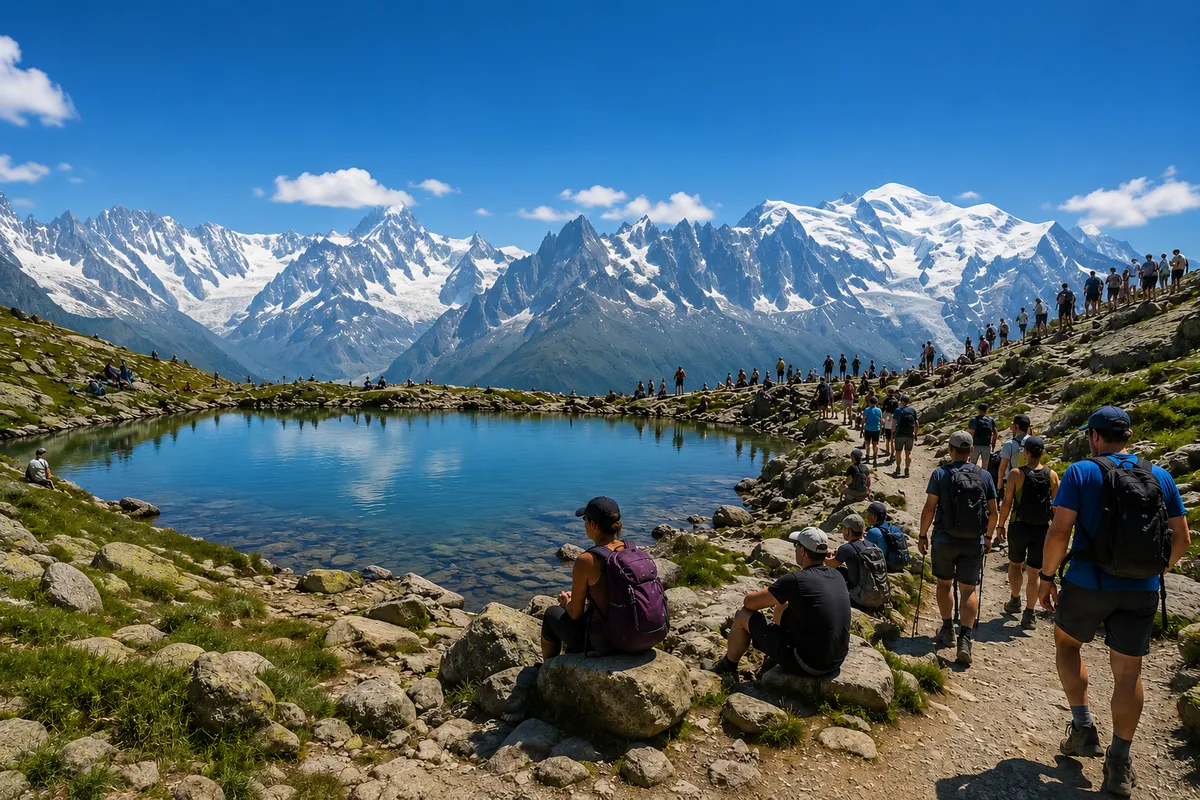
Facing the Mont-Blanc massif, this high-altitude lake offers one of the most spectacular panoramas of the French Alps. But its booming success now attracts thousands of visitors every summer and raises many concerns among mountain professionals.
For a long time, this hike was seen as a reward for the most motivated walkers. You had to start early, climb several hundred meters of elevation, and earn the view. Today, social media and travel platforms have transformed this place into an absolute must-see for holidays in Chamonix.
Each summer, the trails fill up from the first hours of the day. Parking lots are full, queues appear on certain passages, and refuge wardens observe attendance that keeps increasing.
A hike that has become essential in Chamonix
The site concerned is lac Blanc, perched at over 2,300 meters altitude in the Aiguilles Rouges nature reserve. Its water mirror reflecting the Mont-Blanc massif constitutes one of the most famous images of the Chamonix valley.
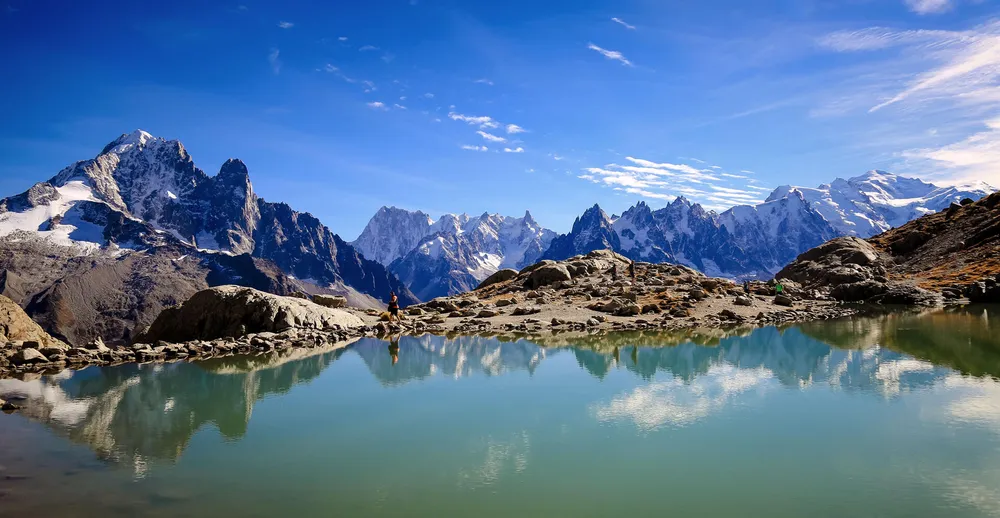
Access is facilitated by the Flégère lifts or the Index cable car, allowing a very broad audience to quickly reach the high-altitude trails. This accessibility partly explains its immense popularity.
In summer, several thousand people can use the routes leading to the lake during the busiest periods. Photographs of the site flood Instagram, TikTok, or tourist guides, further contributing to its notoriety.
Behaviors that worry professionals
While tourist attendance represents an important economic resource for the valley, certain behaviors now pose problems. Mountain guides and natural area managers regularly mention:
- abandoned waste on the trails;
- outings without appropriate equipment;
- hikers leaving marked paths;
- picnics set up in sensitive zones;
- the presence of drones despite restrictions.
Rescue teams also face interventions involving poorly equipped visitors, sometimes wearing light sneakers or without warm clothing, while mountain weather can change very quickly.
A particularly fragile natural environment
Lac Blanc is located at the heart of a particularly sensitive high-altitude environment. Alpine flora develops slowly, and some areas take several years to regenerate after repeated visitor passage.
The erosion of trails is one of the main concerns. Shortcuts created outside marked paths accelerate soil degradation and weaken vegetation.
The local fauna can also be disturbed by human presence. Ibex, marmots, and mountain birds occupy these areas during the high season and must cope with increasing attendance.
The success of social networks is changing the mountain
The popularity of lac Blanc illustrates a phenomenon observed in many natural destinations: certain places go viral and concentrate the bulk of visitors.
Spectacular images shared online sometimes give the impression of easy access or an outing accessible to all, whereas it is a genuine mountain hike requiring minimal preparation.
This quest for the perfect photo sometimes leads to dangerous behaviors, some visitors approaching cliffs or leaving trails to get an original shot.
How to enjoy lac Blanc responsibly?
Despite these difficulties, lac Blanc remains one of the most beautiful natural sites in Haute-Savoie. Professionals simply recommend adopting some good practices:
- set off early in the morning or late in the day;
- favor the periods of June or September;
- stay on marked trails;
- systematically take down your waste;
- check the weather before departure;
- bring water, warm clothes and suitable shoes.
- Do not swim in the lake, despite the temptation.
These simple actions help preserve the site while fully enjoying the exceptional panorama of the Mont-Blanc massif.
A difficult balance to find
Lac Blanc today symbolizes the challenges of mountain tourism. How to allow the greatest number of people to discover exceptional landscapes while protecting fragile natural spaces?
In Chamonix, the question is now acute. Because although the site continues to fascinate thousands of visitors every summer, many agree on one point: preserving this jewel of the Aiguilles Rouges has become essential for future generations to still admire this unique panorama facing Mont-Blanc.