
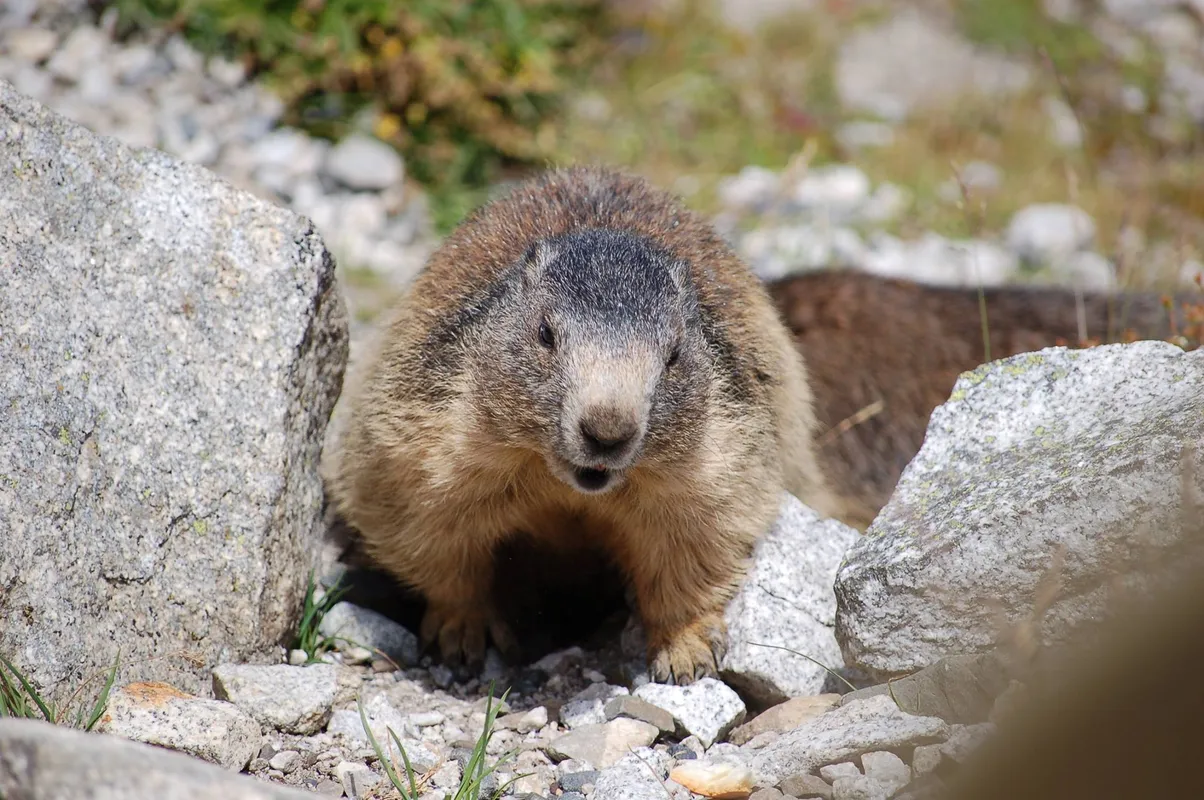
They whistle, stand on their hind legs, and sometimes let themselves be approached very closely. Every summer, marmots are among the stars of the hiking trails in Haute-Savoie. However, offering them a piece of food, even a simple dandelion, is far from a harmless gesture. This reflex, often motivated by good intentions, can have real consequences on their health and behavior.
“It’s just a dandelion,” really?
Many hikers think there is no risk in offering a flower or some leaves to a marmot. After all, dandelion naturally forms part of its diet.
The problem is not so much what you give it, but the act of feeding it.
A wild marmot spends a large part of its day searching for food. This activity is essential to its way of life and allows it to build the fat reserves necessary to survive the five to six months of hibernation. Changing this behavior, even temporarily, disrupts a balance built over thousands of years of evolution.
Marmots become dependent on humans
By being fed repeatedly, some marmots quickly associate humans with an easy food source. They then become less wary and approach closer and closer to trails, picnic areas, or parking lots. This behavioral change increases risks:
- bites or scratches when the animal demands food;
- accidents near roads and parking areas;
- conflicts with visitors when animals become persistent.
In several natural areas, managers thus remind us that a wild animal must keep its distance from humans.
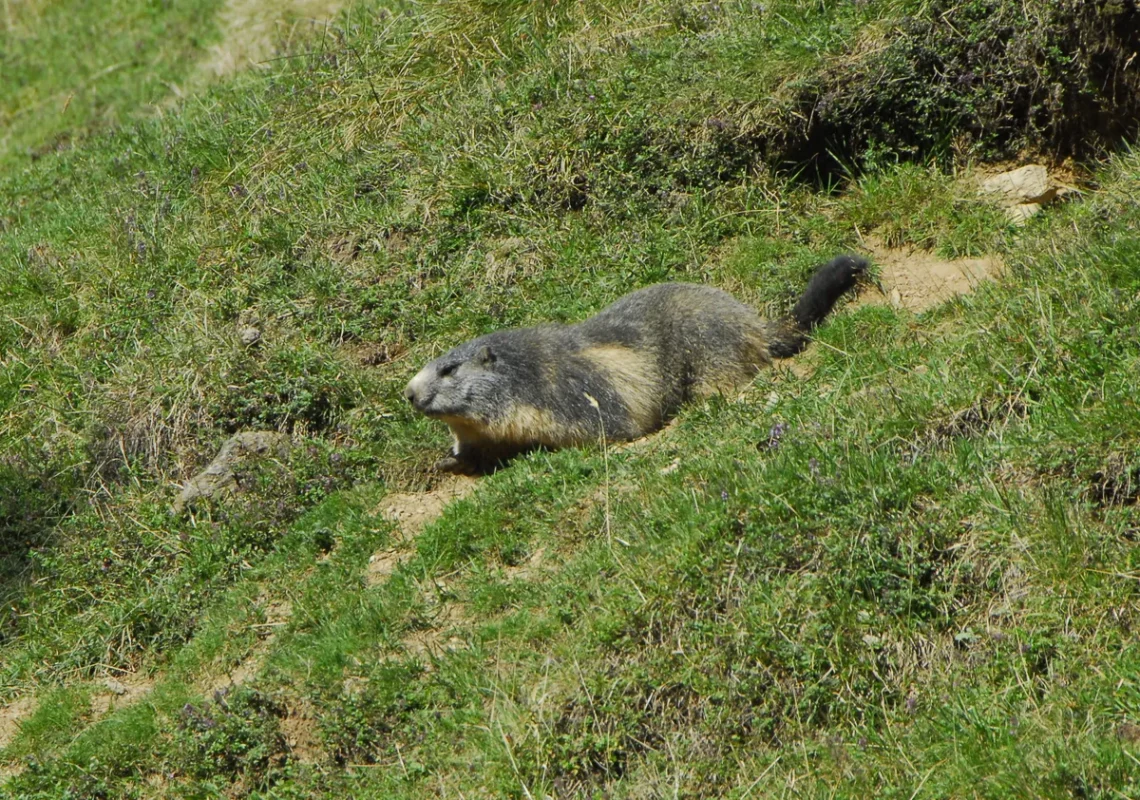
Picnic leftovers are even more dangerous
If the dandelion is not toxic for a marmot, the food brought by hikers often is. Bread, biscuits, chocolate, chips, dried fruits, charcuterie, or sweets are completely unsuitable for its body. These foods rich in sugar, salt or fats can cause digestive problems, promote certain diseases, and harm the formation of the energy reserves on which it depends to get through the winter.
A successful photo is not worth a disturbed animal
Social networks have widely popularized images of marmots eating from visitors’ hands. Yet these scenes are rarely beneficial for the animal.
To get the perfect photo, some walkers get very close, block the path, or wait in front of burrows with food. This repeated stress can disrupt feeding phases, predator vigilance, and the colony’s tranquility.
Observing a marmot from a distance remains the best way to enjoy the show without altering its natural behavior.
To read: Where to observe marmots in Haute-Savoie? The best spots to discover!
How to observe marmots without harming them?
Some simple gestures allow you to enjoy their presence while respecting wildlife:
- keep several meters of distance;
- never try to attract them with food;
- use a zoom or binoculars to photograph them;
- avoid shouting and sudden movements;
- do not leave any trash or picnic leftovers behind.
These good practices benefit not only marmots, but all mountain wildlife.
My advice
If a marmot spontaneously approaches you, resist the temptation to give it something. The best gift you can offer is to let it live like a true marmot… finding its own food in the alpine pastures.