The mountain ranges of Haute-Savoie: between nature, heritage, and adventure
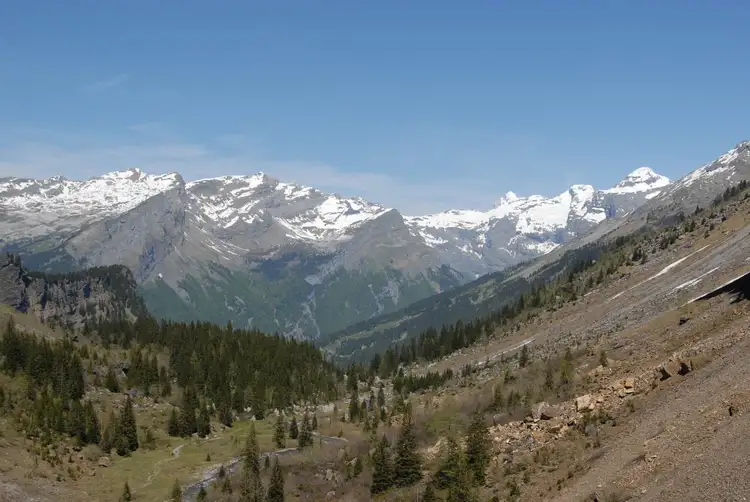
Haute-Savoie is a true paradise for mountain enthusiasts. Its majestic mountain ranges offer a diversity of breathtaking landscapes, with iconic peaks, verdant valleys, and imposing glaciers. Each of these ranges has its own characteristics, tourist attractions, and offers a multitude of activities for all tastes and levels.
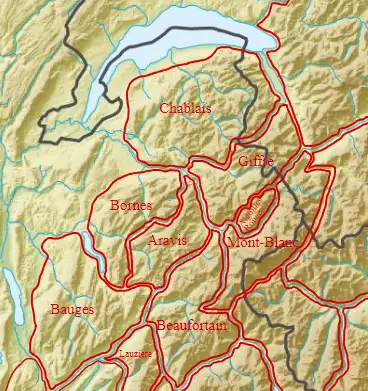
Here is an overview of the main mountain ranges of Haute-Savoie:
The Mont-Blanc range
Characteristics:
The Mont-Blanc range is undoubtedly the most famous and imposing in Haute-Savoie. It peaks at 4,809 meters with Mont-Blanc, the highest summit in Western Europe. It is a granite massif with steep walls, vast glaciers, and deep valleys.
Location:
This range is located at the border between France, Italy, and Switzerland, occupying a large part of southeastern Haute-Savoie, near Chamonix and the Italian Alps.
Main tourist attractions:
- The Aiguille du Midi: Accessible by cable car from Chamonix, this summit at 3,842 meters offers a breathtaking view of Mont-Blanc and the surrounding peaks. You can also venture into the famous “Pas dans le Vide” attraction.
- The Vallée Blanche: One of the longest off-piste ski descents in the world, this adventure takes you through the massif’s glaciers, surrounded by spectacular scenery.
- Mont-Blanc: The summit itself is a popular destination for climbers from around the globe. It is a demanding ascent but offers an unparalleled reward.
- The Mont-Blanc Tramway: This historic rack railway takes you from Saint-Gervais to the Nid d’Aigle, the starting point for many hikes and climbs.
The Aravis range
Characteristics:
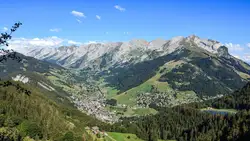
The Aravis range is known for its limestone mountains, offering a gentler landscape than Mont-Blanc, but equally impressive. It peaks at 2,752 meters with the Pointe Percée, famous for its unusual shape.
Location:
The Aravis range stretches between Annecy and the Arve valley, encompassing the ski resorts of La Clusaz, Le Grand-Bornand, and Manigod.
Main tourist attractions:
- The Col des Aravis: One of the most famous mountain passes, offering a splendid view of Mont-Blanc. It is a key route for hikers and cyclists, often included in the Tour de France route.
- La Clusaz: A renowned ski resort, La Clusaz offers a varied ski area in winter, and activities like mountain biking, hiking, and paragliding in summer.
- Le Grand-Bornand: A typically Savoyard village, this resort is also popular for its winter sports and local product markets. In summer, the surrounding alpine pastures are suited to hikes accessible to all.
- The Pointe Percée: An emblematic summit of the range, the Pointe Percée is a favorite destination for experienced climbers and hikers.
The Bornes range
Characteristics:
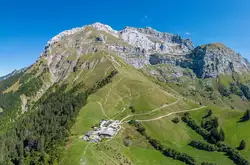
The Bornes range is made up of limestone mountains with rugged reliefs, but relatively accessible. It is ideal for nature lovers, thanks to its vast plateaus, forests, and high-altitude meadows.
Location:
The Bornes range is located west of the Aravis range, between Annecy and the Arve valley.
Main tourist attractions:
- The Plateau des Glières: A key site of the Resistance during World War II, the Plateau des Glières is now a preserved natural area. In winter, it turns into a zone for Nordic skiing, while in summer it attracts hikers and history enthusiasts.
- La Tournette: This summit overlooking Lake Annecy reaches 2,351 meters. It is a very popular hike for its exceptional panorama over the lake and surrounding mountains.
- The Fier Gorges: Located nearby, these gorges offer a spectacular walk along suspended walkways above the river, between impressive rocky walls.
The Chablais range
Characteristics:
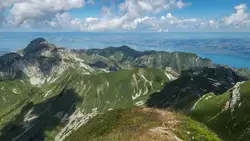
The Chablais range is distinguished by its gentle, green reliefs, limestone mountains, and numerous lakes. It is an accessible and family-friendly range, ideal for nature holidays.
Location:
The Chablais range is located north of Haute-Savoie, near Lake Geneva and the Swiss border.
Main tourist attractions:
- Morzine–Avoriaz: Famous ski resorts of the Portes du Soleil area, Morzine and Avoriaz offer varied slopes in winter, and activities such as mountain biking and hiking in summer.
- Montriond Lake: This glacial lake nestled in the heart of the mountains is an ideal place for swimming, canoeing, and picnics in summer. In winter, it transforms into a magnificent snowy landscape.
- Mont de Grange: A nature reserve and emblematic summit of Chablais, Mont de Grange is a paradise for hikers, with its forests and alpine pastures.
The Bauges range
Characteristics:
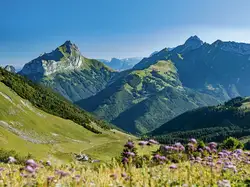
The Bauges range, also limestone, is a protected area, recognized for its exceptional biodiversity. It is a gentler and less frequented range, perfect for peaceful nature getaways.
Location:
The Bauges range stretches between Haute-Savoie and Savoie, near the towns of Annecy and Aix-les-Bains.
Main tourist attractions:
- The Parc naturel régional du Massif des Bauges: A UNESCO global geopark, this park offers a multitude of outdoor activities: hiking, mountain biking, climbing, and discovery of local fauna and flora.
- Le Semnoz: This summit accessible by car offers a breathtaking view of the Alps, Lake Annecy, and Mont-Blanc. It is also a family ski resort in winter, and a hiking spot in summer.
- Mont Colombier: A signature hike of the range, Mont Colombier offers an exceptional panorama over the Bauges range and the surrounding Alps.
The Giffre range
Characteristics:
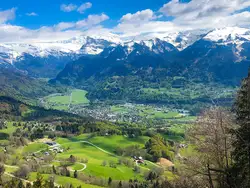
The Giffre range is dominated by impressive rocky peaks and deep valleys. Its landscapes alternate between steep mountains and green plains.
Location:
The Giffre range is located in eastern Haute-Savoie, near the Swiss border and not far from Chamonix.
Main tourist attractions:
- The Cirque du Fer-à-Cheval: This impressive horseshoe-shaped natural formation is a jewel of the Giffre valley. With its steep cliffs and waterfalls, it is a top destination for hikers and lovers of grand landscapes.
- Samoëns: A picturesque village and ski resort, Samoëns is an ideal base for exploring the Grand Massif ski area, which also includes Flaine and Les Carroz.
- La Cascade du Rouget: Nicknamed the “Queen of the Alps,” this waterfall is one of the most spectacular in the region, with a height of more than 90 meters.
The Aiguilles Rouges range
Characteristics:
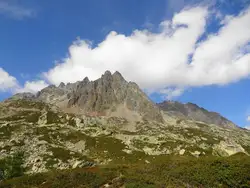
Less known than its neighbor, the Mont-Blanc range, the Aiguilles Rouges range nevertheless offers equally spectacular landscapes, with its pointed peaks and high-altitude lakes.
Location:
Located just opposite the Mont-Blanc range, north of the Chamonix valley, it offers an unobstructed view of the roof of Europe.
Main tourist attractions:
- Le Lac Blanc: One of the most popular hikes in the range, Lac Blanc offers an exceptional panorama of Mont-Blanc and its glaciers. It is a favorite spot for photographers and alpine landscape enthusiasts.
- The Aiguilles Rouges Nature Reserve: This reserve protects diverse fauna and flora. You can observe ibex, chamois, and numerous bird species, all in a wild setting.
- Le Brévent: Accessible by cable car from Chamonix, Le Brévent offers a panoramic view of Mont-Blanc and the surrounding peaks. It is a popular place for summer hikes and ski runs in winter.
The Salève range
Characteristics:
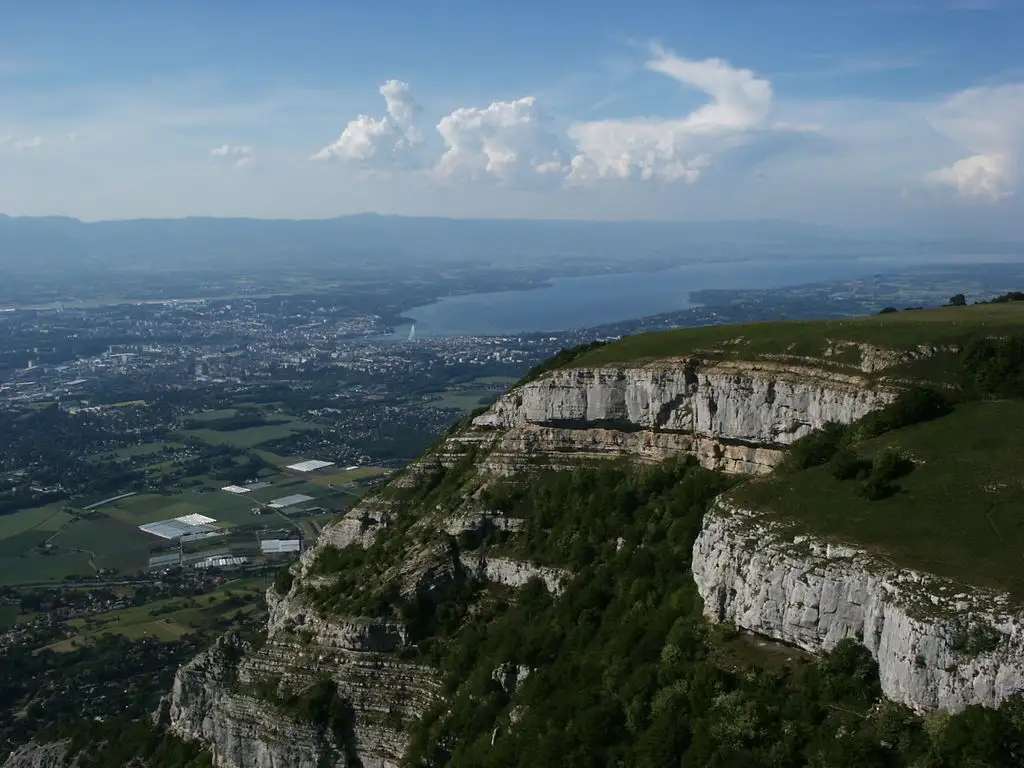
Mont Salève, nicknamed the “Balcony of Geneva,” is a pre-Alpine massif located in Haute-Savoie, at the border with Switzerland. It is a popular spot for outdoor activities and exceptional panoramas.
Location:
The Salève range is an isolated pre-Alpine relief, located at the southwestern end of the Swiss plateau. It neighbors the Chablais range (east), the Bornes range (south), and the Jura (northwest), to which it is geologically linked.
Main tourist attractions:
- Spectacular panoramas: Unobstructed views of Geneva, Lake Geneva, and, in clear weather, the Alps, including Mont-Blanc. Numerous viewpoints, especially at the summit, offering varied landscapes.
- Sporting and outdoor activities:
- Hiking: Several marked trails for different levels (Sentier du Pas de l’Échelle, Grand Salève).
- Paragliding: One of the best launch sites to fly over the region.
- Climbing: Cliffs suited for climbers, notably the Grandes Varappes cliffs.
- Biking and mountain biking: Trails for amateur and experienced cyclists.
- Trail running: A prime location for mountain runners.
- Salève cable car: A quick connection between Veyrier and the summit, offering a panoramic ascent. Ideal for visitors wishing to easily access the heights.
- Natural richness and biodiversity: Diverse fauna and flora, particularly in protected zones. Forests, alpine pastures, and limestone grasslands shelter rare species.
- Cultural and historical points of interest: Exhibition space dedicated to the massif’s nature and heritage. Traces of the mountain’s geological and human history, visible during hikes.
Each mountain range of Haute-Savoie has its unique character, with activities and landscapes suited to all types of travelers. Whether you are a winter sports enthusiast, hiker, or simply seeking unspoiled nature, the mountains of the region are an unmissable destination.
But don’t forget to respect this environment! In this regard, find some good practice advice for mountain hiking.
Also discover the main waterfalls of Haute-Savoie, as well as the major lakes.
Article mis à jour le 22 April 2026