
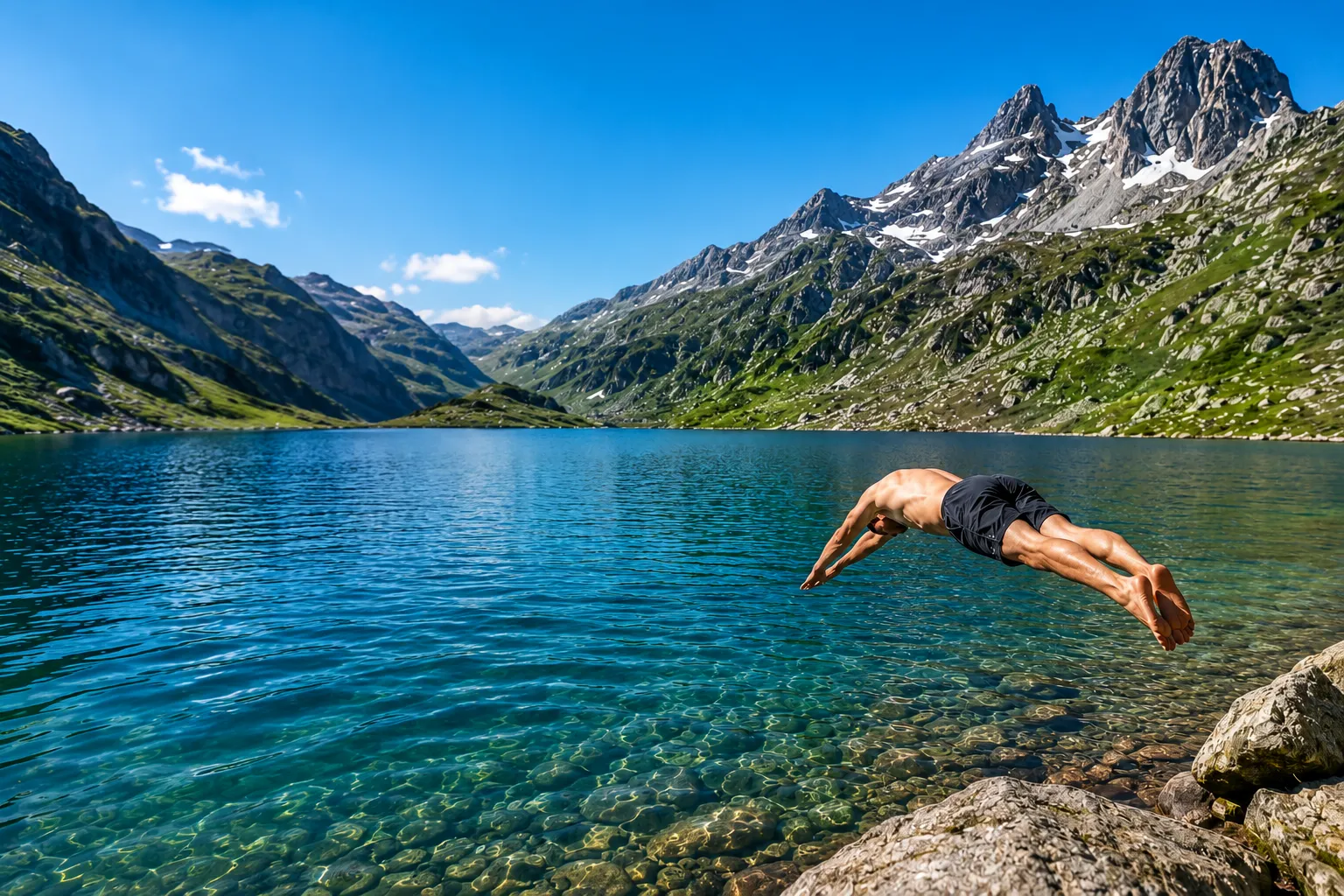
Every summer, the mountain lakes attract thousands of visitors seeking freshness. Their crystal-clear water and spectacular landscapes make you want to take a dip after a hike or during a hot day. Yet, behind this idyllic image lies a danger often underestimated: cold water shock. Even the most experienced swimmers are not safe.
Water that looks welcoming… but often remains very cold
In the middle of summer, it is not uncommon for air temperature to exceed 30 °C in Haute-Savoie. After several hours spent in the sun or physical exertion, the first reflex is often to jump into the lake to cool off.
The problem is that the water temperature remains much lower than one might think. In many high-altitude lakes, it ranges between 12 and 20 °C depending on altitude, depth, and exposure. Even the most frequented bodies of water retain very cold areas, especially a few meters from the shore.
It is precisely this thermal contrast that can cause cold water shock.
Cold water shock, a thermal shock that can be brutal
Contrary to popular belief, cold water shock is not only related to poor physical condition or lack of training. It is a reaction of the body to sudden immersion in water much colder than body temperature. The thermal shock can cause:
- a sudden fainting;
- difficulty breathing;
- loss of consciousness;
- in the most severe cases, cardiac arrest.
When a person loses consciousness in the water, even a few seconds are enough for the situation to become dramatic.
Why experienced swimmers are not protected
Knowing how to swim well helps reduce certain risks, but it does not protect against a physiological reaction. An athlete, triathlete, or excellent swimmer can be a victim of cold water shock just as much as a person not used to cold water.
The danger is sometimes even increased when coming out of intense effort. After a hike, a run, or a bike ride, the body is warm, blood vessels are dilated, and the heart works harder. Immediate immersion in cold water then causes an extremely sudden change that the body may struggle to adapt to.
Circumstances that greatly increase the risk
Certain situations regularly appear in summer accidents:
- jumping directly into the water after prolonged sun exposure;
- entering the lake just after intense physical effort;
- swimming after a heavy meal or alcohol consumption;
- diving into a deep area where the water is much colder;
- overestimating one’s ability to tolerate cold water.
The risk is particularly high during the first moments of immersion, when the body undergoes thermal shock.
Good practices before entering a lake
Some simple gestures significantly reduce the risk of cold water shock.
Before swimming, it is recommended to:
- enter the water progressively;
- wet first the arms, legs, neck, and chest;
- wait a few minutes for the body to get used to the temperature;
- avoid swimming after intense effort without a recovery period;
- never swim alone.
These precautions take only a few minutes but can make all the difference.
The lakes of Haute-Savoie are magnificent… but demand respect
From Lake Montriond to Lake Passy, passing by Lake des Ilettes or the beaches of Lake Léman and Lake Annecy, there are many swimming opportunities.
But they all have one thing in common: their temperature can vary quickly, sometimes even just a few meters apart. Currents, underwater springs, or depth often keep the water much colder than at the surface.
This reality explains why rescue services remind every summer that caution remains essential, even when conditions seem ideal.
Also as a reminder, swimming is even forbidden in the majority of high-altitude mountain lakes.
Enjoying the mountains without taking risks
Swimming in mountain lakes remains one of the great pleasures of summer. It offers an incomparable sensation of freshness and allows you to discover exceptional landscapes.
But it should never be forgotten that cold water represents a risk in itself. Cold water shock occurs without warning and makes no distinction between a beginner and an experienced swimmer. By taking the time to enter the water progressively and respecting basic safety guidelines, it is possible to fully enjoy these natural sites while greatly limiting risks.