
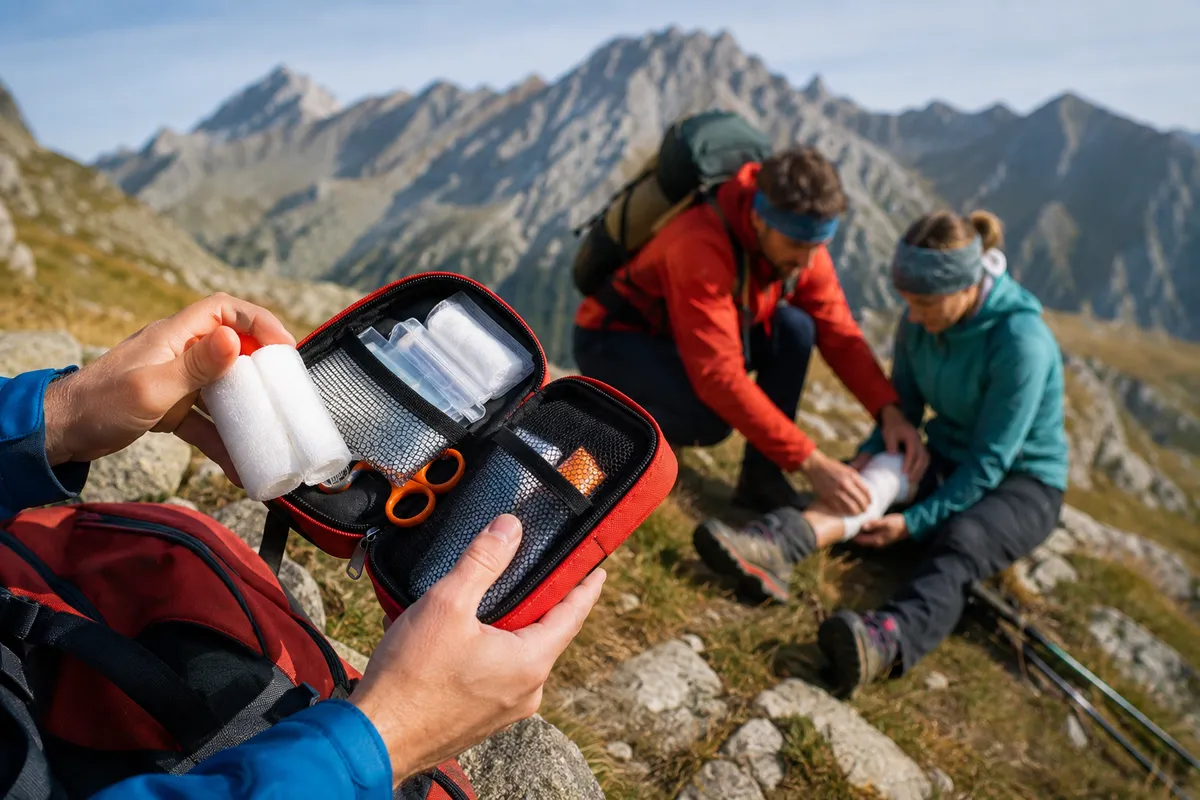
A fall, a fainting, hypothermia… In the mountains, rescue teams can take many minutes to arrive. To help hikers, trail runners, and mountaineers respond effectively, a group of experts has just made first aid sheets freely available, accessible even without a network. A simple reflex that could make all the difference.
Every summer, thousands of people travel the trails of the Alps. While most outings take place without incident, an accident can quickly turn a beautiful day into an emergency situation. In the mountains, remoteness, terrain, or lack of phone coverage often complicate rescue interventions.
It is in this context that a group bringing together emergency physicians, mountain rescue specialists, guides, rescuers, and several sports federations has developed first aid memo sheets accessible free of charge to all.
Sheets designed to be used in the field
Unlike a complete first aid manual, these sheets go straight to the point. Their goal is to remind the correct actions when stress makes decision-making difficult.
They notably cover:
- the course of action in the face of an unconscious victim;
- hemorrhages;
- traumas;
- hypothermia;
- frostbite;
- airway obstruction;
- analysis of the situation before providing aid.
Their very visual presentation allows important information to be quickly found, even in difficult conditions. The documents can be downloaded in advance on a smartphone to be consulted without an internet connection, or printed to be slipped into a backpack. They are freely downloadable on the fichespremiersecours.fr website .
In the mountains, the first few minutes are often decisive
When an accident occurs far from a road or a refuge, those present are the first who can intervene.
Without replacing specialized rescue services, a few simple actions can help limit the worsening of a victim’s condition while waiting for rescue teams to arrive. That is precisely the purpose of these sheets: providing a reliable reminder when every minute counts.
A supplement, not a training course
The creators emphasize an essential point: these sheets do not replace a real first aid training.
They are designed as a decision support tool, intended especially for practitioners already familiar with rescue gestures. Taking a training course like Citizens’ First Aid (PSC) remains the best way to acquire the right reflexes and know how to intervene effectively in real situations.
My advice
Before each hike, download these sheets on your phone, along with your GPS track and the map of the area. In the mountains, it is common to lose mobile network: having this information offline can help you keep the right reflexes if an unforeseen event occurs.
I also advise you to take a first aid training course, which for me is an essential foundation that everyone should follow, hiker or not. Many organizations offer them: Red Cross, firefighters, civil protection…).
Prevention remains your best ally
Even equipped with these sheets, the best accident is the one that is avoided. Before leaving, always take the time to check the weather, choose a route suitable for your level, inform a close contact of your itinerary, carry enough water, a first aid kit, and a fully charged phone. Professionals remind that preparation remains the primary safety factor in the mountains.