Faced with ever-increasing attendance, the local authorities of the Pays du Mont-Blanc and the Chamonix Valley want to better regulate the Tour du Mont-Blanc (TMB). A code of conduct is currently being prepared and should come into effect from the summer season 2027. Its objective: to preserve the trails, limit the impacts on natural environments, and promote a more responsible practice of hiking.
A route victim of its success
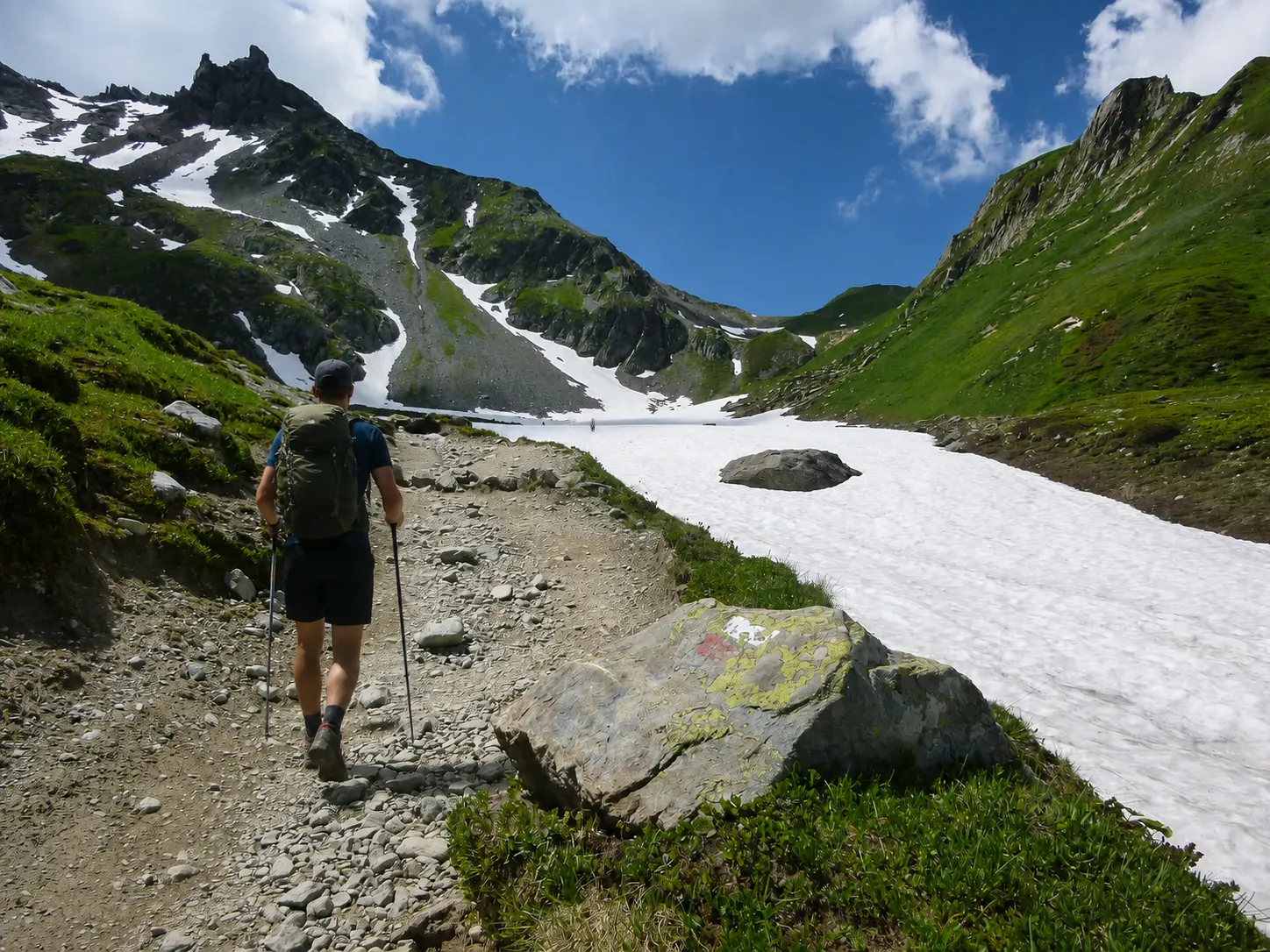
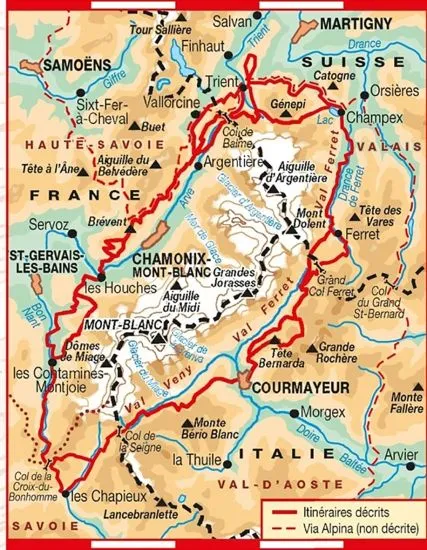
With its 170 kilometers of trails crossing France, Italy, and Switzerland, the Tour du Mont-Blanc is considered one of the most beautiful treks in the world. Each year, several tens of thousands of hikers come to travel this legendary loop in seven to ten days.
But this popularity has a downside. The heavy summer attendance leads to accelerated trail wear, increasing pressure on refuges, difficulties in waste management, and sometimes behaviors that show little respect for the environment.
A charter to better regulate practices
To address these challenges, the Communauté de communes du Pays du Mont-Blanc (CCPMB) and the Communauté de communes de la Vallée de Chamonix-Mont-Blanc are jointly working on the development of an official code of conduct.
Led notably by Jean-Marc Peillex, president of the CCPMB and mayor of Saint-Gervais-les-Bains, this document aims to define common rules to better protect natural areas while ensuring harmonious coexistence between the various mountain users.
Implementation planned for 2027

The charter is currently being drafted and should be operational by the summer season 2027.
The challenge will also be to gain the support of the Italian municipalities of the Aosta Valley and the Swiss of Valais, since the Tour du Mont-Blanc crosses the three countries. Cross-border coordination is already underway to harmonize practices across the entire route.
What rules might be put in place?
At this stage, the precise content of the charter has not yet been revealed. However, it could notably remind several principles already widely encouraged on major hiking trails:
- respect marked trails;
- limit bivouacking to authorized areas;
- always carry down your waste;
- respect wildlife, flora, and herds;
- anticipate refuge reservations;
- adopt responsible behavior towards other users.
The aim would not be to restrict access to the Tour du Mont-Blanc, but rather to guide hikers towards more sustainable practices to preserve this exceptional natural heritage.
A challenge for the future of the massif
The Tour du Mont-Blanc has become a symbol of European mountain tourism. Its success greatly benefits the local economy but also imposes new challenges on the authorities responsible for preserving the landscapes and infrastructures.
This future regulation fits into a trend already observed at several highly frequented natural sites in the Alps, where visitor flow management becomes a major challenge to reconcile tourist attractiveness with environmental protection.