
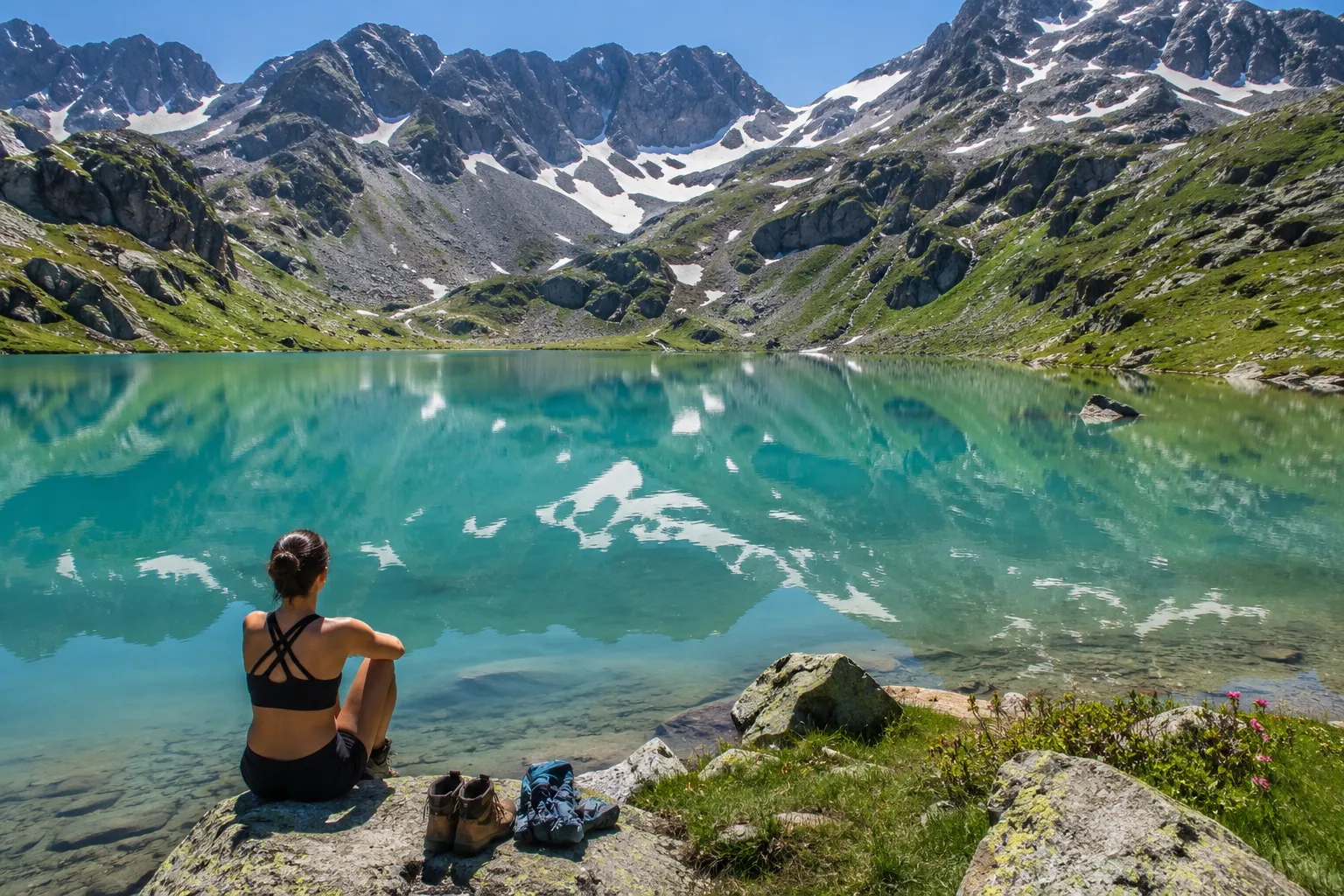
With the heatwave settling in, the temptation is great. After a hike under the sun, facing turquoise water that looks perfect, many dream of a refreshing dip in a mountain lake. However, this swim can be much more dangerous than it seems.
The image is well known: a high-altitude lake with crystal-clear waters, surrounded by still green peaks. The setting immediately makes you want to take off your hiking boots and jump into the water.
But what the eye does not see is the actual temperature of the lake.
Water often icy cold, even in the middle of summer
Unlike lowland lakes that warm gradually over weeks, mountain lakes remain fed by melting snow, underground springs, and high-altitude streams.
Result: even when the thermometer shows 35 °C in the valley, some lakes over 1,500 meters rarely exceed 10 to 15 °C.
This sharp difference between body temperature and water temperature can cause what specialists call cold shock.
The real danger: cold shock
Cold shock occurs when the body is suddenly exposed to very cold water after physical exertion or prolonged sun exposure. The consequences can be immediate:
- difficulty breathing;
- increased heart rate;
- loss of muscle control;
- fainting;
- drowning in the most severe cases.
Every year, accidents are recorded in mountain lakes and rivers for this reason. After several hours of walking, the body is often dehydrated, the core temperature elevated, and fatigue already present. All conditions are met to increase the risk.
A surprising depth
Another trap of high-altitude lakes is their depth. The water is often so clear that it gives a misleading impression of shallow depth. In reality, some basins drop off rapidly to several tens of meters. Once in cold water, movements become more difficult and fatigue sets in much faster than one might imagine.
Even a good swimmer can find themselves in difficulty after a few minutes.
Fragile natural environments
Swimming also raises an environmental issue.
Mountain lakes are often especially sensitive ecosystems. Sunscreen, accidental waste, or simply repeated trampling of the banks can disrupt a fauna and flora that sometimes take decades to adapt to the altitude conditions.
It is also for this reason that swimming is regulated or discouraged in certain sites.
So, should you give up completely?
Not necessarily.
When swimming is allowed, some simple precautions help limit risks:
- enter the water gradually;
- avoid swimming immediately after intense effort;
- never dive in directly;
- do not swim alone;
- leave immediately in case of intense cold sensation or breathing difficulty.
The ideal often remains to enjoy the view without necessarily immersing yourself completely.
The most beautiful role of a mountain lake may not be what you think
During episodes of intense heat, high-altitude lakes already offer an incredible feeling of freshness without the need to swim in them. Simply sitting for a few minutes on their banks, over 1,500 meters above sea level, often allows you to gain several degrees compared to overheated valleys.
Facing these turquoise waters, the best idea is therefore not always to jump in. Sometimes, the greatest luxury simply consists in contemplating the landscape and enjoying the natural coolness of the mountain.