
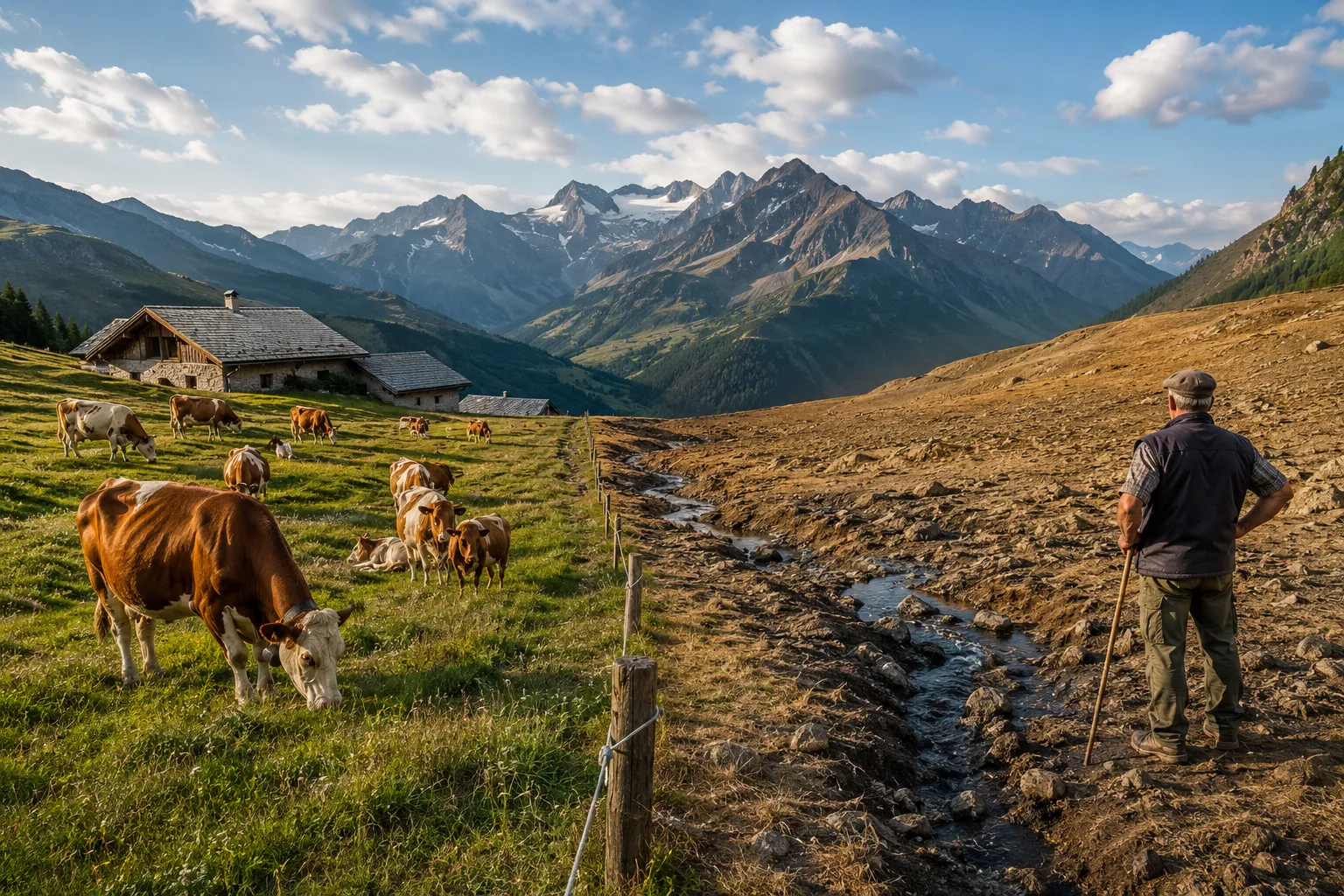
Each summer, the high pastures of Haute-Savoie welcome back their herds, their summer chalets, and their famous farmhouse cheeses. But behind this iconic image of the mountains, breeders today have to deal with an increasingly worrying reality: climate change is profoundly transforming pastoral practices that are sometimes centuries old.
Summer pastures that no longer resemble those of the past
For a long time, the ascent to the high pastures followed an almost immutable rhythm. The herds reached the high-altitude meadows at the beginning of summer to take advantage of abundant grass and cooler weather.
Today, this schedule is increasingly disrupted. Early springs accelerate the growth of grass, while summer drought episodes cause it to disappear much faster than before. In some parts of Haute-Savoie, pastures lose part of their richness by mid-summer, forcing breeders to rethink the organization of their summer pastures.
Water becomes one of the main concerns
Once abundant, some springs that feed the high pastures now see their flow decrease in the heart of summer. During periods of intense heat, water supply sometimes becomes a real challenge.
To continue supporting the herds at altitude, some operators invest in tanks, set up new water points, or have to transport water to the pastures. These solutions represent an additional cost and illustrate the ongoing adaptation of pastoralism in the face of global warming.
Landscapes that are progressively changing
Climate change is also modifying the vegetation of the high pastures. Certain mountain flowers, particularly adapted to cool climates, are becoming less common, while species more resistant to heat are gradually establishing themselves.
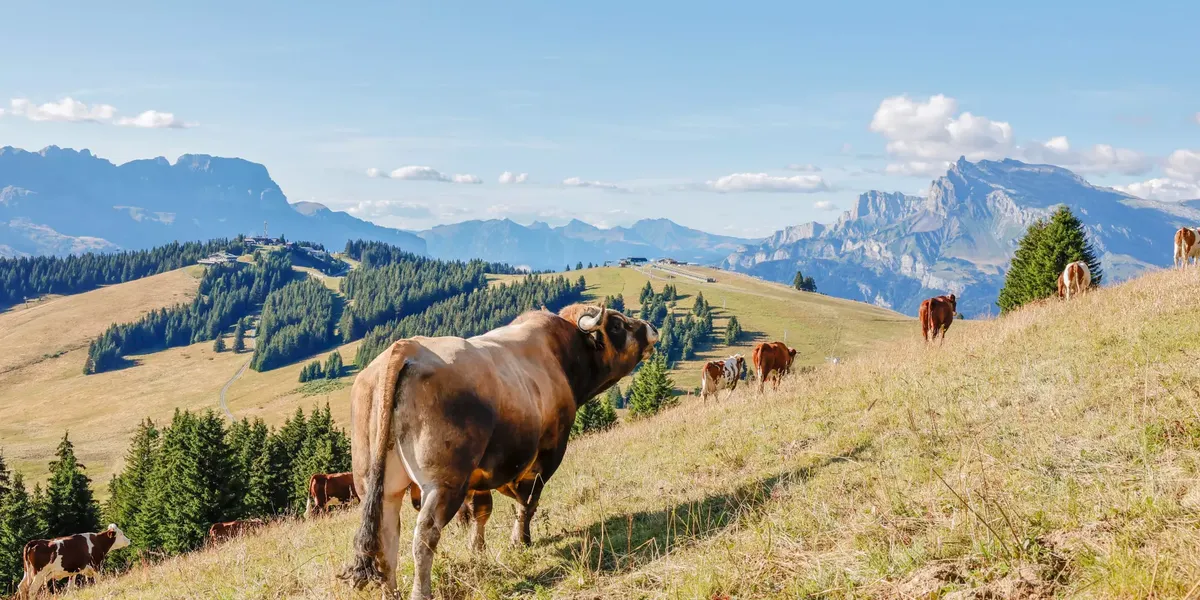
These changes are not only about the landscape. They also influence the diet of the herds and, indirectly, the characteristics of the cheeses produced in summer pastures, such as farmhouse reblochon or abondance, whose quality is closely linked to the diversity of alpine meadows.
Breeders adapt ancestral know-how
Faced with these new constraints, mountain professionals evolve their practices without giving up their craft.
The most common adaptations include:
- more flexible dates for ascent and descent to the high pastures;
- more precise grazing management to preserve resources;
- securing water reserves;
- restoration of wetlands capable of better retaining water;
- closer monitoring of herd health during periods of intense heat.
These adjustments help preserve an activity essential to the economy and identity of the Haute-Savoie valleys.
A living heritage to preserve
High pastures do not only produce milk and cheeses. For generations, they have shaped the landscapes of Haute-Savoie, maintain natural environments rich in biodiversity, and attract thousands of hikers each year.
Without grazing, a large part of these open spaces would gradually be reclaimed by shrubs and then by forest. Preserving pastoralism thus also means preserving the iconic panoramas of the Aravis, Chablais, Mont-Blanc massif, and the Bornes.
Traditions that must evolve to last
Climate change does not only challenge the working conditions of breeders: it is gradually transforming an entire cultural heritage made up of know-how, transhumance, cheese-making, and mountain life.
Despite these challenges, local stakeholders adapt, innovate, and seek solutions to maintain traditions that are part of Haute-Savoie’s identity. A fragile but essential balance, so that the high pastures continue to be living landscapes as well as symbols of Alpine heritage.