
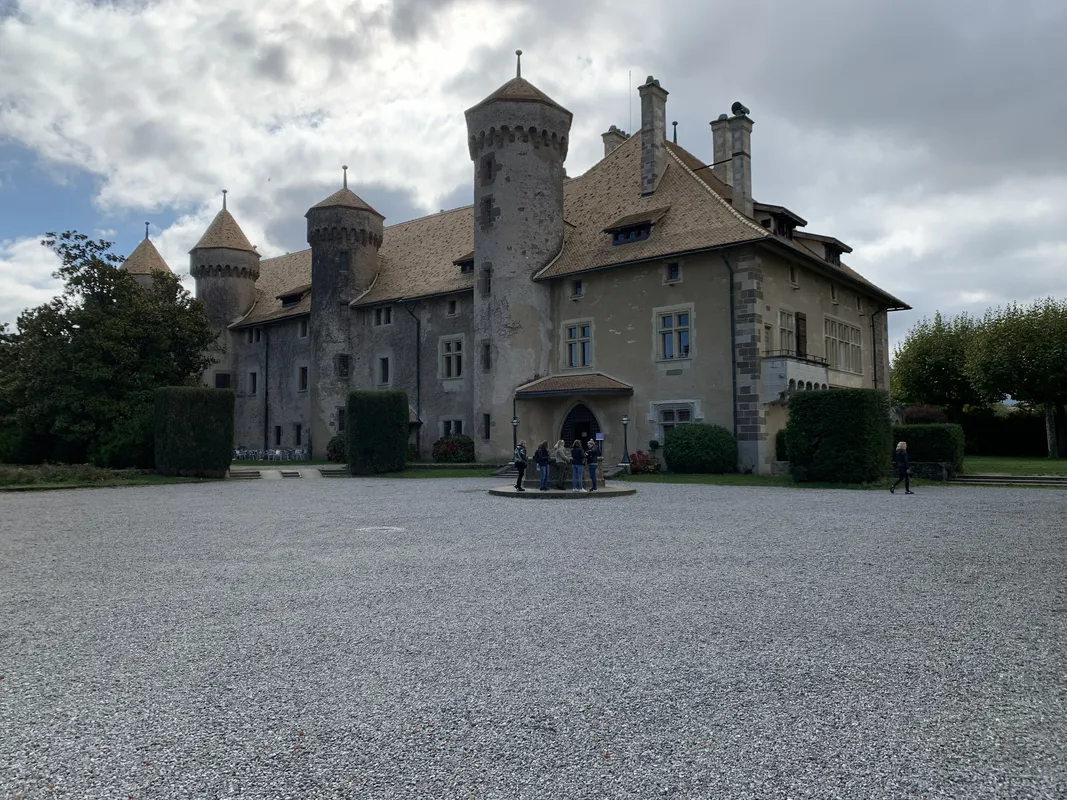
Located at the gates of Thonon-les-Bains, just steps from Lake Geneva, the Château de Ripaille is one of the most emblematic historical monuments of Haute-Savoie. Former residence of the Dukes of Savoy, Carthusian monastery, then a residence transformed during the Belle Époque, Ripaille spans several centuries of history. Its estate, gardens, and vineyard make it an essential visit today during a stay on the shores of Lake Geneva.
The Château de Ripaille, an exceptional site on the shores of Lake Geneva
Just a few minutes from the center of Thonon-les-Bains hides an astonishing estate. Behind its walls, the Château de Ripaille combines a castle, gardens, a vineyard, and vast natural areas.
The architecture itself bears witness to the different lives of the monument. Elements inherited from the Middle Ages sit alongside the developments made at the beginning of the 20th century, when Ripaille underwent a spectacular restoration.
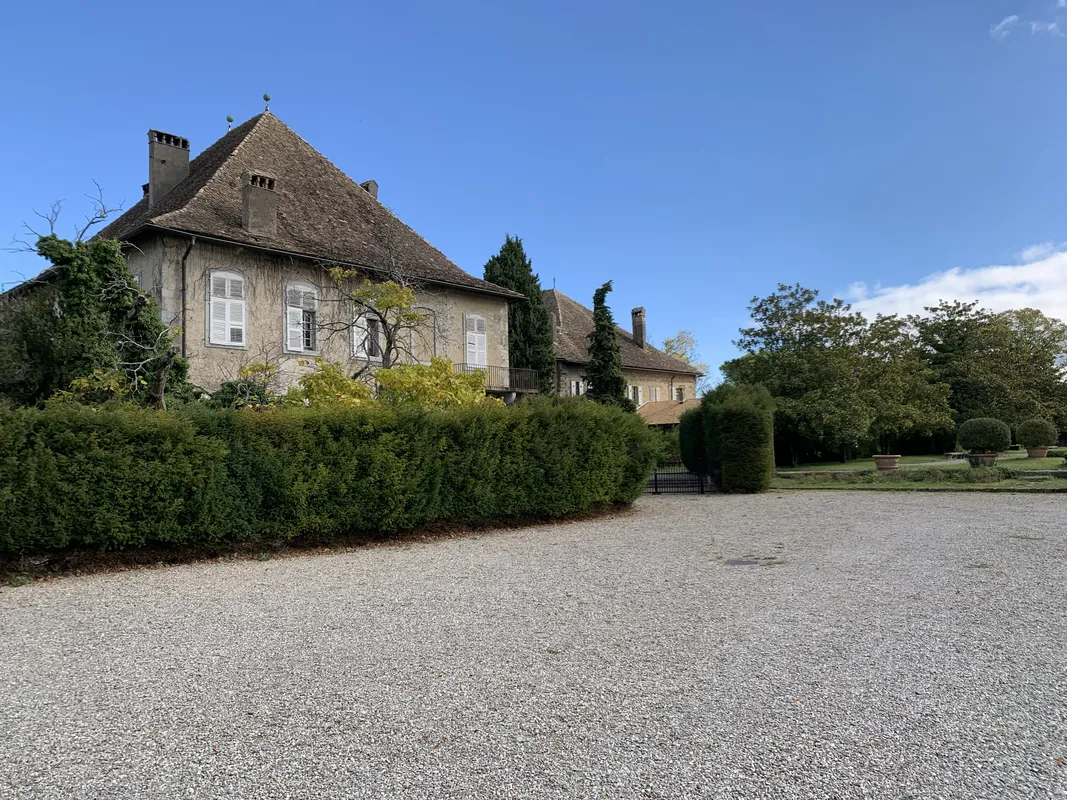
This layering of eras is what makes the visit so interesting: in just a few rooms, one moves from the history of the House of Savoy to that of the Carthusians, before discovering the much more comfortable and refined world of a wealthy family from the Belle Époque.
A history closely linked to the House of Savoy
The history of Ripaille goes back long before the construction of the current château. The estate was frequented from the Middle Ages by the Counts of Savoy, who particularly appreciated its vast forested areas for hunting. But it was in the 15th century that Ripaille truly took on a new dimension.
In 1434, Amadeus VIII, the first Duke of Savoy, built the château. The place was then conceived as a retreat where the sovereign could lead a more contemplative life, surrounded by a few companions.
Amadeus VIII is one of the great figures of Savoyard history. After significantly strengthening his states, he gradually withdrew from political life. His fate then took an exceptional turn as he became, in the complex context of the Church schism, Pope Felix V.
Ripaille thus preserves the memory of a time when the House of Savoy held a major place in the political history of the Alps.
A château once equipped with seven towers
The château built under Amadeus VIII originally had seven towers, associated with seven apartments. The whole was designed to accommodate the duke and the lords who accompanied him to his retreat. Ripaille was therefore not simply a military fortress or a ceremonial residence: the estate also had an important spiritual dimension.
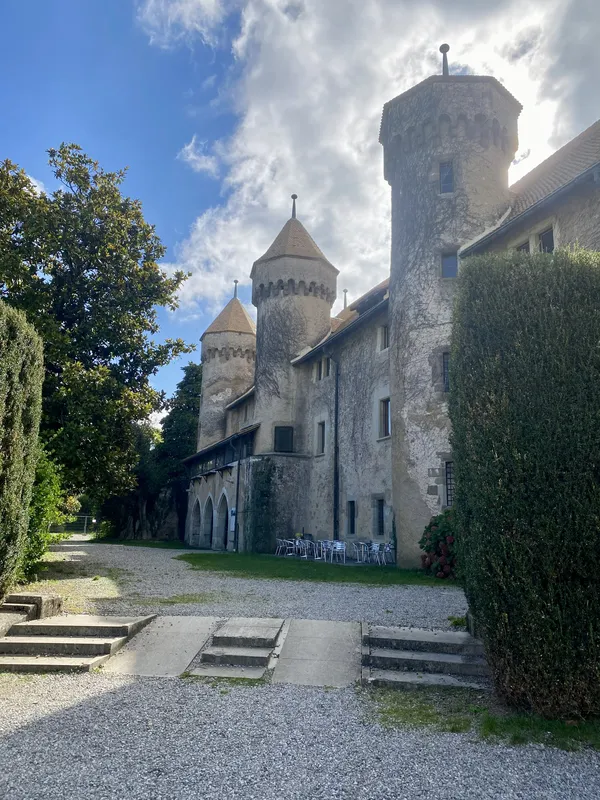
However, the monument has been profoundly transformed over the centuries. Visitors today discover a building whose appearance is the result of this long succession of historical periods.
Ripaille becomes a Carthusian monastery in the 17th century
A new chapter opened in 1622, when Ripaille became a Carthusian monastery. The Carthusians occupied the estate for nearly two centuries. The site was then protected from the outside world by a vast enclosure wall, part of which is still visible today.
The monks also developed agricultural land and the vineyard. This monastic presence strongly contributed to Ripaille’s identity, particularly its vineyard’s history. However, the estate’s winemaking tradition is much older: the vines may have been cultivated there since the Gallo-Roman era.
The French Revolution put an end to this long religious period.
The spectacular revival of Ripaille during the Belle Époque
After several changes of owners and a period of decline, the château experienced a spectacular revival at the end of the 19th and the beginning of the 20th century.
In 1892, the estate entered the Necker-Engel family. A few years later, the Alsatian industrialist Frédéric Engel-Gros, a great art enthusiast, undertook to bring the château back to life. The restoration work truly began around 1900.
His ambition was not only to restore a medieval monument. He involved European architects, artists, and craftsmen to transform Ripaille into a residence reflecting the tastes and comfort of its time.
The result is particularly original: behind the historical appearance of the estate lie interiors characteristic of the Belle Époque and Art Nouveau. This is now one of the great surprises of the visit.
What can you see during a visit to the Château de Ripaille?
The current route allows visitors to go through the different eras of the estate’s history.
The Amédée Room
The Amédée Room brings the visitor back to the 14th and 15th centuries and the era of the House of Savoy.
It notably presents original items related to this period and helps to understand the importance of Ripaille in Savoyard history.
The 1900 route
The contrast becomes striking when entering the spaces devoted to the early 20th-century restoration. The 1900 Route includes several rooms recreating daily life in the château during the Belle Époque.
You can discover in particular:
- an old kitchen;
- the Engel-Gros family dining room;
- a boudoir;
- furniture and decorations typical of the early 20th century.
These spaces help to understand how a wealthy industrial family could live in a large residence at the turn of the last century.
The terrace and medieval moats
The visit also continues outside. The large terrace and the old moats recall the medieval origins of the monument and offer another perspective on its architecture.
The route also includes films dedicated to the history and renovation of Ripaille as well as rooms regularly hosting temporary exhibitions.
A château surrounded by a historic vineyard
It is impossible to talk about Ripaille without mentioning its wine. The château is surrounded by about 22 hectares of vines, mainly planted with chasselas. The vineyard benefits from a privileged location: proximity to Lake Geneva helps moderate temperatures while the soils from glacial formations are particularly permeable. Ripaille’s white wine is now one of the territory’s emblematic productions.
The vineyard is also one of the geosites of the UNESCO Chablais Global Geopark. A discovery trail allows visitors to explore the surroundings of the château and the vineyard while enjoying, in particular, a beautiful view towards the Dent d’Oche.
A shop located at the château’s entrance allows purchasing wine produced on the estate.
Where does the expression « faire ripaille » come from?
It is tempting to imagine that the famous expression « faire ripaille », meaning to eat and drink abundantly, comes directly from the lavish meals held at the château. The story is, however, more complicated.
According to the Thonon Tourist Office, the name Ripaille would rather derive from the term « ripes », used formerly to designate the scrublands present on these lands. The connection between the estate’s name and the popular expression has nevertheless greatly contributed to the legend surrounding the château.
Ripaille is also associated with an old saying: « Qui n’a point vu Ripaille, n’a jamais rien vu qui ne vaille », still highlighted today to evoke the site’s richness.
The forest and arboretum of Ripaille
Ripaille is not limited to its château. The vast estate also includes a remarkable forest, notably inherited from the former hunting grounds of the counts and dukes of Savoy.
The old oak forest extends over about 53 hectares. The pedunculate oaks are one of the estate’s major natural riches.
It also houses the Arboretum Sylvetum André Engel, created between 1930 and 1934 to study the adaptation of different forest species to the local climate.
However, be aware: access to the different natural areas of the estate may change. It is therefore better to check their opening before planning a walk in addition to the château visit.
The National Memorial of the Righteous
The Ripaille estate also has an important memorial dimension. In the forest stands the National Memorial of the Righteous, inaugurated in 1997. It pays tribute to the women and men who helped, hid, or saved Jews during World War II.
The site thus reminds us that Ripaille is at once a historic, natural, and memorial space.
How much time should you plan to visit the Château de Ripaille?
To properly discover the château, it is recommended to allow at least 1 hour 30 minutes, particularly with the audio guide. In practice, plan rather two hours if you want to take your time, explore the outdoors, and enjoy the shop.
Half a day can easily be devoted to Ripaille if you combine the château visit with the vineyard and a walk in the accessible areas of the estate.
Visiting Ripaille with children
The château can also make for an interesting family outing. Two activity booklets are offered to children, one focused on history and the other on the environment. They make discovering the estate more playful.
Workshops and activities for children are also organized at certain times, especially on Wednesdays. The schedule varies throughout the season.
The “Summer Times” visits in summer 2026
During summer 2026, Ripaille also offers an interesting formula to discover the estate differently. From July 6 to August 28, 2026, guided “Summer Times” visits take place on weekdays at 3 p.m..
They last about 1 hour 30 minutes and include a tasting. The announced rates range from €11 to €17, with free admission for children up to 7 years old.
Other events punctuate the season: Murder Party, workshops, themed visits, European Heritage Days, Halloween activities, and even a Christmas market.
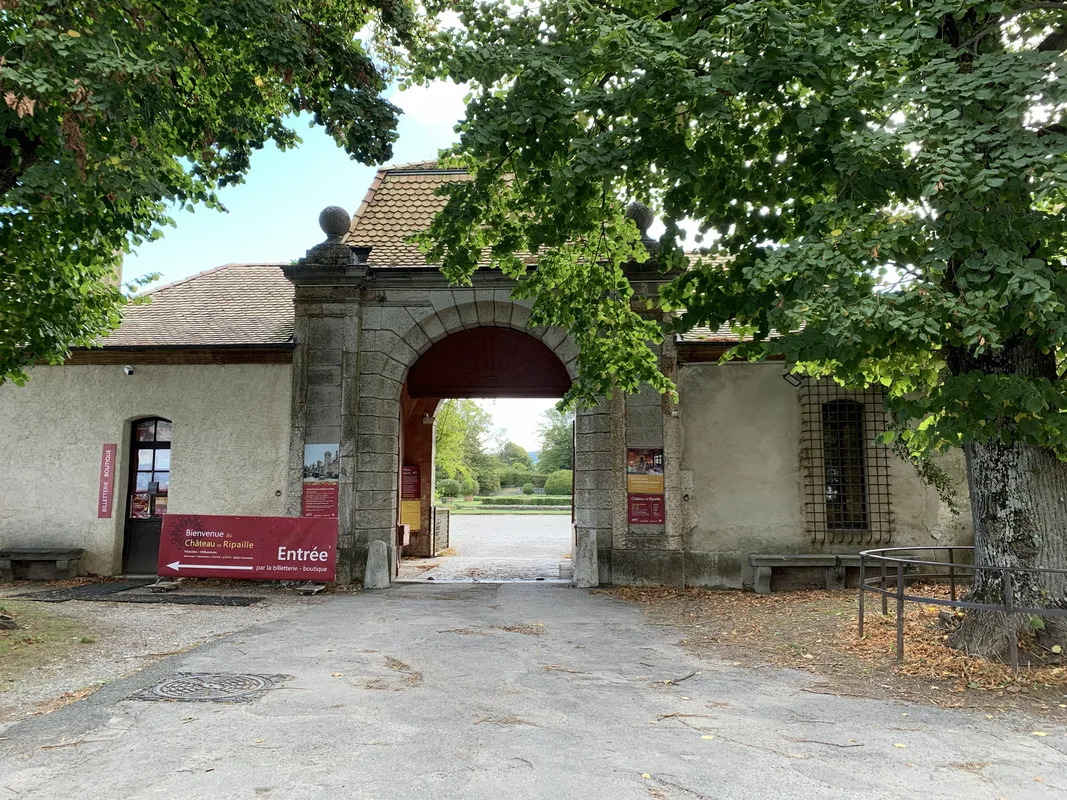
Practical information for visiting the Château de Ripaille in 2026
Address
Château de Ripaille – Fondation Ripaille
83 avenue de Ripaille
74200 Thonon-les-Bains
The estate is located a few minutes from the city center of Thonon and in close proximity to Lake Geneva.
Opening hours 2026
For the main tourist season 2026, the château is open from April 1 to November 1, from Tuesday to Sunday:
Tuesday to Friday: 10 a.m. – 6 p.m.
Saturday: 10 a.m. – 5 p.m.
Sunday: 10 a.m. – 6 p.m.
The last admission is one hour before closing. The château is also open during certain school holidays, especially in February and during the end-of-year holidays.
Exceptional closures may occur during events. It is therefore prudent to check the calendar before your visit.
Prices 2026
Individual prices announced are:
- adult: €12;
- youth 7 to 17 years: €6;
- under 7 years: free;
- reduced rate: €9;
- persons with disabilities: €5;
- family package: €31 for two adults and at least two children.
The audio guide in French, English, or German is offered for an additional €3. The activity booklets for children cost €2.
Parking
A free parking lot with about 35 spaces is available on-site.
Getting there by public transport
The estate is also accessible by public transport. The L bus line serves the Ripaille stop in summer or the Forêt de Ripaille stop. It is also possible to reach Thonon by train or boat before continuing to the estate.
Accessibility
The gardens and rooms located on the ground floor of the château are accessible to people with disabilities. However, the entire interior route is not accessible.
Are dogs allowed?
No. Dogs and other pets are not allowed inside Ripaille’s grounds.
My advice for visiting Ripaille
Plan at least two hours and don’t limit yourself to the château’s interior: much of Ripaille’s charm lies in the combination of heritage, vineyard, and Lake Geneva landscapes. In summer, prioritize a morning visit to more calmly discover the outdoors before the hottest hours.
If you are a wine enthusiast, the summer visits including a tasting are also a good way to understand why viticulture occupies such an important place in the estate’s history.
What to do around the Château de Ripaille?
The château’s location easily allows complementing the visit with a discovery of Thonon-les-Bains.
The historic center, Rives harbor, and the shores of Lake Geneva are quickly accessible. The path along the estate and vineyard also offers a pleasant option to extend the walk.
Ripaille can thus perfectly fit into a day including a morning château visit, lunch in Thonon, then a walk on the shores of Lake Geneva in the afternoon.
Why visit the Château de Ripaille?
Ripaille is much more than a simple medieval château.
Few sites in Haute-Savoie allow visitors to cross so many eras during a single visit. The visitor successively discovers the history of the Counts and Dukes of Savoy, Amadeus VIII’s retreat, several centuries of religious presence, then the incredible transformation of the estate into a Belle Époque residence.
Add to this a historic vineyard, vast natural areas, and an exceptional location on the shores of Lake Geneva, and one understands why Ripaille is among the major heritage visits of the Chablais region.
Official site and reservations
As schedules may change and exceptional closures may be scheduled on certain days, it is better to consult updated information before your visit:
Official site of the Château and Domaine de Ripaille
Official ticketing of the Château de Ripaille
FAQ – Château de Ripaille
Where is the Château de Ripaille located?
The château is located at 83 avenue de Ripaille in Thonon-les-Bains, in Haute-Savoie, very close to Lake Geneva.
Who built the Château de Ripaille?
The current château was built in 1434 at the initiative of Amadeus VIII, the first Duke of Savoy.
How long does it take to visit Ripaille?
It is recommended to allow at least 1 hour 30 minutes. Two hours allow for a more relaxed experience of the château and its outdoors.
Can you visit Ripaille’s vineyard?
The estate is surrounded by about 22 hectares of vines and a trail allows visitors to discover the château and its vineyard. Summer visits with tastings are also offered on certain dates.
Can you visit Ripaille with children?
Yes. Activity booklets and various activities are offered to children. Admission is free for those under 7 years old for individual visits.
Is free parking available?
Yes. Free parking with about 35 spaces is available on-site.
Can you come with your dog?
No, pets are not allowed inside the estate grounds.