As successive heatwaves stifle metropolises and overheat the Mediterranean coast, a clear choice is made by holidaymakers: to abandon the burning concrete and seek a second breath at altitude. This summer again, the phenomenon of “coolcationing” (the search for cool holiday destinations) is booming, and Haute-Savoie is asserting itself as the most coveted sanctuary in the Hexagon.
Between mythical peaks, crystal-clear lakes, and soothing microclimates, a dive into the heart of a territory that has become the new Eldorado for summer climate refugees.
1. The physics of altitude: precious degrees gained
The first argument is purely mathematical: in free atmosphere, we lose on average 0.65 °C every 100 meters of altitude. A simple equation that completely changes the holiday experience.
- In the valley (Annecy, Évian, Thonon): Even if the days are warm there, the proximity of water bodies creates a constant thermal breeze effect that softens the sensation.
- In mid-mountain (1,000 m – 1,500 m): In resorts like La Clusaz, Le Grand-Bornand, or Morzine, the thermometer ideally oscillates between 22 °C and 25 °C during the day.
- At high altitude (above 2,000 m): At the summit of the Aiguilles Rouges or near Brévent, the air remains tonic and pure, perfect for exertion without risking overheating.
| Zone | Afternoon feels-like temperature | Main advantage |
| Plain / Metropolis | 35 °C to 38 °C | Stifling heat |
| Valley & Lakes (400 m) | 28 °C to 30 °C | Swimming and lake breeze |
| Mid-altitude (1,200 m) | 22 °C to 24 °C | Ideal outdoor activities |
| Peaks (> 2,000 m) | 15 °C to 18 °C | Fresh sharpness and pure air |
The summer Grail: restorative sleep. True luxury is not only experienced during the day but at night. Far from urban “tropical nights” where the mercury refuses to drop below 20 °C, the altitude guarantees a spectacular nocturnal thermal drop (often between 10 °C and 14 °C). Enough to turn off the air conditioning and reopen the windows.
2. The Haute-Savoie privilege: the marriage of water and rock
What sets Haute-Savoie apart from other Alpine massifs is its exceptional hydrographic network. Water is everywhere, in all its forms, creating a unique temperate continental climate.
The freshwater giants: Annecy and Léman
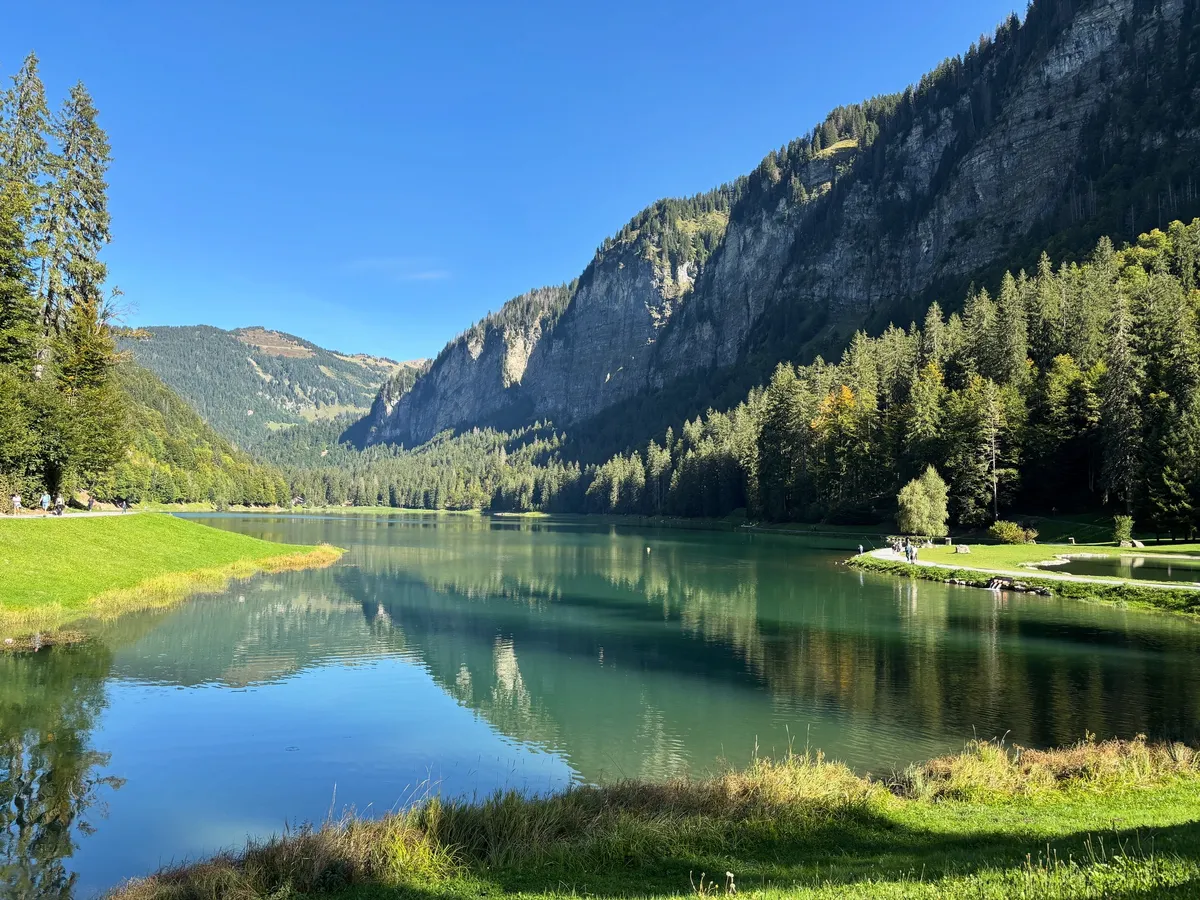
Nicknamed the “purest lake in Europe,” Lake Annecy offers water around 24 °C in summer. The same applies to the French side of Lake Léman, from Évian to Yvoire. This lake-mountain combo allows you to chain a morning hike with an afternoon session of paddleboarding, sailing, or diving, facing a grandiose alpine-and-lake panorama.
The “natural mistmaker” effect of waterfalls and gorges
For a beneficial thermal shock, travelers rush to the undergrowth and canyons.
- The Rouget waterfall at Sixt-Fer-à-Cheval (nicknamed the Queen of the Alps) projects a chilled mist visible several tens of meters away.
- The Gorges du Fier or the Désert de Platé offer shaded oases where the constant humidity of the rock maintains an ambient temperature 10 °C lower than uncovered areas.
3. From intense sport to “Slow Tourism”: the mountain reinvented
Long associated only with skiing or extreme mountaineering, the Haute-Savoie mountain has succeeded in its summer transformation. Resorts now adapt their rhythms to the heat:
- Morning and twilight hikes: People head out at dawn to observe marmots and ibexes to enjoy the dew, or go up late afternoon to watch the sunset over the Mont-Blanc massif.
- White water activities: Rafting on the Arve, canyoning in the Giffre valley, or hydrospeed provide an adrenaline rush amid water coming directly down from glaciers.
- High-altitude refuges and disconnection: Spending a night in a refuge (such as at Col de Balme or Lac Blanc) has become the ultimate experience to escape urban frenzy and sleep under a starry sky preserved from any light pollution.
A lasting paradigm shift
The quest for freshness is no longer a mere holiday choice: it reflects a profound change in our lifestyles facing climatic hazards. By combining the power of its landscapes, the freshness of its nights, and the richness of its natural heritage, Haute-Savoie no longer settles for being a secondary summer destination. It has become, for many, the first choice.