Living in Haute-Savoie means having Switzerland as your neighboring garden. In less than an hour’s drive from Annecy, Thonon-les-Bains, or Saint-Julien-en-Genevois, you change country, currency, and often language, without ever really leaving the Alps. Between Lake Geneva, the terraced vineyards, and the Valais peaks, French-speaking Switzerland and its surroundings offer a concentration of excursions accessible for a day trip or a weekend.
In brief
- Less than 1h30 driving: Geneva, Nyon, Lausanne, the Vaud Riviera (Montreux, Vevey) and the UNESCO vineyards of Lavaux are perfect for a day outing.
- For a weekend: Gruyères, Zermatt and the Matterhorn, or the Bernese Oberland (Interlaken) deserve at least one overnight stay.
- Practical side: a valid ID card or passport is enough (Schengen area), but Switzerland pays in Swiss francs (CHF) and is not in the EU, so plan some local currency or a card without foreign fees.
- The Swiss rail network (SBB) is one of the most reliable in Europe: beyond Geneva, the train often becomes more comfortable than the car to reach mountain resorts.
Geneva, the international city on the shore of Lake Geneva
The natural gateway to Switzerland for any Haute-Savoie resident, Geneva can be visited in half a day or a full day depending on your desire to stroll. The Jet d’Eau, symbol of the city, can be seen from afar from the quays; the old town perched around Saint Peter’s Cathedral retains its cobbled streets and 18th-century facades. The Nations district, with the UN headquarters and its many museums (including the International Red Cross Museum), recalls the city’s unique diplomatic role.
For a nature break, the Pâquis baths offer urban swimming in the lake, and the English Garden with its famous flower clock remains a classic for a walk by the water. Geneva is also great for shopping or gastronomy outings, with historic chocolatiers and the Molard market.
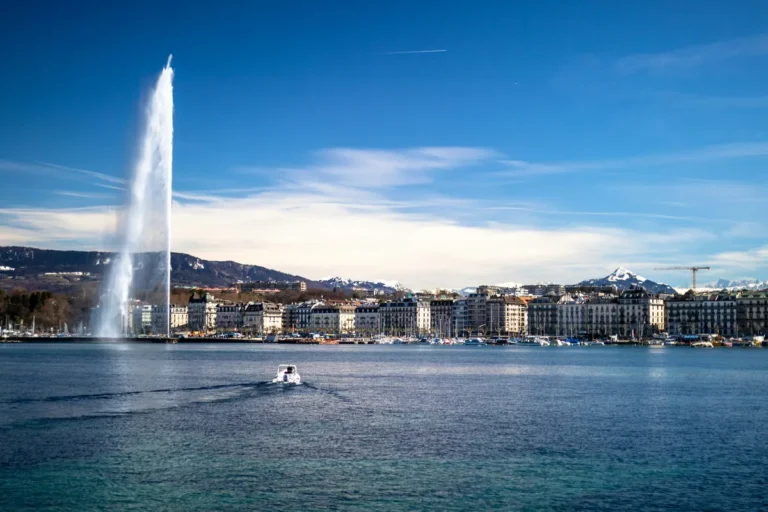
From Haute-Savoie: Annecy is about 35-45 minutes’ drive from Geneva, and Thonon-les-Bains is less than 45 minutes by following the lake. It’s the easiest excursion to improvise, even in the evening.
Also read: Visit Geneva: 15 must-see places to discover
Nyon, the discreet little sister of Lake Geneva
About twenty minutes from Geneva, Nyon deserves a detour for its medieval castle overlooking the lake, its lively market, and its atmosphere of a small lakeside town much quieter than its big neighbor. The Lake Geneva Museum tells the story of navigation on the lake, and the harbor allows boarding for a cruise to Yvoire, on the French side, or to Geneva.
Nyon easily combines with a visit to Geneva in the same day, or with a start towards Lausanne for those who want to continue on the Vaud Riviera.
Lausanne, Olympic capital perched on its hills
Built like an amphitheater above Lake Geneva, Lausanne surprises with its relief: the Gothic cathedral dominates the old town, connected to the lakeside district (Ouchy) by a historic funicular, the “m2”. As the seat of the International Olympic Committee, the city houses the Olympic Museum, one of the most visited in the country, with collections retracing the history of the Games.
Ouchy, the lakefront, lends itself to a stroll along the water, with views of the Savoy Alps on the other side of the lake, a nice nod to visitors coming from Haute-Savoie. The Flon, a former industrial district turned into a lively area, concentrates shops, bars, and nightlife.
From Haute-Savoie: allow about 1h to 1h15 drive from Annecy via Geneva. Train service also exists, with connections in Geneva or Annemasse.
Montreux and Chillon Castle, the Vaud Riviera
Montreux benefits from a microclimate that allows palm trees and cypresses to grow by Lake Geneva, giving this stretch of shore a nearly Mediterranean atmosphere. The city owes part of its fame to its jazz festival, but it’s worth a visit all year round for its flowered promenade and its immediate proximity to Chillon Castle.
Set on a rocky islet by the lake, Chillon Castle is one of the most visited monuments in Switzerland: its vaulted rooms, medieval prison (made famous by Lord Byron’s poem), and views over the Vaud and Savoy Alps make it an essential stop, accessible on foot or by boat from Montreux.
From Haute-Savoie: about 1h15 to 1h30 drive from Annecy.
Lavaux, the terraced vineyards classified by UNESCO
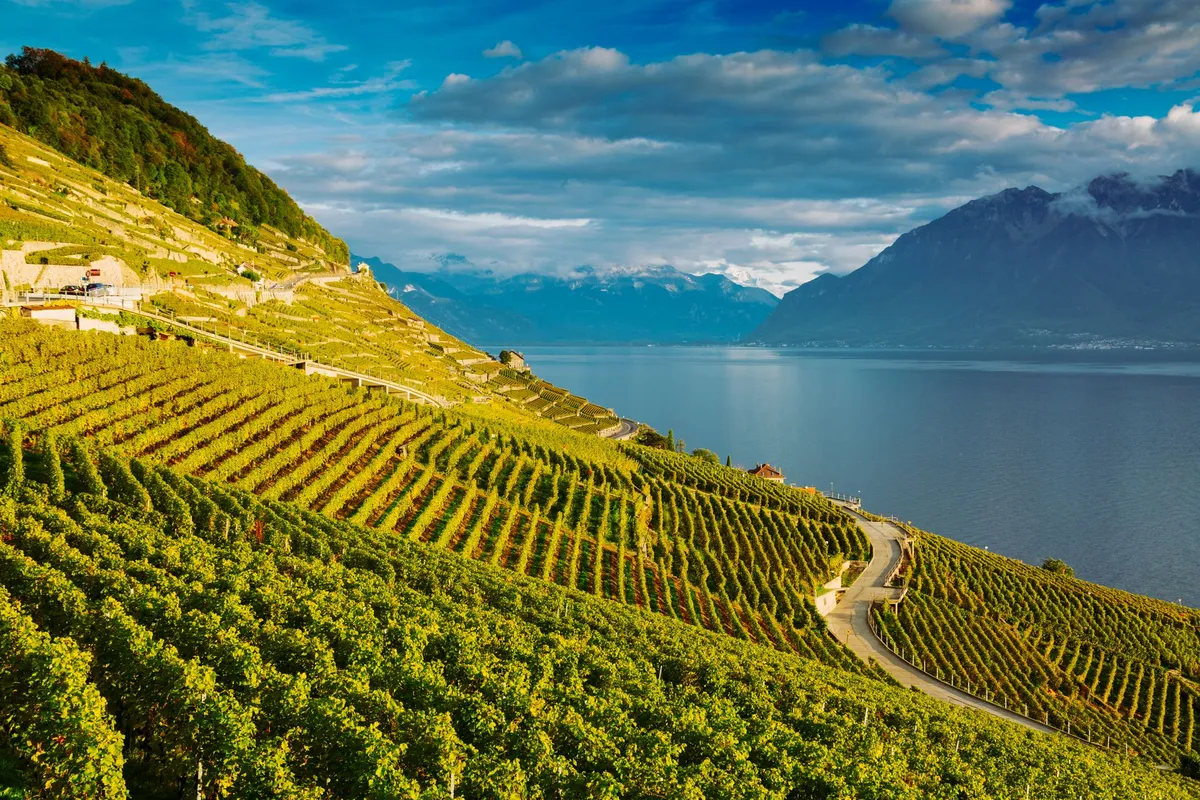
Between Lausanne and Montreux, the Lavaux slopes spread out nearly 800 hectares of terraced vineyards, cultivated since the 11th century by Cistercian monks. Listed as a UNESCO World Heritage site since 2007, this landscape offers a tiered view: the lake below, the vines in the foreground, and the Alps as a backdrop on the other side of the water.
The local grape variety, chasselas, produces a mineral white wine rarely exported; tasting at a winemaker’s cellar in Cully, Rivaz or Épesses remains the best way to sample it. The little vineyard train, linking Vevey to Puidoux through the terraces, lets you discover the landscape effortlessly; walkers will prefer the paths connecting the wine villages, particularly photogenic at harvest time in October.
Gruyères, the medieval town of the cheese country
Perched on its hill in the canton of Fribourg, the village of Gruyères lines its stone houses along a single main street, without modern signs to break the medieval charm. Gruyères Castle, continuously inhabited since the 13th century, is visited for its tapestry collections and, surprisingly, for the museum dedicated to the Swiss artist H.R. Giger, creator of the creature in the film Alien.
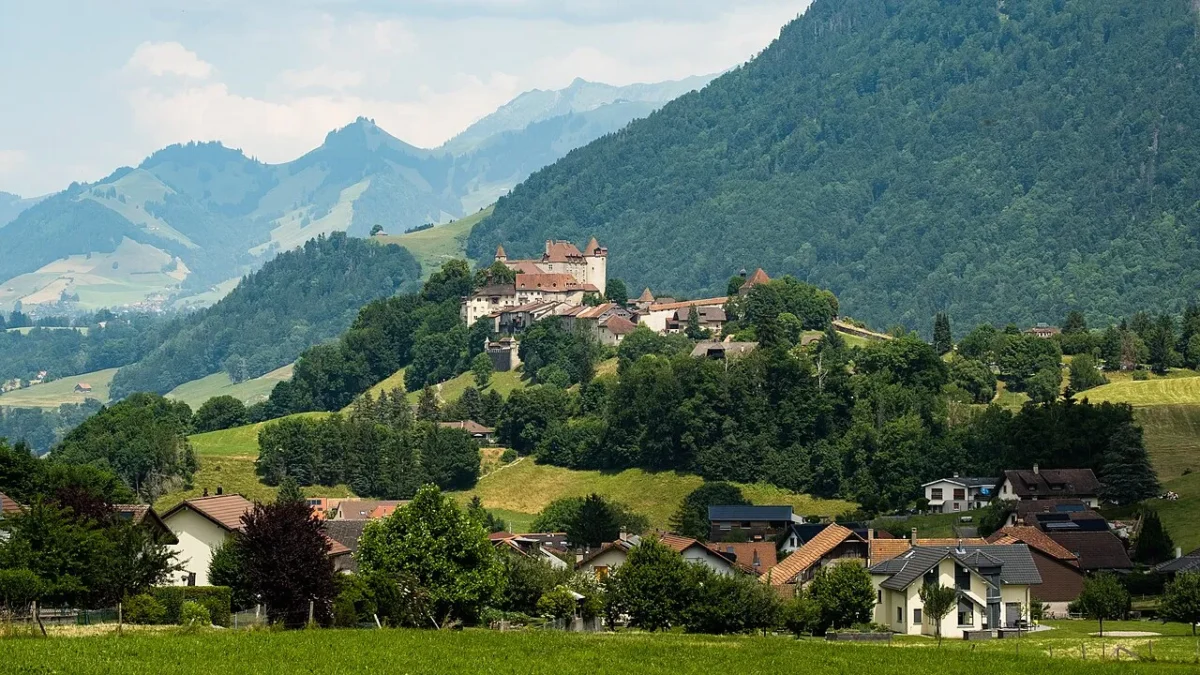
Impossible to pass through Gruyères without stopping at La Maison du Gruyère, at the village entrance, where you can follow all stages of AOP cheese production before tasting it at different maturation stages. The Gruyère double cream, a local dairy specialty, perfectly completes a gourmet break.
From Haute-Savoie: allow 1h45 to 2h drive from Annecy, via Geneva and Bulle. A day trip is possible, but Gruyères also fits well as a stop on a broader Swiss weekend.
Zermatt and the Matterhorn, the alpine excursion for a weekend
Further in Valais, Zermatt deserves a detour for mountain lovers. A car-free village since 1947, dominated by the silhouette of the Matterhorn (4,478 m), Zermatt combines high-level skiing in winter and spectacular hiking in summer, with a ski domain connected to neighboring Italy. The Klein Matterhorn cable car climbs to 3,883 m, offering one of the most breathtaking panoramas in the Alps.
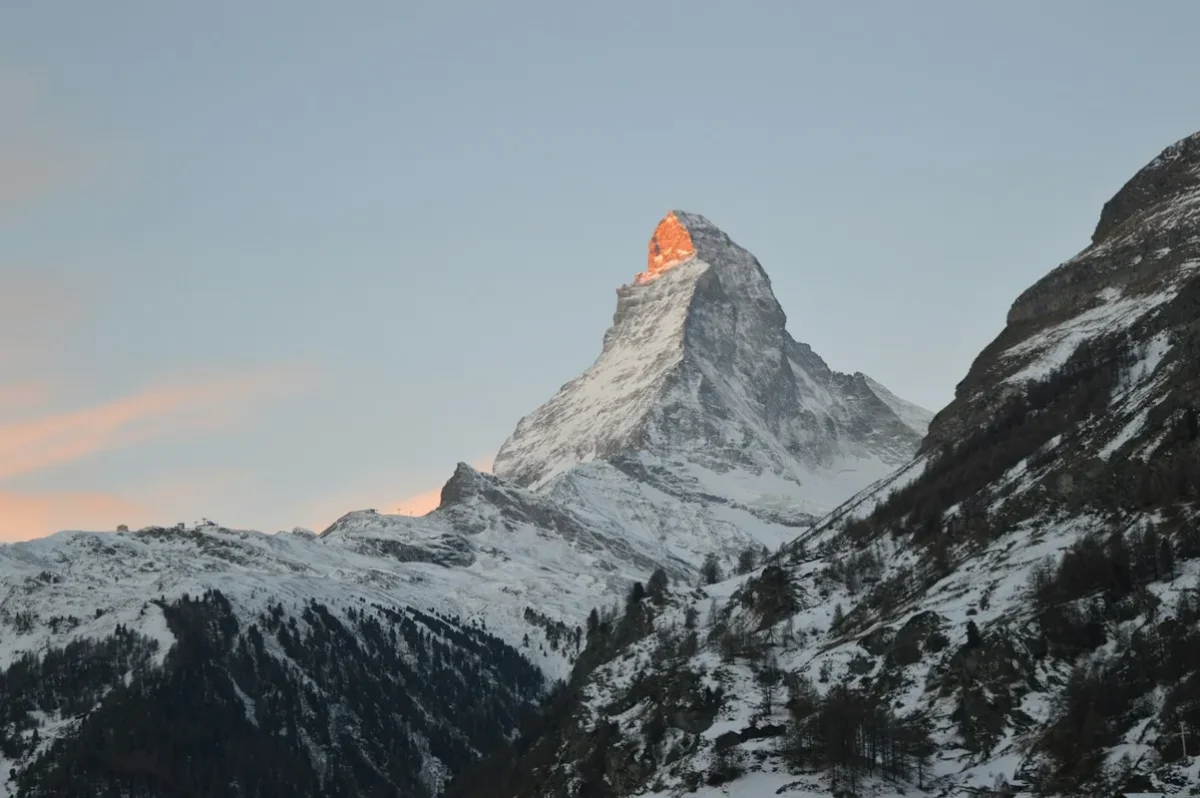
Access is by train to Täsch then by mountain train to Zermatt (the village is not accessible by car), making it a unique destination for those also wanting to enjoy an alpine train journey without worrying about parking.
From Haute-Savoie: about 2h30 to 3h drive to Täsch via Martigny, then take the train to Zermatt. A weekend getaway is recommended rather than a day trip.
Interlaken and the Bernese Oberland, for wide open spaces
A bit further on, in the Bernese Oberland, Interlaken sits in a narrow valley between Lake Thun and Lake Brienz, facing the peaks of the Eiger, Mönch, and Jungfrau. It’s the best base for a mountain sports-focused stay: paragliding over the valley, hiking in the Jungfrau region, or visiting the Trümmelbach Falls, underground waterfalls carved by glaciers in the Lauterbrunnen valley.
From Haute-Savoie: count about 2h45 to 3h drive from Annecy. It’s the furthest destination in this selection, to reserve for a stay of several days rather than a simple outing.
Comparison of Swiss getaways from Haute-Savoie
| Destination | Driving time from Annecy | Ideal for | Recommended duration |
|---|---|---|---|
| Geneva | ~35-45 min | City, museums, shopping | Half-day to 1 day |
| Nyon | ~50 min | Small lakeside town, market | Half-day |
| Lausanne | ~1h-1h15 | Culture, Olympism, old town | 1 day |
| Montreux / Chillon Castle | ~1h15-1h30 | Heritage, lakeside | 1 day |
| Lavaux | ~1h15-1h30 | UNESCO vineyard, tasting | Half-day to 1 day |
| Gruyères | ~1h45-2h | Medieval village, gastronomy | 1 day or weekend stop |
| Zermatt / Matterhorn | ~2h30-3h (+ train) | Mountain, skiing, hiking | Weekend |
| Interlaken / Bernese Oberland | ~2h45-3h | Mountain sports, large lakes | Several days |
How to choose your destination according to available time
All these excursions do not require the same commitment, and that’s precisely what makes neighboring Switzerland so convenient from Haute-Savoie: you can improvise an afternoon outing or plan a real mountain weekend.
For a spontaneous outing during the week or on a Sunday, Geneva and Nyon remain safe bets: less than an hour’s drive, no need to book accommodation, and enough activities to keep you busy for half a day without rushing. It’s also the simplest choice with children, between the Pâquis baths, Jet d’Eau, and walks by the lake.
For a weekend for two or family, the Lausanne-Montreux-Lavaux combination works especially well: one night on the Vaud Riviera allows to chain Chillon Castle, old Lausanne, and vineyard tastings without having to return to the car between each stop, thanks to the local rail network. Gruyères slips easily into the same weekend for those who want to add a gastronomic and medieval dimension.
For a mountain stay of several days, Zermatt and the Bernese Oberland require a bit more logistical organization—particularly for Zermatt, where the car stops at Täsch—but in return offer alpine panoramas that Haute-Savoie itself, already generous in peaks, does not provide in this exact form: the Matterhorn on one side, the Eiger and Jungfrau on the other.
Practical advice for crossing the border
Some useful points before you leave, whichever destination you choose:
- Identity documents: Switzerland is not a member of the European Union but is part of the Schengen area; a valid ID card or passport is sufficient for French nationals.
- Currency: the Swiss franc (CHF) remains the standard, although the euro is often accepted in border areas (change is given in francs). A bank card without foreign fees simplifies things.
- Transport: beyond Geneva, the Swiss rail network (SBB) efficiently serves most destinations on this list, including mountain resorts inaccessible by car like Zermatt. The Swiss Travel Pass may be worthwhile for a stay of several days combining trains, buses, and boats.
- Cost of living: Switzerland is generally more expensive than France, notably for dining; plan a budget accordingly, especially for meals and ski lifts.
- Season: Lake Geneva and its shores can be visited year-round, but alpine destinations (Zermatt, Interlaken) are doubly interesting, skiing in winter and hiking in summer.
Also read: Top 15 unusual and must-see places to visit around Lake Geneva
Frequently asked questions
Do you need a passport to go to Switzerland from Haute-Savoie? No, a valid French identity card is sufficient for a tourist stay as Switzerland is part of the Schengen area.
Can you pay in euros in Switzerland? In many border shops, yes, but change is given in Swiss francs and the exchange rate applied is not always favorable. It’s simpler to plan some francs or a suitable bank card.
What is the fastest Swiss destination to reach from Annecy? Geneva, about 35-45 minutes by car, remains the easiest excursion to improvise from Haute-Savoie.
Is Zermatt accessible by car? No, the village has been car-free since 1947. You must park in Täsch and finish the journey by mountain train.
What is the best time to visit Lavaux? The vineyard can be visited all year, but the harvest period in October offers the most photogenic atmosphere, with colorful vines and winemakers working on the terraces.
To extend the getaway on the French side, also find our guides on What to do and visit in Annecy, Thonon-les-Bains and the shores of Lake Geneva, Chamonix and the Mont Blanc massif.
Cover photo: Photo by Michał Ludwiczak