
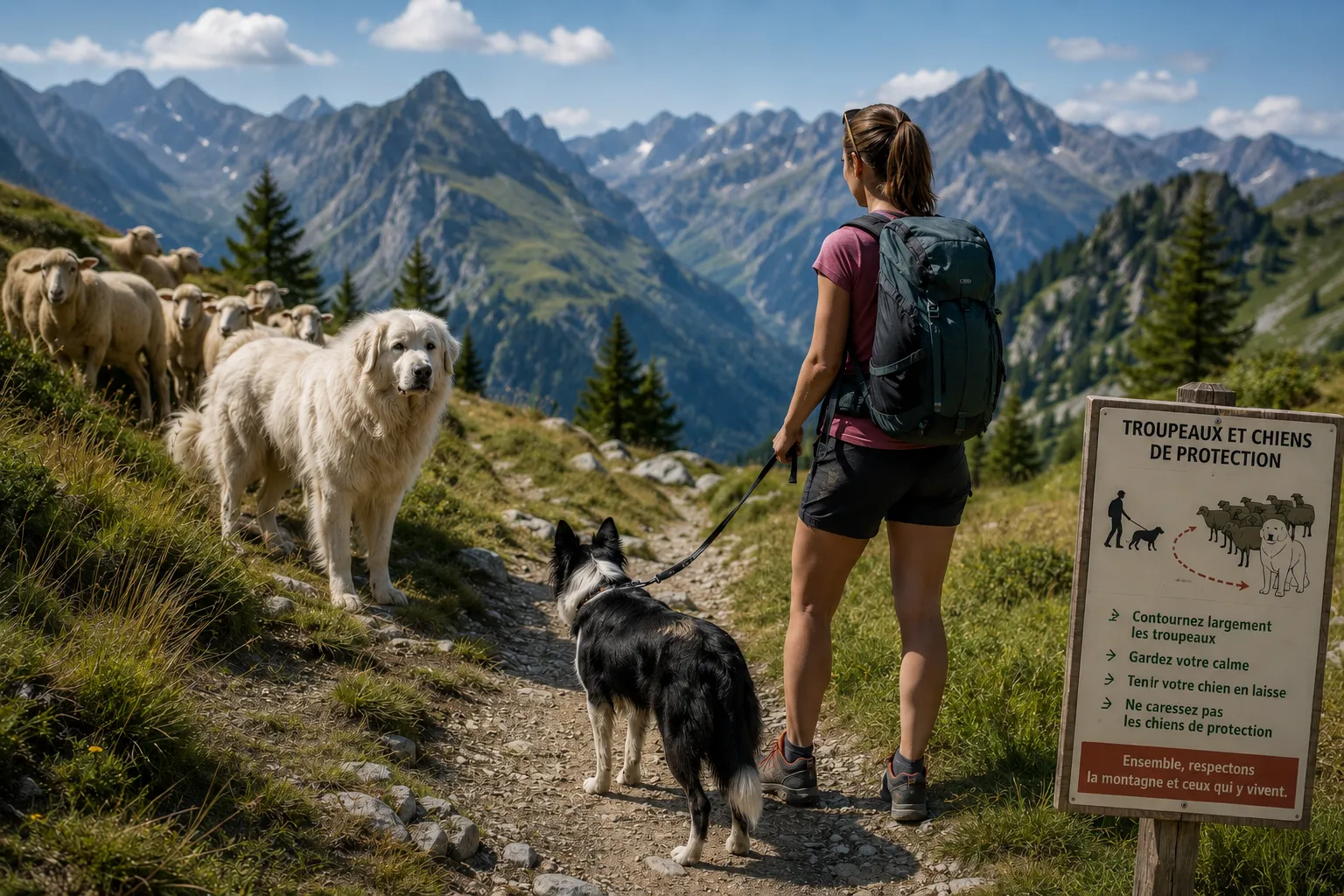
They are increasingly numerous on the trails. In backpacks, on the end of a leash, or running freely on the paths, dogs now accompany their owners on most mountain hikes. But behind this trend that appeals to vacationers, many professionals are now sounding the alarm.
In Haute-Savoie as elsewhere in the Alps, refuge keepers, mountain guides, breeders, and rescuers are noticing an increase in risk situations involving dogs. Attacks on herds, encounters with patous, heat-related exhaustion, or disturbance of wildlife: the causes for concern are multiplying.
A presence exploding on the trails
In recent years, dogs have become true travel companions. “Dog friendly” accommodations are multiplying, tourist offices are communicating more on accessible routes, and many owners now refuse to leave without their animal.
On some very busy trails in Haute-Savoie, it is no longer rare to encounter several dozen dogs in a single day during summer. This development is explained by several factors:
- the increase in the number of dogs in French households;
- the rise of nature tourism;
- the development of remote work;
- the search for outdoor activities accessible to the whole family.
But the mountain remains a particular environment, often underestimated by owners.
Patous remain the main source of tensions
Each summer, livestock guardian dogs cause many delicate situations. Patous are bred to defend sheep against predators and often consider hiking dogs as a potential threat. When a dog approaches a herd, even on a leash, the patou can intervene in a very impressive manner.
Professionals regularly remind several rules:
- widely bypass herds;
- keep your dog on a short leash if a patou approaches;
- keep your dog calm facing the patou;
- avoid sudden movements;
- never try to pet or push away the guardian dog.
These situations sometimes generate strong tensions between breeders and hikers, particularly in the very frequented alpine pastures of Haute-Savoie.
Wildlife also disturbed
Dogs can also have a significant impact on mountain wildlife. Even when they do not directly chase animals, their presence can cause stress in some species.
In spring and early summer, breeding periods make especially vulnerable:
- black grouse;
- chamois;
- roe deer;
- certain ground-nesting bird species.
In several nature reserves, dogs are even prohibited, even on a leash. Unfortunately, many visitors discover this regulation only upon arrival, which sometimes causes misunderstandings.
Heat becomes a major risk
The summer of 2026 promises to be particularly hot, and veterinarians remind that dogs tolerate high temperatures much less well than humans. Unlike hikers, dogs barely sweat. A hike done in the middle of the afternoon can quickly cause:
- a heat stroke;
- dehydration;
- burns on paw pads;
- severe exhaustion.
Mountain rescuers regularly observe animals unable to continue the hike after several hours of effort. Short-muzzled breeds, old dogs, and overweight animals are particularly exposed.
Sometimes complicated rescue operations
When a dog is injured in the mountains, the situation can quickly become complex. An animal weighing 25 or 30 kilos injured on a steep trail may require the intervention of several people. Some owners find themselves in difficulty trying to carry their companion.
Refuges also report delicate situations:
- exhausted dogs;
- animals with injured paw pads;
- dehydration;
- conflicts between dogs.
For many professionals, the preparation of the outing remains insufficient.
Yet dogs have their place in the mountains
Professionals do not wish to ban dogs on the trails. Most even acknowledge that they help bring families closer to nature.
The message is mainly to encourage more responsible practices:
- choose suitable routes;
- leave early in the morning;
- bring enough water;
- respect regulated areas;
- keep your dog on a leash when necessary;
- get information before the outing.
The mountain remains a wonderful playground for dogs as well as their owners, provided the rules are known and respected, of course.
A coexistence that becomes a real challenge
In 2026, the presence of dogs in the mountains ultimately illustrates the evolution of outdoor tourism. Trails host more visitors, more animals, and sometimes very different uses. Between breeders, hikers, sportspeople, natural area managers, and dog owners, the balance sometimes remains fragile.
Professionals do not question the place of dogs in the mountains. They simply remind that such a demanding environment requires more anticipation, respect, and knowledge of the terrain.
Because in the mountains, the best hiking companion is also the one who knows how to adapt to their environment.