
In brief
- September is considered by many hikers as the best month for mountain walking: fewer people, milder temperatures, superb light.
- There are drawbacks: shorter days, first chills at altitude, progressive closures of refuges and ski lifts.
- Haute-Savoie combines all the assets of September: varied mountain ranges (Aravis, Aiguilles Rouges, Fiz, Chablais), still well-maintained trails, and alpine pastures taking on their autumn colors.
- Well prepared (equipment, schedules, checking refuges), September allows hikes among the most beautiful of the year in Haute-Savoie.
Why is September a special month for hiking?
Summer is coming to an end, school holidays are over, yet the mountains remain fully accessible. It is this combination that makes September a pivotal month for hiking enthusiasts. Trails that were crowded in July and August regain their calm, while nature begins its autumn transition: blueberry bushes turn red, larches are just starting to yellow, and the air becomes crisper and clearer.
Contrary to a common misconception, the mountain is not “finished” in September. A good number of refuges remain open at least until mid-September, sometimes later for some, and weather conditions are often more stable than in high summer, when afternoon storms are frequent.
To read: Discover the 10 most beautiful hikes in Haute-Savoie
Advantages of hiking in September
Less crowding on the trails
This is the number one argument. Starting parking lots, often full by 8 am in August, become accessible again. Iconic trails, high-altitude lakes, and the most photographed viewpoints can finally be enjoyed in peace.
Ideal temperatures for effort
No more crushing mid-summer heat that makes long ascents difficult. In September, temperatures in the valleys and mid-mountains are milder, making the effort more comfortable, especially on significant elevation gains.
Exceptional light and colors
Late summer and early autumn light is particularly appreciated by photographers and landscape lovers. The alpine pastures begin to change hues, offering gradients of green, yellow, and russet with a splendid effect, especially at the end of the month.
Often more advantageous prices
Accommodations, refuges, side activities: the post-school holiday period often comes with prices reduced compared to the heart of summer.
More visible wildlife
The deer rut usually begins at the end of September, and mountain animals (chamois, ibex, marmots making their last reserves) are often more observable, human presence having decreased.
Drawbacks and precautions to take
Shortening days
The day loses about 2h30 to 3h of daylight between the beginning and the end of September. You therefore need to start earlier and carefully anticipate the return time, especially for long routes.
More changeable weather at altitude
While days are often stable, the first autumn disturbances and early morning frosts at altitude can appear, especially after September 20th. Equipment must be adapted (warm layers, windbreaker).
Progressive closures
Many staffed refuges, summer ski lifts, and mountain shuttles gradually close their doors throughout the month. It is essential to check opening dates before leaving, as some fully autonomous routes become necessary toward the end of the month.
Nature preparing for winter
Some markings or alpine pasture passages may be less maintained than in peak season, as shepherds descend their flocks. Some technical or cable-secured passages may also be closed in preparation for winter.
Comparative table: hiking in September vs other seasons
| Criterion | July-August | September | October |
|---|---|---|---|
| Trail attendance | Very high | Low to moderate | Very low |
| Temperatures | Hot, sometimes heavy | Mild and pleasant | Cool, early snow possible at altitude |
| Refuge openings | Almost total | Partial (variable by date) | Very limited |
| Day length | Long | Decreasing | Short |
| Colors / landscapes | Green, flowering alpine pastures | Autumn transition, golden light | Late autumn, first frosts |
| Accommodation prices | High | Moderate | Low |
Haute-Savoie in September: an exceptional playground
Haute-Savoie concentrates a diversity of mountain ranges that makes it a particularly suitable destination for hiking in September, whatever the level sought.
The Aiguilles Rouges massif and Lac Blanc
Facing Mont Blanc, the Aiguilles Rouges natural reserve offers clear panoramas in September without the summer crowds. The Lac Blanc trail, one of the busiest in the Chamonix valley, becomes passable again under good attendance conditions.
To read: Lac Blanc
The Fer-à-Cheval Cirque and the Giffre Valley
On the Sixt-Fer-à-Cheval side, waterfalls and the glacial cirque take on a particular light at the end of summer. Hikes to high-altitude lakes (Vogealle lake, Anterne lake) remain accessible as long as the weather allows.
To read: Discover the Fer à Cheval Cirque
The Aravis massif
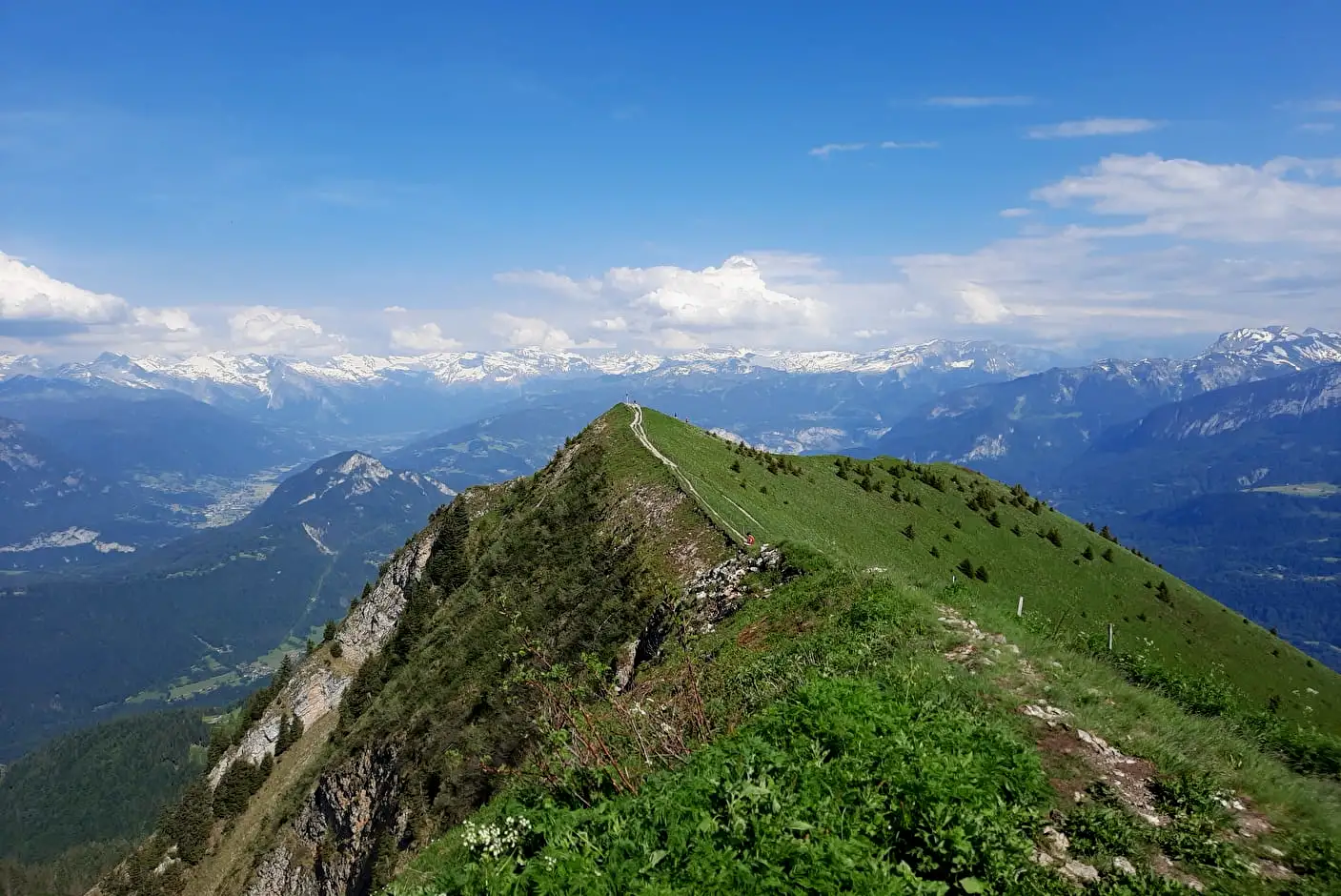
Between La Clusaz and Le Grand-Bornand, the alpine pastures of the Aravis, still frequented by flocks at the very beginning of the month, offer ridge paths with views of Mont Blanc, particularly pleasant once the summer heat has subsided.
The Chablais and Portes du Soleil
Less frequented than Chamonix or the Aravis, the Chablais offers gentler walks, ideal for enjoying September’s light without crowds, with remarkable views over Lake Geneva.
Our practical advice for hiking in Haute-Savoie in September
- Check the opening of refuges and ski lifts before leaving, as these change weekly.
- Bring a warm layer and a windbreaker, even for a day hike in mid-mountains.
- Start early to account for the gradual reduction in daylight.
- Check mountain weather the day before and the morning of, as conditions can change faster than in summer.
- Prefer outings during the week to enjoy the calm restored on the trails.
To read: Day hiking: the complete list of equipment to bring
FAQ
Is September a good month for mountain hiking? Yes, it is even one of the favorite months of experienced hikers: fewer people on the trails, pleasant temperatures, and particularly beautiful light, especially in Haute-Savoie.
Are refuges still open in September? Some refuges remain open, at least until mid-September, but dates vary greatly from one refuge to another. It is recommended to check directly with each refuge before leaving.
What equipment should be planned for a hike in Haute-Savoie in September? Beyond classical hiking gear, it is advised to bring a warm layer, a windbreaker, and a headlamp, as the days progressively shorten.
Which hikes should be favored in Haute-Savoie in September? The classics such as Lac Blanc in the Aiguilles Rouges, the Fer-à-Cheval Cirque, or the Aravis ridges are particularly recommended, as the attendance is much lower than in summer.