
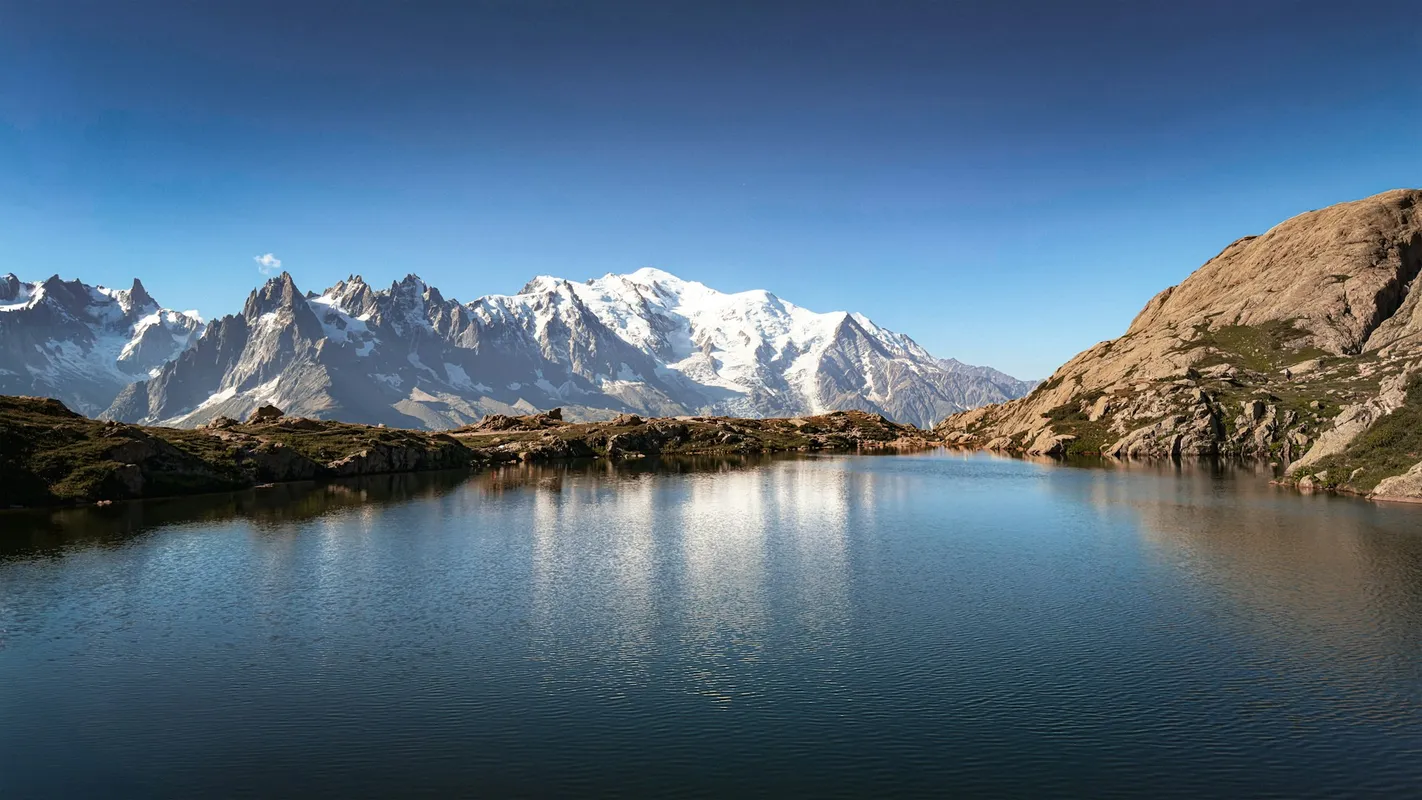
Because at 2,352 meters altitude in the Aiguilles Rouges nature reserve, Lac Blanc is one of the most photographed hikes in the Chamonix valley. Its appeal lies in a striking contrast: a mountain lake framed by pink granite blocks, with in the background the entire Mont-Blanc massif, from the Aiguille Verte to the Grandes Jorasses. Here is how to organize the visit, on foot or on a multi-day route, regardless of the chosen season.
How to access Lac Blanc
The starting point is from the hamlet of Praz-de-Chamonix, where you take the Flégère cable car (1,877 m). From there, an additional chairlift, the Index, allows you to gain altitude up to 2,385 m and to significantly reduce the approach hike. From the arrival of the Index, plan about 1 h to 1 h 30 of walking on a marked path, with a moderate elevation gain but a section equipped with chains near the end of the ascent, which requires a minimum of confidence on rocky terrain.
Flégère cable car booking: official site
For hikers who prefer to start on foot from the valley, the full ascent from Les Praz represents about 1,400 m of elevation gain and 4 to 5 hours of climbing, a sportier option reserved for trained walkers and days of stable good weather.
There is another route, reserved for athletes and those used to mountain walking: Lac Blanc is also accessible from the Montets Pass, or Tré-le-Champ. But beware, this route is technical and sometimes exposed, it is not suitable for everyone, be careful!
When to go: the best period
The trail is generally passable from mid-June to late September, depending on the residual snow cover from the previous winter. At the beginning of the season (June), snowfields can still cover some passages near the lake, which makes progress more technical; it is recommended to check the trail conditions with the Chamonix tourist office or the refuge before starting early in the season. July and August offer the safest conditions, with the drawback of heavy traffic in the middle of the day; starting early in the morning helps avoid crowds and enjoy better light on the massif.
The Lac Blanc refuge
The Lac Blanc refuge, built on a rock face at the edge of the lake, is a popular stop for a break or an overnight stay. It notably allows witnessing the sunrise over Mont-Blanc, a moment especially sought after by mountain photographers. Booking is essential in high season, as places are limited and often full several weeks in advance in July-August.
Information and booking: official website
Fauna and flora of the Aiguilles Rouges reserve
The Lac Blanc area is entirely within the Aiguilles Rouges national nature reserve, created to protect an alpine pasture and rocky environment that has remained preserved. Hikers frequently encounter:
- ibex, often seen on the rocky blocks very close to the trail, especially late morning;
- marmots, numerous in the scree slopes below the lake;
- typical high-altitude flora of siliceous soils, with rhododendrons and bilberries in July-August;
- yellow-billed choughs, which willingly accompany hikers near the refuge.
The reserve imposes some simple rules: stay on marked paths, do not feed the wildlife, and carry down your waste, including organic waste.
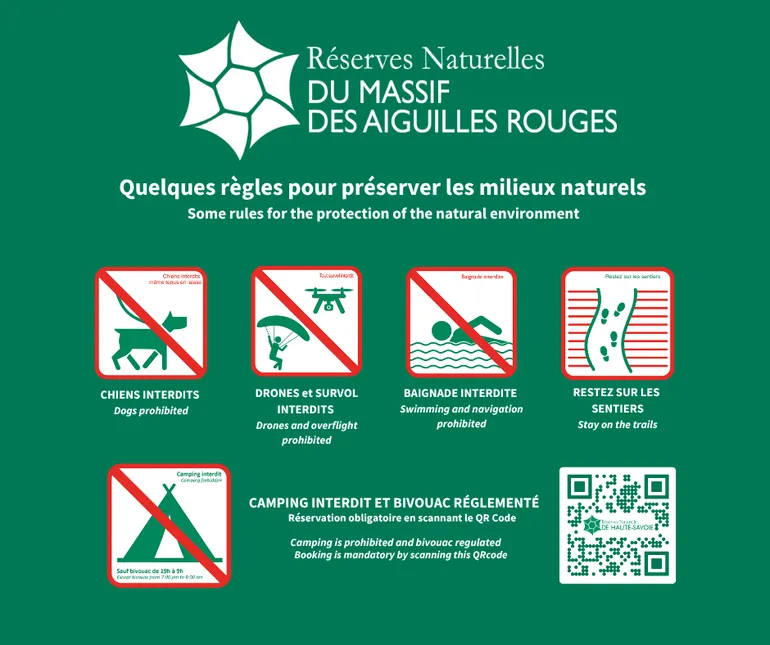
Swimming and boating prohibition in the lakes of Chéserys and Lac Blanc by prefectural decree of May 22, 2025: see the decree
What to prepare for the hike
Despite its image as an accessible stroll, Lac Blanc remains a full mountain hike, which requires a minimum of preparation:
- good high-cut hiking boots, as the trail includes rocky passages and a section equipped with chains;
- enough water, as there are no refreshment points between the arrival of the Index and the refuge;
- sun protection (cream, sunglasses, hat), exposure being strong at altitude even in cloudy weather;
- a windbreaker, as conditions can change quickly once over 2,300 m;
- the last ascent and last descent times of the lifts, to check before leaving so as not to get stuck at the end of the day.
A reference view of the Mont-Blanc massif
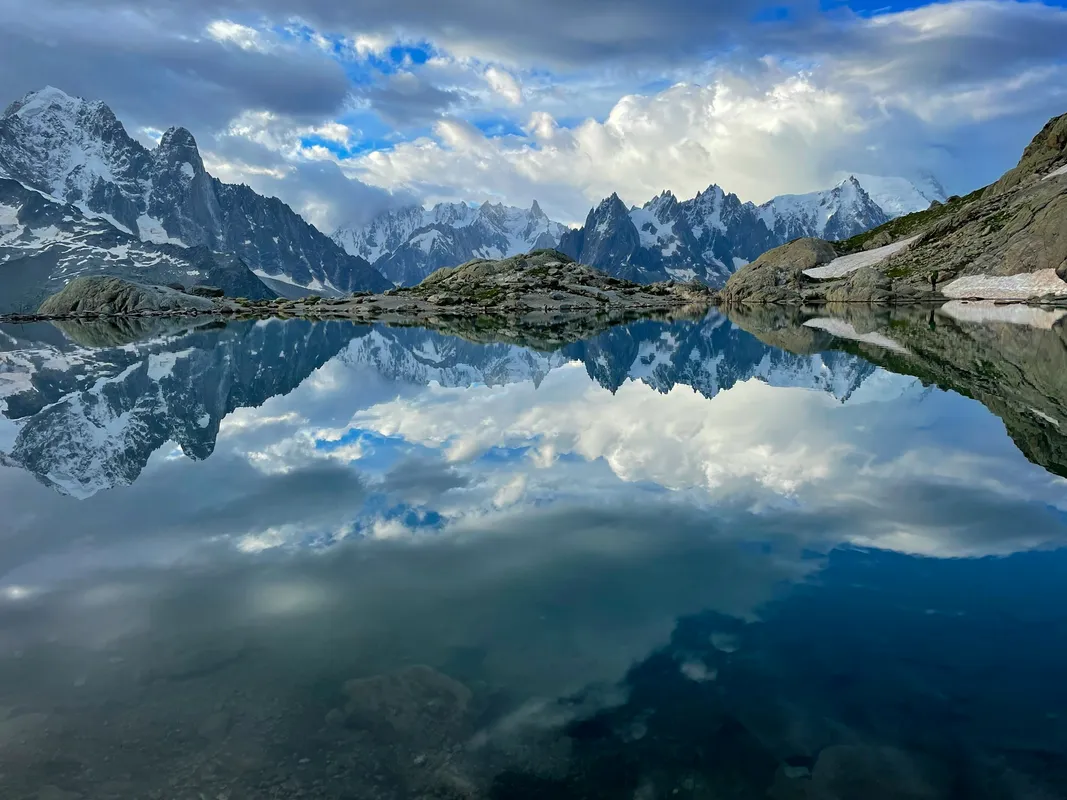
What sets Lac Blanc apart from other high-altitude lakes in the valley is the viewing angle it offers over the entire range: Mont-Blanc, the Aiguille Verte, the Drus, and the Grandes Jorasses are reflected on calm days in the lake’s waters, framing become iconic alpine photography. This view is accessible without any special technical equipment, explaining the site’s popularity with both casual hikers and experienced photographers.
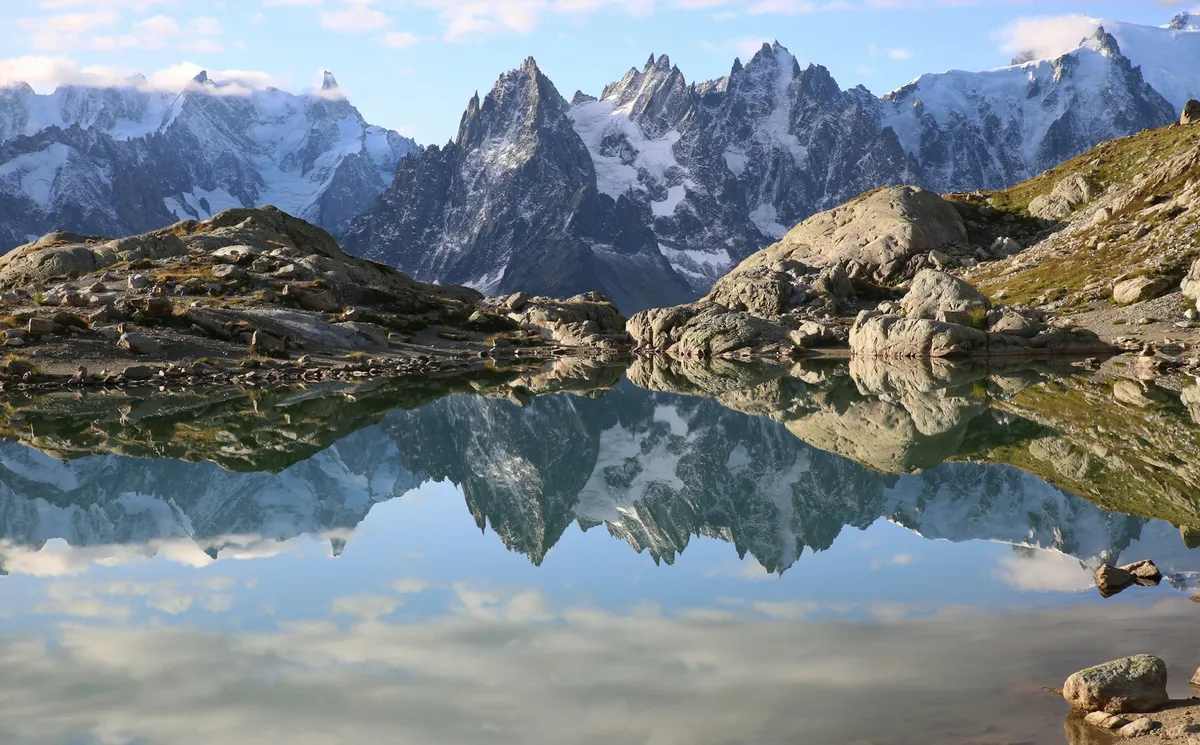
For visitors passing through the Chamonix valley, Lac Blanc thus constitutes a full stage of a stay in Haute-Savoie: half a day is enough with the lifts, a full day for those who go up on foot, and a night at the refuge for those wishing to experience the sunrise over the massif.
Read also: The Lakes of Haute-Savoie
FAQ: your questions about Lac Blanc
How long does the Lac Blanc hike take? From the arrival of the Index chairlift, count about 1 h to 1 h 30 of ascent. From the valley on foot, the complete hike represents 4 to 5 hours of walking for about 1,400 m of positive elevation gain.
Is the Lac Blanc hike difficult? The trail is of medium level from the Index, but includes a section equipped with chains near the end of the ascent which requires ease on rocky terrain. It is not a family stroll in the strict sense, even though it remains accessible to a hiker in good physical condition.
What is the best time to do Lac Blanc? The trail is generally passable from mid-June to late September. July and August offer the safest conditions, without residual snowfields, but with more traffic in the middle of the day.
Can you sleep at the Lac Blanc refuge? Yes, the refuge offers overnight stays, highly sought after to witness the sunrise over Mont-Blanc. Booking is essential in high season, as places are limited.
Do you need specific equipment for this hike? High-cut boots are recommended for rocky passages, as well as sun protection, a windbreaker, and enough water, since there are no refreshment points on the route.
What animals can you observe around Lac Blanc? The Aiguilles Rouges nature reserve is home to ibex, marmots, and yellow-billed choughs, regularly seen near the trail and the refuge.
Photo sources: Rowan Cumming and Raymond Rutjes