
Every summer, hiking trails attract thousands of enthusiasts in Haute-Savoie and the French mountain ranges. However, a poorly planned outing can quickly turn into a nightmare. Changing weather, dehydration, loss of orientation, or simply overestimating one’s abilities: most accidents could be avoided thanks to some essential habits before departure.
Preparation begins long before putting on your shoes
A successful hike is prepared at home. Before leaving, it is essential to check the weather forecast, but also to analyze the route as a whole: distance, elevation gain, estimated duration, and technical difficulties.
In the mountains, conditions can change very quickly. A clear sky in the morning can give way to a violent storm by mid-afternoon. That is why it is recommended to favor an early departure, especially during the hot summer days.
Choose a route suitable for your level
Every year, rescuers assist hikers who have embarked on a route that is too difficult. The best habit is to choose a hike adapted to your physical condition, but also to that of all group members. The actual duration of an outing is often longer than that indicated on signs, especially with children or during photo breaks.
Knowing when to give up or turn back is also one of the most important safety rules. If fatigue sets in or if the weather deteriorates, it’s better to shorten your outing than to take unnecessary risks.
Never neglect your equipment
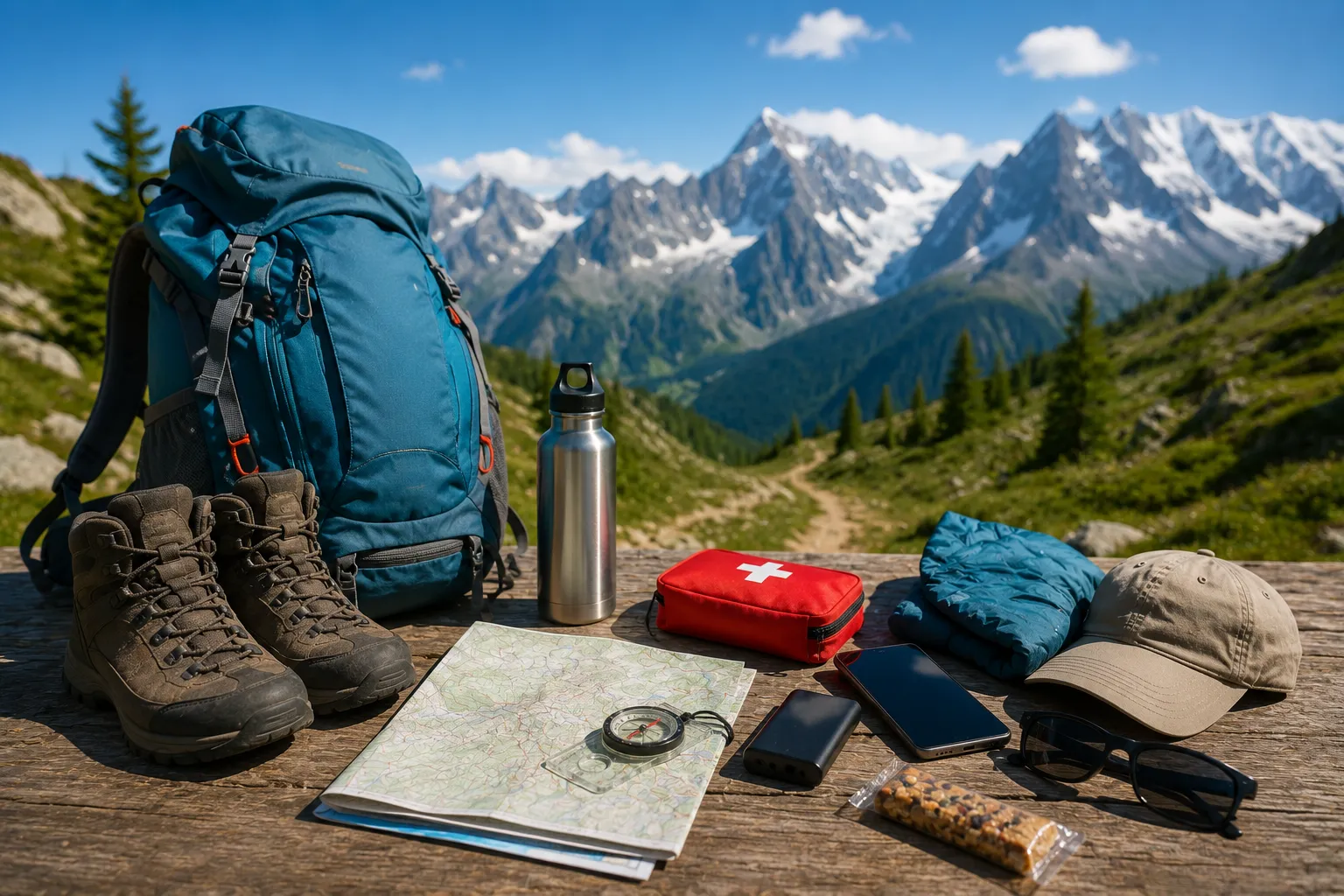
Good weather never exempts you from appropriate equipment. Even for a hike of a few hours, the backpack should contain:
- at least 1.5 to 2 liters of water per person;
- some energy snacks;
- a waterproof or windbreaker jacket;
- a first aid kit;
- a charged phone, ideally with an external battery;
- a map or a navigation app downloaded offline.
Hiking shoes providing good grip remain essential, even on a trail reputed to be easy. A simple slip can cause a sprain or a more serious fall.
To read: Day hike: the complete list of equipment to bring
The weather is your best guide
Summer storms are among the main dangers in the mountains. Before leaving, it is recommended to check multiple local weather sources. During the hike, stay attentive to the sky’s changes. If storm clouds appear, do not wait for the first lightning to go back down.
Authorities regularly remind that it is always better to postpone an outing than to expose yourself to the risk of a storm at altitude.
Always inform someone close to you
This simple habit can save valuable time for rescuers. Before leaving, inform a close contact of your route, your approximate return time, and the place where you parked your vehicle. In case of trouble, this information will help quickly guide the search.
Patrick’s tip: I often go hiking alone (which is not recommended without very good knowledge of the mountains, and even then…). In this case, I always leave on the windshield of my car at the start of the hike a paper (in a waterproof sleeve) indicating my route, my departure time and expected arrival time, my phone number, and instructions to alert emergency services if my vehicle is still there 4 hours after the indicated expected arrival time. It costs nothing and can be useful in case of trouble!
Hydration, nutrition, and effort management
During the summer period, heat greatly increases the risk of dehydration. It is advised to drink regularly, without waiting to be thirsty, and to take frequent breaks, especially during long climbs.
A light but energy-rich diet (dried fruits, nuts, cereal bars) also helps maintain a good energy level throughout the day.
In the mountains, knowing when to give up is a quality
The summit will always be there tomorrow. However, changing weather, a slippery trail, or a group member in difficulty should lead to reconsidering your plans. Mountain professionals regularly remind: the best decision is sometimes to turn back.
This ability to adapt your objective to the current conditions remains one of the best ways to avoid an accident.
A successful hike is above all a well-prepared hike
The mountains offer exceptional landscapes, but they also demand respect. A few minutes of preparation often suffice to avoid the most common mistakes.
By choosing a suitable route, monitoring the weather, bringing the right equipment, and listening to your body, everyone can fully enjoy the trails this summer… while returning home safely.