
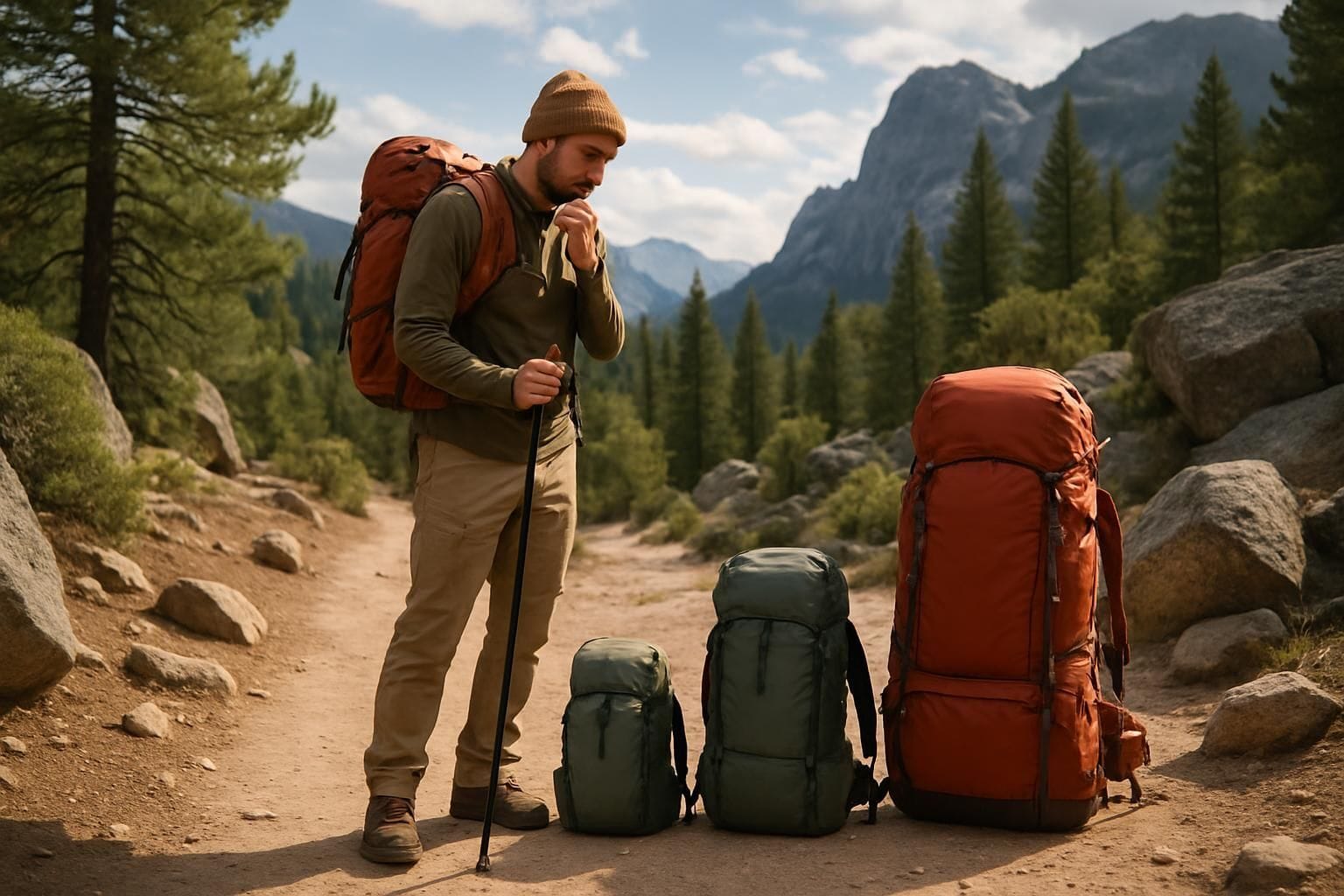
Which hiker has never hesitated between two backpack sizes in front of a store aisle or an online shop? In 2026, as hiking and trekking are booming in France and Europe, choosing the right backpack size is of strategic importance. A poorly adapted selection promises a journey ruined by pain, regrets at every climb, or, conversely, frustration due to the lack of equipment carried. Finding the right balance not only ensures comfort on the trails but also safety by limiting any risk caused by overload or imbalance. Every detail counts: back length, volume needed according to duration, design and features of the backpack, or accessories to prioritize for protection against the elements. New technical standards, differences in body shape, and the trend towards ultra-light equipment complicate the purchase… but also open up great opportunities.
Through the example of Julie, passionate about trekking and fond of both short outings and long crossings, we will go through together the essential steps to choose the ideal size of your hiking backpack. Manufacturers compete in innovation, hiker profiles diversify, and expectations evolve: in 2026, the volume criterion is no longer taken lightly. This guide details common mistakes to avoid, concrete techniques to define your real needs, professional tips for male or female models, summer or winter, and the art of optimizing every kilogram carried, from the chosen material to weight distribution. Follow this structured journey, blending story and practical advice: be equipped, comfortable, and ready to fully enjoy every hike, whether it lasts two hours or ten days.
Why choosing the right hiking backpack size is essential for your comfort and safety
Opting for the right backpack size in hiking is not a simple logistical choice: it is a decision that conditions the entire unfolding of your adventure. On one hand, an oversized backpack often encourages you to take everything, even if it means carrying excessive loads; on the other hand, a too small backpack forces you to make compromises, potentially dangerous if it concerns vital safety or comfort equipment.
Julie, our fictional trekker, recently faced this dilemma before a one-week trek on the GR20 in Corsica. On her first try, she had chosen a model that was too large, yielding to promises of versatility. Result: her backpack weighed nearly 16 kg at departure, making every stage exhausting and causing lower back pain from the second day. This experience highlights how a suitable selection ensures a balance between storage space and weight, crucial to limit fatigue, increase safety, and truly enjoy each stage, whether in mid-mountain, the Alps, or on coastal trails.
Consequences of a poor backpack size choice on perception and hiking
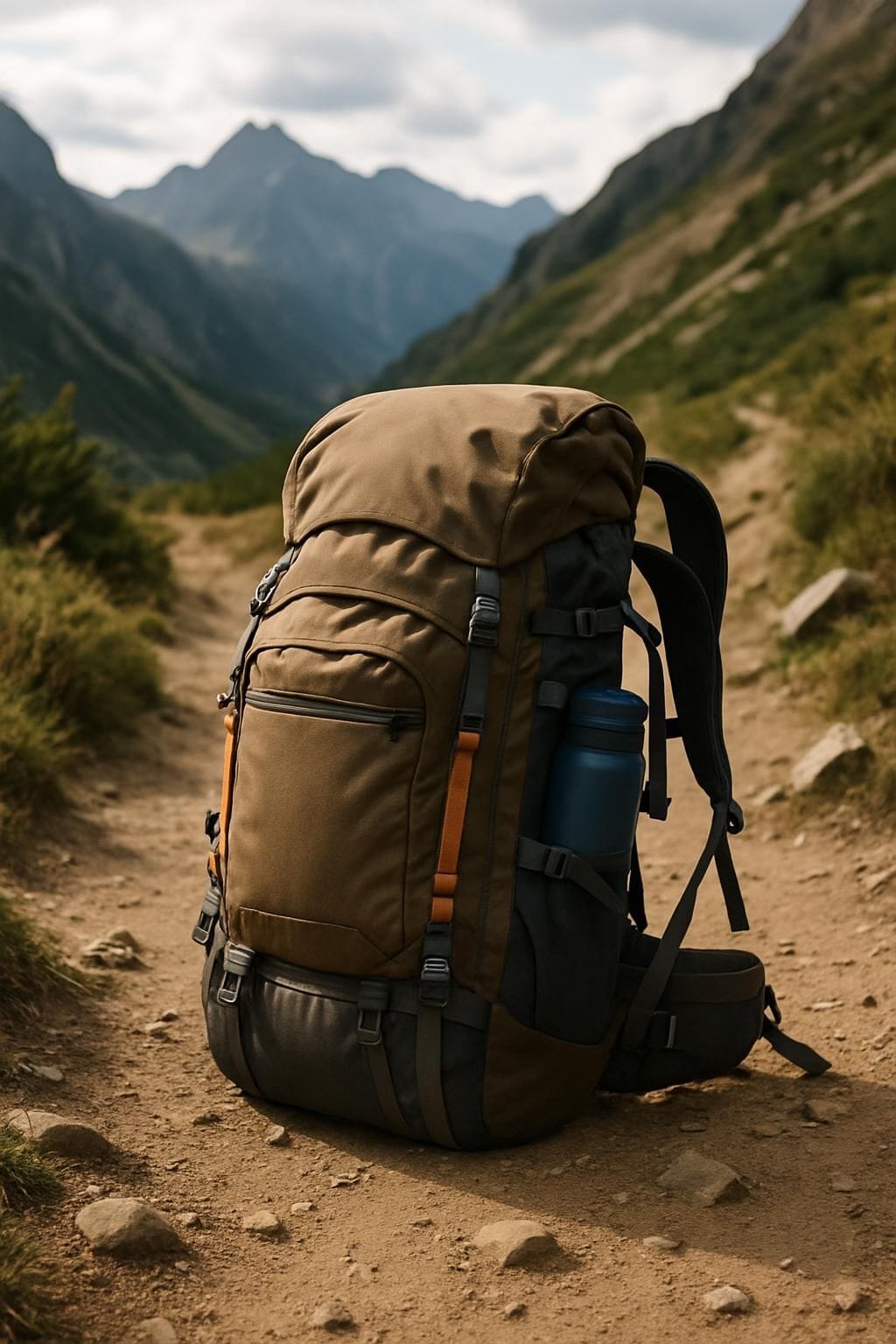
A poorly adapted backpack has real and often immediate repercussions. Carrying a model that is too bulky inevitably leads to taking unnecessary items, overloading your equipment, and rapidly exceeding the recommended limit of 20 to 25% of your body weight. This overload not only causes discomfort but also increases the risks of falls, slips, or muscle injuries, impacting the quality of your hike and multiplying unexpected breaks.
Conversely, an undersized backpack forces you to sacrifice crucial equipment: windbreaker, first aid kit, water or food reserve. Julie testifies that such an error during a winter trek cost her hours of cold and major discomfort due to a too small backpack. Ultimately, the perception of a hike strongly depends on this first decision of size choice.
Finding the perfect balance between storage volume and weight to carry
The quest for balance between storage space and careful load is key for any hiker. The goal is to opt for a backpack large enough to hold the essentials, without providing unnecessary space for superfluous items. Forcing discipline in equipment choice, linked to the duration and difficulty of the route, remains a guarantee of freedom and safety on the trails.
Avoid the “automatic filling law”: a large empty space will inevitably be filled, which will inevitably increase your load, especially during long trekking days. This overload increases fatigue, reduces comfort, and risks compromising your goals. Conversely, carefully calculating the volume allows rationalizing your needs while adapting the carried weight to your physical level.
The importance of a suitable size to avoid pain, imbalance, and unnecessary overloads
An adapted hiking backpack to your body shape limits pressure points, promotes overall stability, and prevents common back pain in both novice and seasoned hikers. Shoulder, hip, or even knee pain often come from poor fitting or inappropriate weight distribution.
Julie has thus adopted a new rule: “If at the end of the first hour I have back or shoulder pain, it means the size or adjustment of my backpack is not right.” Never underestimate the influence of the backpack on posture and balance: on uneven terrain, unbalanced overload can cause twists or falls, whereas a precisely sized model guarantees safe and effective carrying.
How to determine the ideal volume of the hiking backpack according to duration and season
The first question to ask before each outing is: for how long and under what conditions are you leaving? From a Sunday city trek to crossing the Alps, each type of hike demands its own backpack volume, regardless of route type.
Recommended volume for a day outing: backpacks from 15 to 30 liters
For a day hike, the ideal backpack has a volume between 15 and 30 liters. This compact format forces you to focus on the essentials: a windbreaker, a water reserve (camelbak or bottle), a quick meal, a light first aid kit, and some accessories (headlamp, map, protected phone). The main advantage of this capacity is to automatically limit the weight, a decisive factor for comfort during short but intense walks.
It is the preferred option for summer outings around the Mediterranean, or forest walks in Île-de-France in spring. Julie, who alternates between trail running and discovery hiking, prefers this format for her escapades on the Chevreuse valley trails, as it makes adding unnecessary items impossible and ensures dynamic carrying.
Choosing a backpack between 40 and 60 liters for multi-day hikes
As soon as the hike extends over several days, the required volume evolves significantly. A backpack of 40 to 60 liters then represents a good base, allowing to carry a sleeping bag, a lightweight sleeping pad, a stove, a food reserve, and some warm clothes or protection against bad weather. This range is favored for most treks lasting two to five days, including in mountainous areas where autonomy is key.
Again, the balance between volume and weight remains crucial: an empty 50-liter backpack should not encourage carrying everything. Julie tested different volumes during a trip to the Mercantour Regional Natural Park: 45 liters sufficed in summer, but she would have needed 60 liters in winter due to the bulk of a down jacket and a larger sleeping bag.
Assessing needs for long treks with large capacity backpacks
For trips exceeding five to seven days without resupply, or during autonomous trekking in high mountains, the required volume often exceeds 60 liters. These backpacks, classified as “large capacity,” can reach 80 liters or more. They are essential if you travel in a group with shared equipment (tent, cookware, medical kit), or for winter challenges where technical equipment (ice axes, crampons, multilayer clothing) takes considerable space.
Julie shares an anecdote: during a trekking expedition in Iceland, her team decided to invest in three 75-liter backpacks, which allowed optimal load distribution and improved comfort for everyone. For these demanding hikes, today’s backpack technology allows impressive volumes… but beware of the final weight!
The practical volume method with a garbage bag for precise choice
A concrete trick to determine the required volume consists of using a garbage bag. This method is appealing for its simplicity and allows everyone to perform a tailor-made simulation, adapted to their hiking practice and available equipment.
Concrete steps to measure the necessary volume with a garbage bag
Gather all the equipment you want to take, arranged flat on your floor: clothes, sleeping gear, stove, food, first aid kit, and safety accessories.
Place all these items, carefully folded, inside a large garbage bag. Try to replicate the backpack’s packing configuration for a realistic test.
Close the bag and measure its volume using a large graduated container or by relying on standard dimensions (a classic 50-liter garbage bag filled three quarters full provides a reliable base).
Depending on the result, opt for a slightly larger backpack to include the first aid kit, valuables, or last-minute provisions.
This method brings welcome rigor and avoids being influenced by fashion trends or the “always more” temptation. It ensures choosing a backpack size that matches the reality of your hike, no more, no less.
Adapting volume to seasonal variations, especially in winter
It is important to integrate seasonality into your thinking about volume choice. In winter, hiking requires thicker clothes, additional thermal gear, and sometimes increased food reserves. Julie notes that between her summer and winter preparations, the difference in backpack volume often reaches ten to twelve liters. Her advice: always anticipate the weather and favor models with capacity extensions or adaptable top flaps, so never having to abandon key equipment in case of sudden cold snap or unexpected storm.
Type of hike | Recommended volume (backpack) | Period / Season | Distinctive equipment |
|---|---|---|---|
Day | 15-30 L | Spring / Summer / Autumn | Light jacket, meal, water |
Weekend (2-3 days) | 40-50 L | Any season | Sleeping bag, stove |
Long trek / Winter | 60-80 L | Winter / High mountain | Warm technical gear |
Taking this step of volume choice seriously is the best prevention against the unexpected; hiking leaves no room for improvisation, especially when the climate is fickle.
Adapting the size of the hiking backpack to your body shape for risk-free carrying
A backpack adapted to your morphology becomes a true extension of your body: it accompanies your movements, naturally distributes weight, and promotes stability even on the most rugged slopes. The key lies in precise back measurement and understanding the specifics of every silhouette, from muscular men to more slender female profiles.
Measuring back length: key to choosing the right backpack size
One of the secrets of comfortable carrying lies in the exact measurement of back length. It is the distance between the 7th cervical vertebra (small bump at the base of the neck) and the iliac crest (top of the hip bones). This measurement allows choosing the backpack size that offers the most natural fit, allowing the belt to carry most of the weight.
Julie systematically uses this method before every major hike, aware that the relevance of choice depends on this number. Most manufacturers now offer several sizes per model, ranging from “S” to “XL,” or sometimes continuously adjustable, to fit all body shapes.
Major differences between hiking backpacks for women and men
Historically, backpacks were designed according to a standardized male morphology. In recent years, the range has greatly diversified. Female models generally offer closer straps, a narrower belt, and a shorter back, taking into account stature and pelvis shape.
After some disappointing tries, Julie switched to a female model for her trekking on the GR5. Result: fewer pressure points, better support, and complete absence of pain over several days of walking. Taking the time to try different cuts in store or consult a detailed morphology guide is therefore a must, whatever your body type.
Gender | Strap characteristics | Waist belt | Back length |
|---|---|---|---|
Male | Wide, spaced straps | Wide, low position | Standard/long |
Female | Narrow, close straps | Shorter, padded | Short/medium |
This table briefly summarizes the essentials to compare during purchase: size is primarily adjusted according to body structure, not fashion trends or trendy colors.
The importance of a perfect fit: straps, waist belt, and back length
A precise fit ensures lasting comfort on all types of hikes. Straps must be padded and oriented to avoid friction on the collarbone during walking. The waist belt rests on the iliac crests to transfer up to 70% of the load weight. If the back length is poorly chosen, transfer is faulty, causing pain and imbalances.
Experienced hikers perform an adjustment test with a loaded backpack immediately after purchase: a short field test allows spotting pressure points and the possible need to fine-tune the back or strap adjustments.
Backpacks available in various sizes according to morphological measures
Almost all manufacturers offer their ranges in multiple sizes, sometimes adjustable down to the centimeter. These variants ensure that every user, from young teens on nature outings to trekking veterans, can access a backpack that is both technical, comfortable, and safe. Specialized sellers sometimes take measurements directly in-store.
Julie recommends enquiring about exchange options if the first try does not fit: morphology evolves with practice, and a slightly more muscular back or more shaped pelvis can dictate choosing a new size on the same model for a future hike.
Essential features and materials to prioritize for a suitable hiking backpack
Choosing the right backpack also involves analyzing features that make every hike safer and more practical, as well as materials that guarantee durability and lightness. Innovative options now allow combining controlled volume, low weight, and weather resistance in a single piece of equipment.
Choosing a practical opening system: advantages of full zip openings
Nothing is more frustrating than having to empty your entire backpack at camp to access the bottom! The most advanced models now offer zip openings along the entire length, providing direct access to gear without disrupting the internal organization.
Julie quickly adopted this type of opening on her long hikes, appreciating especially the speed of handling during weather changes or in the evening at camp. This feature saves time and improves comfort management during breaks and unexpected events.
Material quality and durability: ripstop nylon, waterproofing, and rain cover
The backpack’s manufacturing material determines both its lifespan and resistance to elements. Ripstop nylon dominates the market, known for its lightness, robustness, and abrasion resistance on rocky passages. Waterproofing also plays a crucial role: some models include an internal membrane, while others come with an integrated rain cover.
Julie has endured several storms on the Compostelle path: choosing the right material and systematically using the rain cover kept clothes and technical equipment dry. A point not to be overlooked during purchase, especially if you enjoy hikes in exposed areas.
Usefulness of multiple pockets and external attachments without weighing down the pack
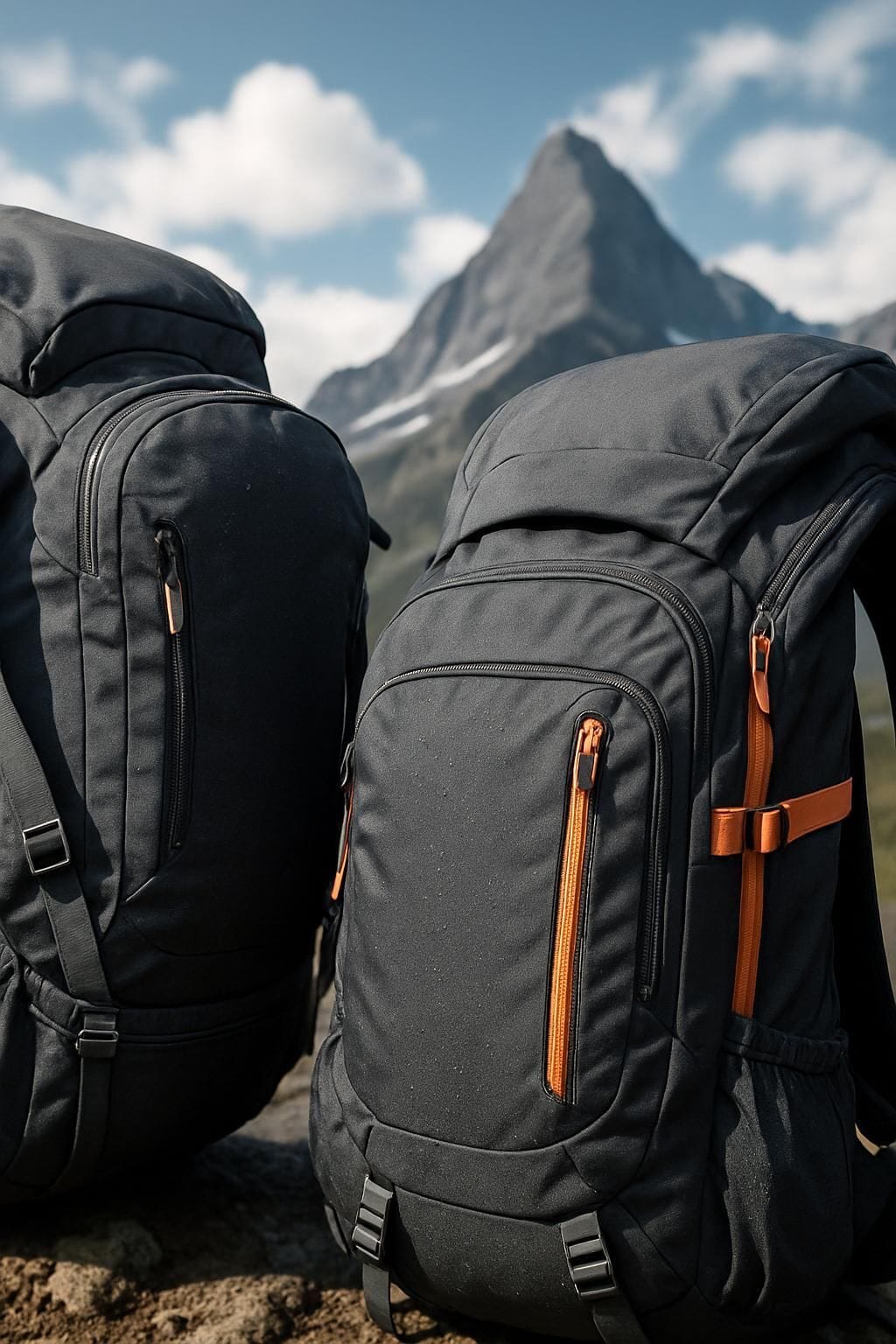
Having many pockets provides real benefits for organizing your gear, but be careful not to give in to the temptation of a “pocket for everything” at the expense of total weight! Prioritize belt pockets for quick-access items, side pockets for bottles, and external attachments for poles or the tent. Every detail counts to optimize space management and gain comfort during stops.
Julie favors a minimalist layout, with a single “pharmacy” pocket and a strap for crampons, thus limiting the temptation to overload her backpack unnecessarily. The art of compromise plays here a full role in finding the best balance between storage, accessibility, and lightness.
Use of waterproof bags inside the pack to protect your belongings
Despite waterproofing advances, a simple trick still makes a difference in 2026: using waterproof bags inside the backpack to compartmentalize and protect spare clothes, sleeping bag, and electronics. This inexpensive solution proves very effective against prolonged rain, river crossings, or even nighttime condensation at camp.
Julie always carries three lightweight waterproof pouches, organizing her pack around independent modules, easy to extract during breaks or emergencies. This method also helps distribute weight, contributing to comfort over several days of hiking.
Optimizing carrying comfort and choosing the ideal pack according to size and use
The backpack choice is complete only once carrying comfort is optimized. Equipment as well fitted as equipped ensures a peaceful hike, where weight almost seems to disappear, making way for pure pleasure of walking and discovery.
Weight distribution: the crucial role of the waist belt and padded shoulder straps
The waist belt plays a crucial role when carrying heavy loads: it transmits up to 70% of the weight onto the hips, thus preserving the neck and shoulders. Padded shoulder straps limit painful pressure points and facilitate good posture, even after several consecutive hours of walking.
Julie always recommends adjusting the belt first and then the straps once the pack is loaded, to guarantee optimal stability and maximum comfort, whether hiking on flat terrain or rough ground.
Sternum strap and load lifter straps for optimal support
The sternum strap stabilizes the backpack laterally, supporting the chest without hindering breathing. Load lifter straps, located at the top of the shoulder straps, serve to pull the backpack closer to the back. This device prevents backward tilting of the weight and improves ease on technical terrains where balance is crucial.
Among long-duration trekking enthusiasts, their precise adjustment has become a ritual before the stage: 2 minutes well spent for hours of additional comfort on the trails.
Testing your loaded backpack: field test to check distribution and absence of discomfort
The best way to validate your choice: conduct a “life-size” test at home or during a short hike, with loaded backpack. This trial reveals instantly fitting or distribution flaws, and allows action before the big departure.
Julie advises simulating a 30-minute walk, then adjusting each strap live until you obtain natural carrying, without discomfort or premature fatigue. This test allows you to leave for trekking with confidence and serenity.
Avoiding overload: dangers of a too large backpack versus compromise of a too small one
A backpack that is too large mechanically encourages overload, pushing the load beyond reasonable limits (maximum 25% of the hiker’s weight). Conversely, a backpack that is too small will impose difficult choices, sometimes leaving aside equipment essential for safety and comfort.
Excess volume unnecessarily weighs down and increases risk of imbalance.
Lack of space exposes you to having to choose between first aid kit, warm layer, or water reserve.
The right compromise consists in choosing the backpack size as close as possible to your real needs, even if it means testing beforehand with the garbage bag method mentioned previously.
Choosing between classic, ultra-light, and hybrid backpacks according to load and experience
The market evolves rapidly, with three main backpack families: classic models with frame, ultra-light “frameless,” and hybrids. Each of these categories corresponds to a hiking profile and particular experience, from occasional nature outings to extreme expeditions.
Characteristics and advantages of backpacks with classic frame
Framed backpacks remain the standard for long-duration trekking. Internal or external aluminum structures, reinforced comfort thanks to suspension, high capacity: they can carry 15 to 20 kg without losing shape or compromising comfort, though with a slight extra weight unloaded.
When to prefer an ultra-light frameless backpack or a hybrid model
Experienced hikers, fans of ultra-light gear, sometimes favor frameless models, with unbeatable featherweight. These backpacks suit pure minimalists, capable of reducing equipment to the strict essentials, and accepting loads below 8-9 kg. Hybrids offer a compromise, combining light frame and technical materials, for optimal versatility during semi-autonomous treks.
Practical steps to properly choose your hiking backpack size
Define your needs according to practice and measure your back length
Everything starts with defining the duration, season, and type of planned hike. Then take the exact measurement of your back. This dual approach structures a thoughtful choice, guaranteeing comfort and ergonomics for all your outings.
Precisely evaluate the necessary volume using the garbage bag method
Before any purchase, simulate all the equipment you plan to take, test everything inside a garbage bag leaving some margin for the unexpected. This simple act helps avoid the temptation of maximum displayed volume, and refocuses preparation on essentials for each upcoming hike or trek.
This meticulous process becomes, over time, the secret of experienced hikers to combine pleasure, safety, and performance on major European trails and beyond.
How to properly measure your back length to choose a backpack?
Simply locate your 7th cervical vertebra (the bump at the base of the neck) then measure the distance to the iliac crest (top of the hip bones). Compare this length to the manufacturer’s size chart to select the backpack best suited to your morphology, thus ensuring comfort and safety during hiking.
Is a large capacity backpack preferable to ensure comfort on a long hike?
Not necessarily! A large backpack often encourages carrying too many unnecessary items, which penalizes carrying comfort. Prioritize the volume exactly matching your needs, considering the final weight, to avoid fatigue and increase enjoyment on all types of hikes.
Is it really useful to use waterproof bags inside your backpack?
Yes, even if your backpack is waterproof, waterproof bags offer additional security against rain, snow, or river crossings during trekking. They especially protect clothes, electronics, and food, thus ensuring a serene hike regardless of conditions.
How to optimize your backpack adjustment before a long walk?
Start by loading the backpack as planned, first adjust the waist belt on the hips, then the shoulder straps so the load fits your back. Finally adjust the sternum strap and load lifter straps. Test on a few kilometers to fine-tune fitting and ensure comfort.
Why is the garbage bag method one of the best for choosing your backpack size?
This method allows you to concretely visualize the volume of your gear, adjust your choices, and avoid the trap of a backpack that is too large or too small. It encourages reflection on the essentials, limits overload, and promotes autonomy in preparing any hike or trek.