
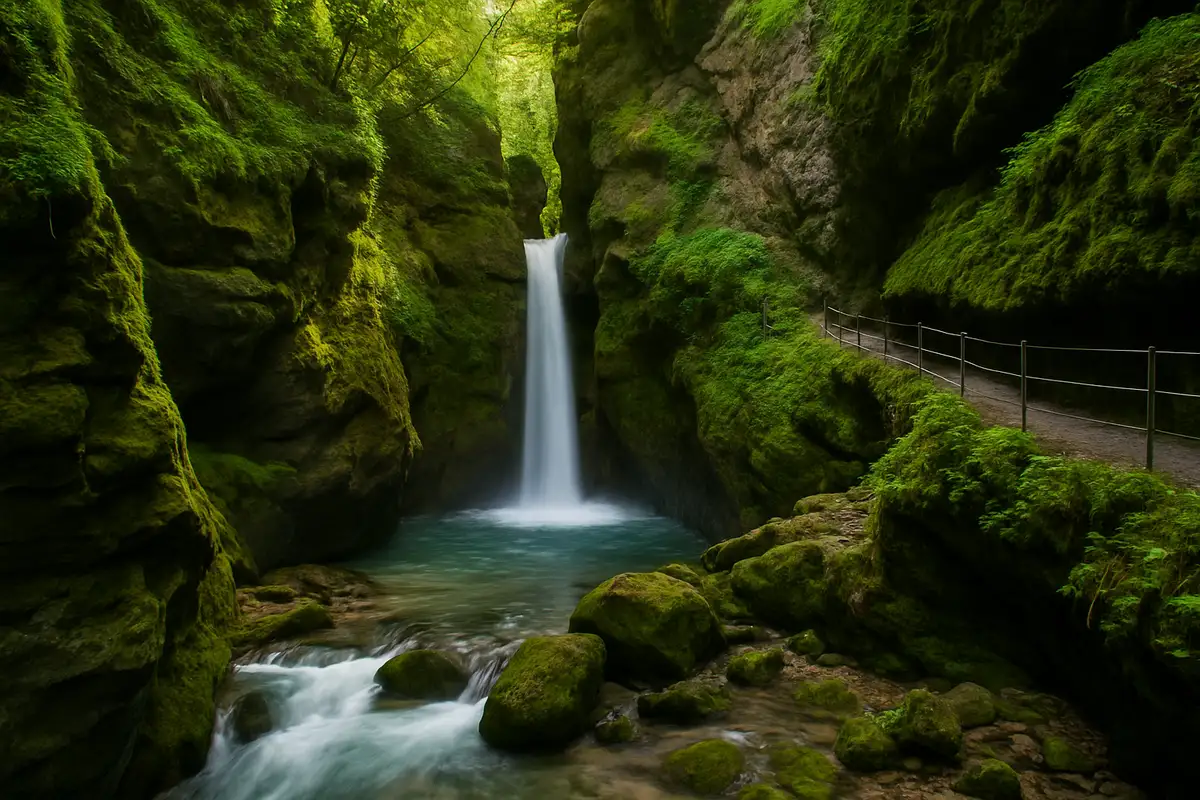
In the wooded heights overlooking the Lake Annecy, there is a place few visitors suspect exists. A spot where water has been shaping the rock for millennia, carving out narrow gorges, emerald basins, and walls covered in moss. It is here, in this almost unreal setting, that the Angon canyon unfolds its dizzying course.
This natural site is one of the most spectacular in Haute-Savoie. Located between Talloires and the Forclaz Pass, the canyon is renowned as much for its postcard landscapes as for its thrilling sensations. The adventure begins with an approach hike through the forest, followed by rappels, natural slides, and jumps into the water. All in the heart of a narrow gorge, cool even in the height of summer, where light gently filters between the cliffs.
A total sensory immersion
The sound of water trickling, the echo of your footsteps on the wet rock, the joyful cries of canyoning participants, everything here reconnects you with life. Even without equipment, a simple path allows you to reach the famous viewpoint of the Angon waterfall, from where you overlook an impressive waterfall over 60 meters high.
An unforgettable travel impression
I discovered this place on a summer morning. It was already warm by the lake, but as I climbed towards the canyon, the temperature dropped. The silence of the forest, then the sudden coolness of the gorges… and finally, that first glimpse of the waterfall plunging into the void. A striking impression of natural power, almost mystical. I continued along the suspended path that runs along the wall — a bit slippery, but magnificent. The kind of experience that stays etched in memory for a long time.
And this secret place…

…is the Angon canyon, a spectacular natural site located on the heights of Lake Annecy, in Haute-Savoie. Perfect for canyoning enthusiasts or simply nature hikers, it embodies that rare combination of thrills, raw beauty, and accessibility.
Practical information
| Item | Detail |
|---|---|
| Location | Talloires-Montmin, Haute-Savoie |
| Type of activity | Canyoning or hiking (free up to the waterfall) |
| Difficulty | Medium (beware of wet trail) |
| Best period | May to September |
| Access | From Angon (parking), 30–45 min walk |
Technical difficulty of Angon canyon
Angon canyon is one of the most famous in Haute-Savoie… but it should not be taken lightly. There are several canyoning courses on this site, each with a different difficulty level:
1. The “Discovery” or “initiation” canyon (lower part)
- Duration: about 2 to 2.5 hours
- Audience: accessible to beginners and families (children from 10 years old, able to swim)
- Difficulty: easy to moderate
- Technical elements: small jumps (optional), natural slides, walking in the river, no big rappels
2. The “Integral” canyon (upper + lower parts)
- Duration: about 3.5 to 4.5 hours
- Audience: athletes, good physical condition required
- Difficulty: moderate to difficult
- Technical elements:
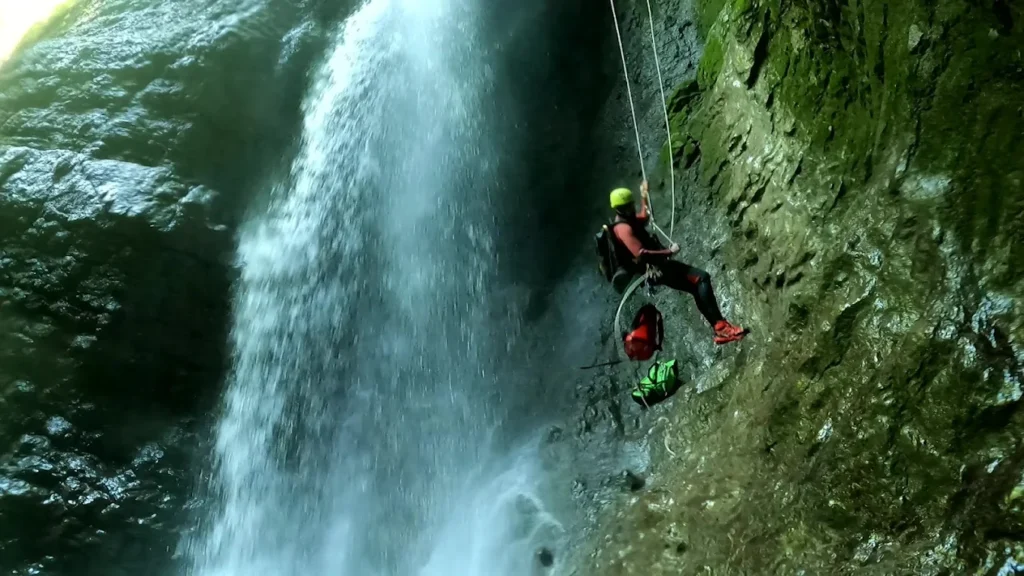
- Rappels up to 45 meters (notably the Angon waterfall rappel)
- Mandatory jumps up to 6 meters (often avoidable)
- Progression through narrow, slippery gorges
- Presence of siphons, white-water swimming, and rope handling
Points of attention
- Canyoning is not recommended without professional supervision.
- Weather conditions strongly influence safety: after recent rain, the canyon can become dangerous.
- Wearing a helmet, harness, wetsuit, lanyard, and descender is mandatory (provided by guides).