
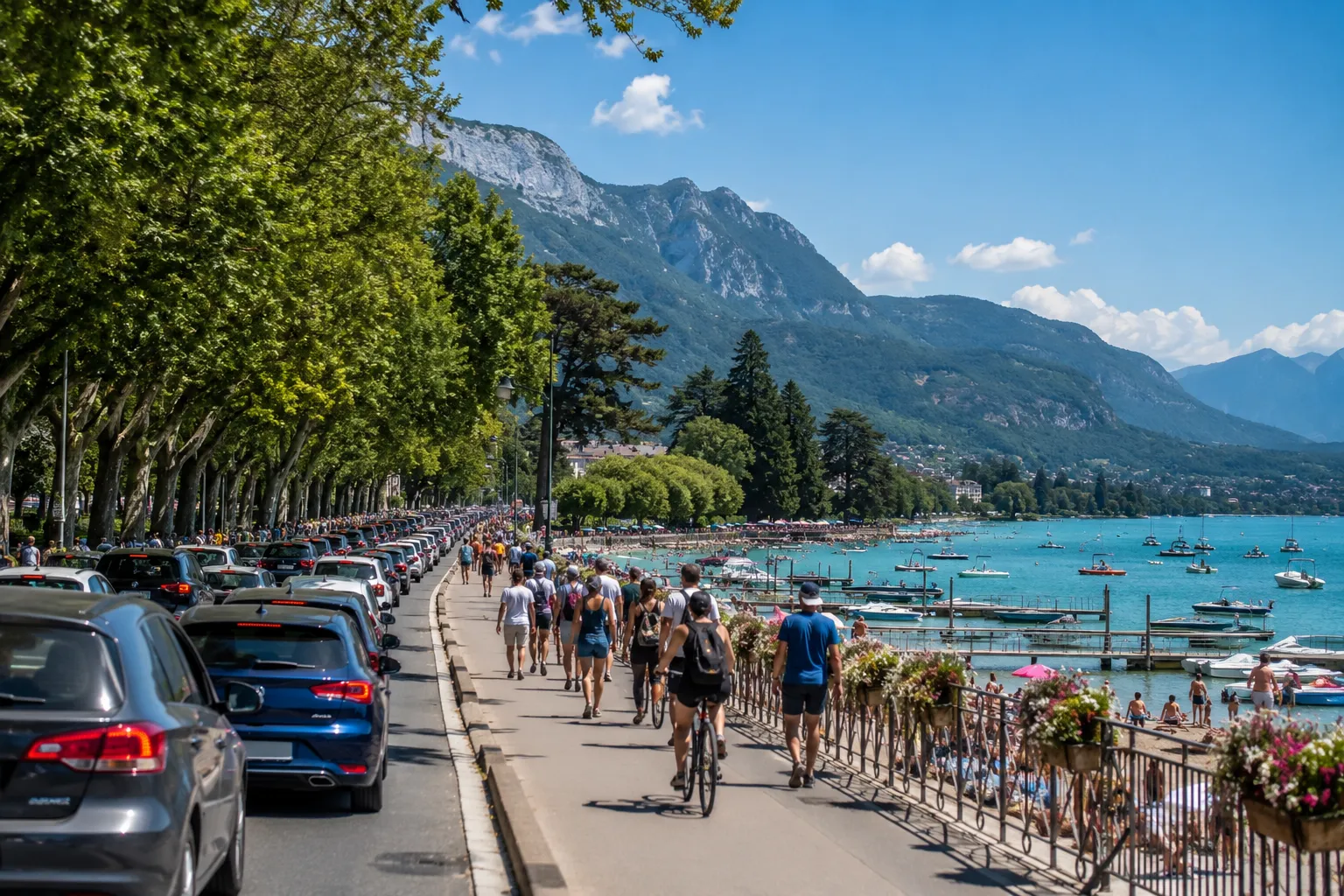
Each summer, Lake Annecy attracts hundreds of thousands of visitors who come to enjoy its turquoise waters and exceptional setting. But this record popularity also leads to traffic jams, saturated parking lots, crowded beaches, and increasing pressure on the neighboring municipalities. Faced with this situation, several local authorities are now considering strong measures to limit car traffic and preserve this iconic site of Haute-Savoie.
A tourist success reaching its limits
Lake Annecy is one of the most popular destinations in France during the summer period. From the first sunny weekends, the roads leading to the beaches quickly become congested. Car queues lengthen, parking lots fill up by mid-morning, and traffic sometimes becomes very difficult on the east shore as well as on the west shore, and even cycling around the lake is a real challenge.
This exceptional attendance obviously benefits the local economy, but it also puts infrastructure under pressure. Residents regularly report nuisances related to traffic jams, illegal parking, and noise, while natural spaces experience an ever-increasing number of visitors.
Municipalities considering traffic restrictions
To face this situation, several municipalities around the lake have been working for several years on solutions to reduce the presence of cars during the summer.
The options being studied include:
- temporary closure of certain roads to car traffic;
- limited access zones on the busiest days;
- developing park-and-ride lots outside the most sensitive areas;
- strengthening shuttle services and public transport;
- more facilities for cyclists and pedestrians.
The goal is not to prevent visitors from coming, but to organize travel differently to limit congestion around the lake.
An idea already inspired by other destinations
This type of measure is no longer exceptional in major tourist destinations. Several natural sites in France and Europe now limit car access during certain periods to preserve their environment while improving visitor comfort.
Around Lake Annecy, elected officials are closely watching these experiences. The idea of more regulated access regularly comes up in discussions, especially during summer peak periods when traffic sometimes becomes nearly impossible.
Preserving a fragile environment
Beyond traffic problems, the issue is also environmental. Lake Annecy benefits from remarkable water quality, the result of several decades of protection efforts.
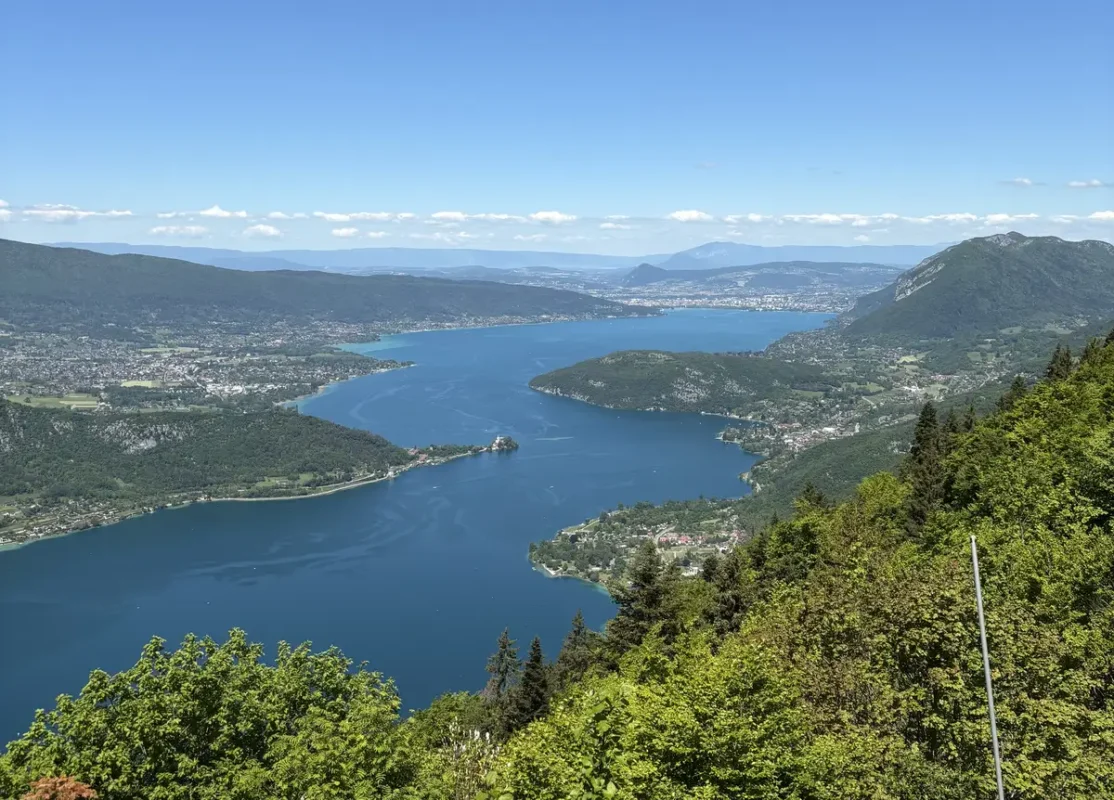
Increasing attendance leads to more waste, increased pressure on beaches, natural spaces, and reserves around the lake. Local authorities therefore seek to reconcile tourism appeal with the preservation of this exceptional natural heritage.
This reflection is part of a broader sustainable tourism approach already underway in the territory.
Soft mobility gains ground
The development of the cycle path that circles a large part of the lake illustrates this desire to offer alternatives to cars. Each year, more and more visitors choose cycling, whether traditional or electric, to reach the beaches or discover the lakeside villages. But this only dilutes the problem since it is now this cycle path that is overcrowded.
Boat connections, summer buses, and shuttles could also play a more important role in the coming years if the projects currently being studied come to fruition.
Visitors may have to change their habits
If these measures are implemented, they will gradually change the way to discover Lake Annecy. Tourists would be encouraged to leave their cars on the outskirts to reach beaches or villages by public transport or bicycle.
For elected officials, it is above all about preserving the quality of life for residents while maintaining the tourist appeal of the area. A delicate balance, but one that has become essential given the attendance that keeps breaking records every summer.
My advice
During the high season, favor arriving before 9 a.m. or late afternoon. You will enjoy easier access to the beaches, smoother traffic, and a far more pleasant experience than at the peak of the day.
Cover photo: AI illustration