In brief:
Before looking at local specifics, classic investment vehicles (PER, PEL, life insurance) remain the foundation of any wealth strategy, including in Haute-Savoie. The department combines rare assets: Swiss border, Lake Geneva, Mont Blanc massif, and one of the most dynamic economic areas in France, which opens up specific investment opportunities (tourist rental real estate, LMNP in resorts, cross-border worker status). Real estate prices remain very heterogeneous: from less than €3,000/m² in the Arve valley to over €12,000/m² in Chamonix. The taxation of furnished tourist rentals was tightened in 2026 (Le Meur law), a point to consider before any seasonal rental project in the mountains.
Why consider this question in Haute-Savoie?
Haute-Savoie is not a department like any other in terms of wealth management. It concentrates a population of Swiss cross-border workers with high incomes, an international tourist basin (Chamonix, Megève, Annecy, Évian), a dense industrial economy in the Arve valley (precision machining), and a real estate market under constant pressure. This combination creates investment opportunities not found elsewhere in France, but it also requires a good mastery of the basics before specializing.
1. Classic investments: the foundation of any strategy
Regardless of the place of residence, a wealth project generally starts with regulated or fiscally advantageous investment vehicles.
The Retirement Savings Plan (PER)
The PER allows voluntary contributions to be deducted from taxable income, up to a ceiling calculated based on the PASS (annual Social Security ceiling). For 2026, the maximum deduction ceiling is €37,680 for employees and can reach €88,911 for self-employed workers (TNS). A decree published at the beginning of 2026 also raised social contributions to 18.6% and ended the deductibility of contributions made after age 70.
For a cross-border executive working in Geneva or the canton of Vaud, the PER deserves specific analysis: income earned in Switzerland is not always taken into account in the same way in the deduction ceiling calculation, and coordination with the Swiss 2nd pillar (LPP) must be verified with an advisor familiar with cross-border taxation.
The Home Savings Plan (PEL)
For PELs opened in 2026, the gross interest rate is set at 2% per year, with interest capitalized every December 31. The payment ceiling is €61,200 and opening requires a minimum initial payment of €225, supplemented by at least €540 per year. The associated home savings loan is guaranteed at 3.20%, a point that can make sense in a department where real estate loans finance properties with prices per m² well above the national averages.
Life insurance
Always popular for its flexibility (free contributions and withdrawals, transfer outside inheritance within certain limits), life insurance remains a relevant tool to house emergency savings or prepare a transfer, especially for owners of secondary residences in Haute-Savoie wishing to organize their estate without increasing their heirs’ tax burden.
To better understand how to coordinate these three investment vehicles according to your profile, this video explains a simple method to prioritize savings.
2. Investments more specific to Haute-Savoie
Once the foundation is laid, several territory-specific paths deserve study.
Residential real estate: a two-speed market
The Haute-Savoie real estate market is marked by considerable disparities depending on the area:
- in Annecy, the average price per m² for an apartment was €5,930 at the beginning of 2026, compared to €7,435 for a house;
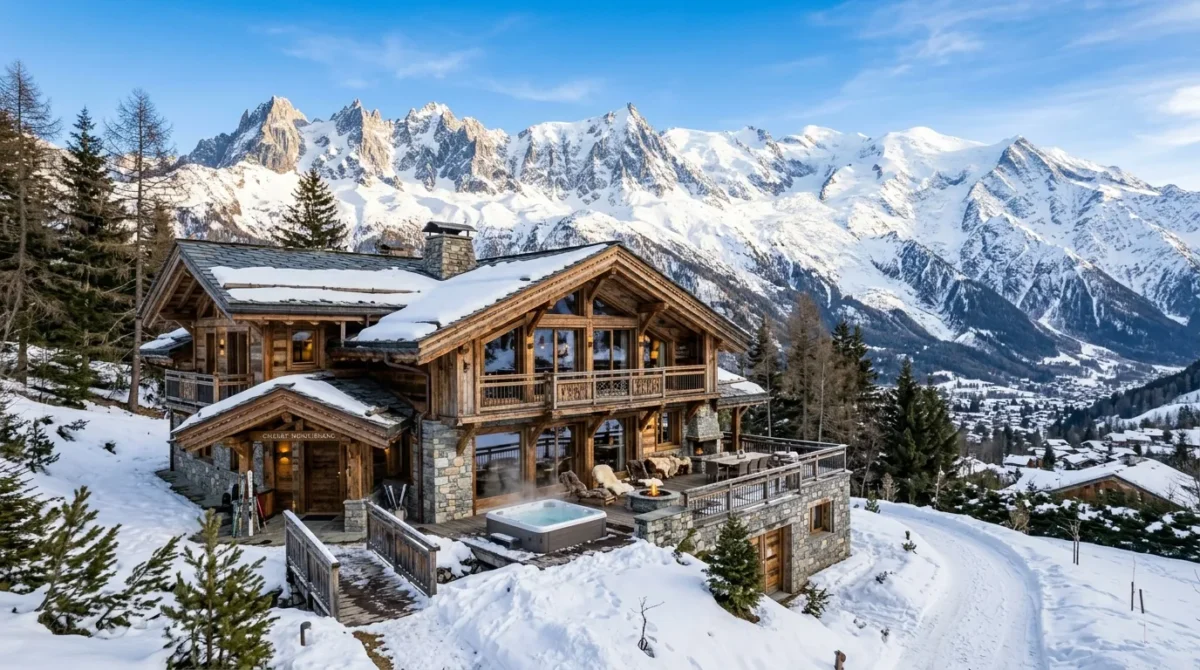
- in Chamonix-Mont-Blanc, prices exceed €12,700/m² for a house, driven by international tourist demand;
- in Megève and Les Houches, prices for the most sought-after properties can exceed €9,000 to €11,000/m², notably for properties with views or strong rental potential;
- moving away from the Swiss border or Lake Geneva significantly reduces costs, with the Arve valley offering a much lower entry price than lakefront sectors.
This heterogeneity requires a differentiated strategy: patrimonial investment and high-end secondary residence in resorts, classic rental investment in medium-sized towns of the Arve valley or the Annecy basin.
The LMNP in furnished tourist rentals: beware of 2026 taxation
Investment in furnished tourist rentals (chalets, apartments in resorts) has long been a favored gateway to investing in Haute-Savoie. The situation changed with the reform called the “Le Meur law”:
- the micro-BIC regime allowance is now set at 50% for long-term furnished rentals and classified tourist rentals, compared to 30% for non-classified tourist rentals;
- the micro-BIC regime threshold for a non-classified tourist rental is lowered to €15,000 in annual revenue, compared to €77,700 for a classified rental, now raised to €83,600 according to the latest regulatory clarifications.
Practically, a chalet rented as a non-classified furnished tourist rental in Chamonix or Megève loses much of its micro-BIC fiscal interest beyond this threshold. The property’s classification (1 to 5 stars) and, when applicable, switching to the real regime with depreciation become levers to systematically study before investing.
Cross-border worker status: a parameter not to overlook
With several tens of thousands of cross-border workers towards Geneva and the canton of Vaud, Haute-Savoie has a strong wealth specificity: income earned in Swiss francs, coordination between the Swiss 2nd/3rd pillar and French envelopes (PER, life insurance), and exchange rules must be integrated into any investment strategy. A cross-border worker neither has the same effective deduction ceilings nor the same retirement coverage needs as an employee working solely in France.
Investment in the local economy
Less known, the industrial fabric of the Arve valley (precision machining, automotive and aeronautical subcontracting) offers crowdfunding or regional private equity opportunities, via crowdfunding platforms or regional funds. These investments remain riskier and less liquid than classic envelopes but allow support for a recognized local economic fabric.
Comparative table of investment solutions in Haute-Savoie
| Investment | Advantages | Disadvantages | Key conditions (2026) |
|---|---|---|---|
| PER | Tax deduction on entry; suited to high marginal tax rates, common among cross-border workers | Savings locked until retirement (except early release cases); no deduction after age 70 | Ceiling from €37,680 (employee) to €88,911 (self-employed) |
| PEL | Guaranteed rate at opening; right to a mortgage loan at fixed rate | Modest yield compared to Livret A; mandatory minimum payments | 2026 rate: 2% gross; ceiling €61,200; minimum €540/year |
| Life insurance | Flexibility of payments/withdrawals; advantageous transfer | Graduated taxation by age; variable management fees | No ceiling; optimal tax regime after 8 years |
| Classic rental real estate (Arve valley, urban area) | More accessible market; rental demand linked to industrial and cross-border employment | Variable yield depending on municipality | Average price around €3,000-5,000/m² depending on area |
| Resort real estate (Chamonix, Megève) | Strong appreciation, international tourist demand | Very high entry price (up to €12,700/m²); tight market | Among the highest prices per m² in France |
| LMNP furnished tourist rentals | Potentially high rental income in season | Taxation tightened in 2026 (reduced allowance, lowered thresholds) | Allowance 30% (non-classified) to 50% (classified); thresholds €15,000 / €83,600 |
| Swiss 2nd/3rd pillar savings (cross-border workers) | Completes retirement for cross-border workers | Complex coordination with French taxation | To be validated depending on status and employer |
Key takeaways
Investing in Haute-Savoie means not opposing classic investments and local opportunities: some serve as the foundation, others allow taking advantage of the region’s specifics (Swiss border, mountain tourism, real estate pressure). The 2026 tax reform of furnished tourist rentals changes the rules for seasonal rental investors, while cross-border worker status requires a particular interpretation of the PER and life insurance. In all cases, a personalized analysis with a wealth management advisor familiar with cross-border specifics is recommended before committing significant amounts.
Download the infographic summarizing this article
FAQ
Is the PEL still interesting in Haute-Savoie given real estate prices? With a ceiling of €61,200, the PEL is insufficient to finance purchases in the most pressured areas (Annecy, Chamonix), but it remains useful as complementary project savings or to secure a loan rate.
Is the LMNP status still profitable for a chalet in a resort? This now strongly depends on the property’s classification and revenue level. Beyond the new thresholds, switching to the real regime with depreciation should be considered to retain a significant fiscal advantage.
Can a Swiss cross-border worker open a PER in France? Yes, but the deduction ceiling calculation and coordination with Swiss pension pillars require individual analysis, as the situation varies depending on tax status and employer.
Where to invest in real estate in Haute-Savoie with a limited budget? The Arve valley (Cluses, Sallanches, Bonneville) and some municipalities outside the lake basin offer prices per m² significantly lower than in Annecy or ski resorts.
Sources: service-public.fr, France Épargne, Les Clés de la Banque, MeilleursAgents, SeLoger, PAP, Foncia. This article is for informational purposes and does not constitute personalized investment advice.