
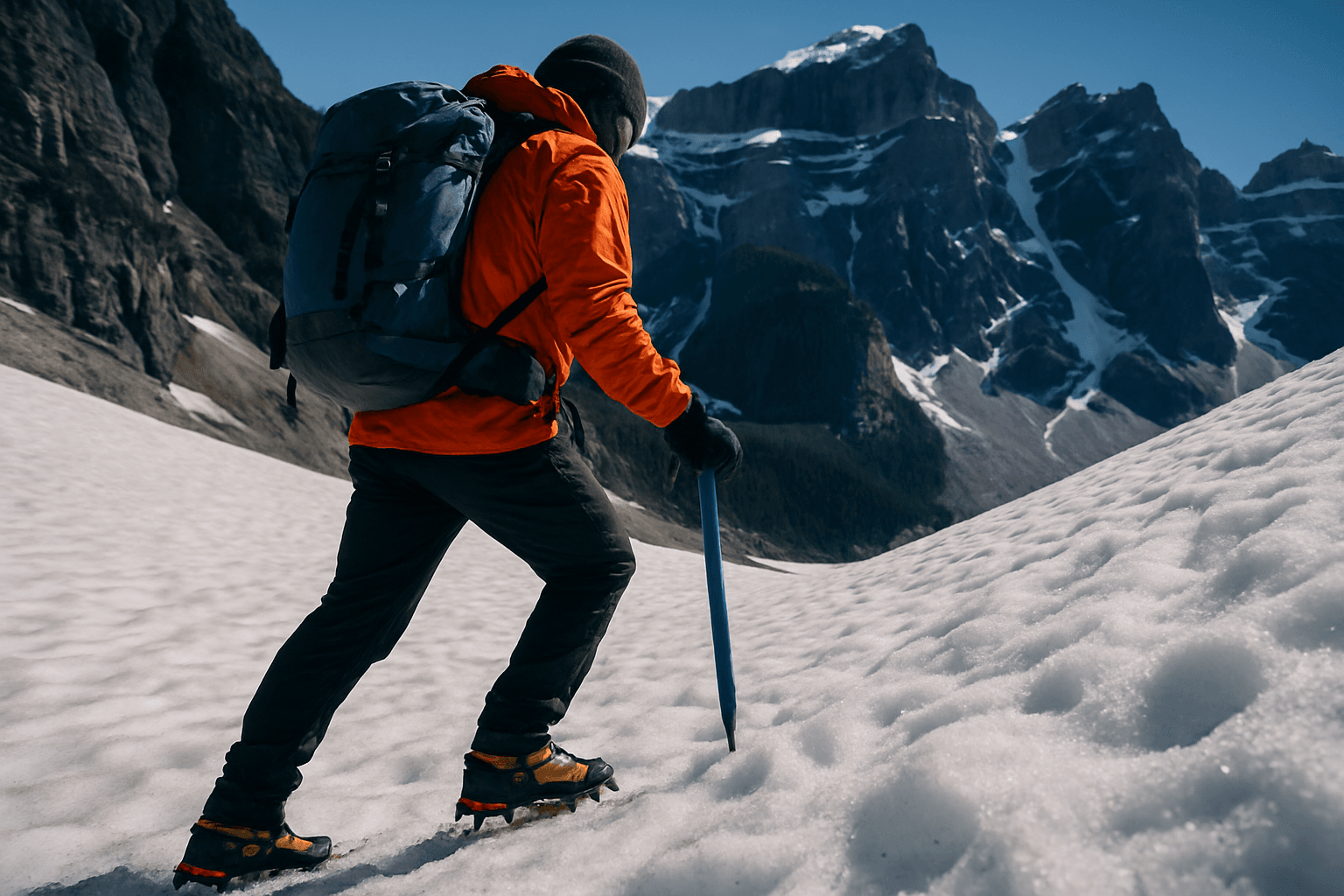
The presence of névés in the mountains represents a common challenge for hikers, especially in spring and early summer. These persistent snow accumulations, often found above 1,500 meters in altitude or on north-facing slopes, can present significant risks. Preparation and knowledge of good practices are essential to reduce dangers when crossing a névé.
Definition and characteristics of a névé
A névé is a snow accumulation that remains after spring melting, generally at altitude or in areas with little sun exposure. Its structure, denser and more compact than fresh snow, sometimes resembles ice, especially in the morning when temperatures are low. This phenomenon is common in French mountain ranges such as the Alps, the Jura, or the Vosges, where névés can be found until the end of summer.
Risks related to crossing a névé
The main danger when crossing a névé lies in the risk of falling and slipping. On a slope greater than 30%, it becomes practically impossible to stop without proper equipment. A slip can lead the hiker towards hazardous areas such as ravines, rock faces, or scree slopes. The snow can also conceal streams or crevasses, increasing the risk of breaking through a weak layer.
Criteria for identifying a dangerous névé
Several factors help assess the danger of a névé:
- What is under the névé: possible presence of a stream or crevasses.
- The foot of the névé: existence of obstacles downhill (cliff, scree, etc.).
- Type of snow: icy snow in the morning, soft at the end of the day.
- Slope of the névé: the steeper the slope, the higher the risk of slipping.
Preparation and route choice
Before any hike, it is recommended to consult specialized websites such as Sentineige.fr or the bulletins of Météo France to obtain updated information on snow coverage. These tools help identify the potential presence of névés on the planned route and anticipate risk areas.
Essential equipment for crossing a névé
Using suitable equipment is essential to ensure safety when crossing a névé. The two main items to prioritize are:
- Ice axe: allows stopping a fall and ensuring a solid anchor.
- Crampons: improve grip on hard or icy snow.
Trekking poles can provide additional support, but they do not stop a slide. It is advisable to choose lightweight and easy-to-install crampons suitable for summer hiking.
| Equipment | Model | Weight (g) |
|---|---|---|
| Ice axe | Camp Corsa Race | 185 |
| Ice axe | Petzl Ride | 240 |
| Crampons | Camp Icemaster Run | 170 |
| Crampons | Petzl Leopard FL | 360 |
| Crampons | Quechua SH500 Mountain Light | 230 |
Techniques for crossing a névé
Before engaging on a névé, it is advisable to assess the possibility of circumventing it without exposing oneself to other risks (steep slope, unstable terrain). If crossing is unavoidable, it is recommended to follow the tracks left by other hikers or create firm steps using feet and a pole or ice axe.
How to stop a fall with an ice axe?
In case of a fall, the reflex is to turn onto the stomach, head facing uphill, and plant the axe blade into the snow at shoulder height.
If crampons are used, it is necessary to lift the feet to avoid uncontrolled rolling. Mastery of these gestures requires specific training, ideally with a mountain professional.
Practical safety advice
To limit risks when crossing a névé, it is recommended to apply the following advice:
- Do not go alone when hiking in névé zones.
- Give up if conditions do not allow a safe crossing or circumvention.
- Check snow coverage before setting out.
- Prefer the summer period (July-August) to reduce the presence of névés at mid and high elevations.
Conclusion
Crossing a névé in the mountains requires vigilance, preparation, and appropriate equipment. The risks of slipping and falling are real, especially on steep slopes or when the snow is icy.
The use of an ice axe, crampons, and suitable hiking boots, as well as knowledge of safety techniques, are essential for moving confidently on this type of terrain. Careful preparation and evaluation of conditions on site allow enjoyment of the mountains while limiting dangers.
FAQ – How to safely cross a névé
Can you cross a névé without an ice axe or crampons? It is not recommended once the slope becomes significant or the snow is hard. Without an ice axe to stop a possible fall nor crampons to ensure grip, the risk of uncontrolled slipping greatly increases. If the passage seems too exposed without this equipment, it is better to look for a detour or give up.
When is the period with the most névés in Haute-Savoie? Névés are mainly present in spring and early summer, especially above 1,500 meters altitude or on north-facing slopes. Favoring the summer period (July-August) significantly reduces their presence on mid and high mountain routes.
What to do if you don’t have the right equipment when facing a névé? The best option remains to give up crossing rather than to engage without appropriate gear. It is also possible to look for a detour path, provided it does not expose to other risks such as steep slopes or unstable terrain.
How to recognize a dangerous névé? Several elements allow assessing the danger: possible presence of a stream or crevasses under the snow, presence of obstacles downhill (cliff, scree), type of snow (icy in the morning, soft in the late afternoon), and the slope of the névé — the steeper, the higher the risk of slipping.
Are trekking poles enough to cross a névé? No. Poles can offer balance support but do not allow stopping a slide in case of a fall, unlike the ice axe. For a committed névé, the ice axe and crampons remain the reference equipment.
Where to check snow conditions before a hike? Tools like Sentineige.fr or Météo France bulletins provide updated information on snow coverage and help anticipate the presence of névés on the planned route.