
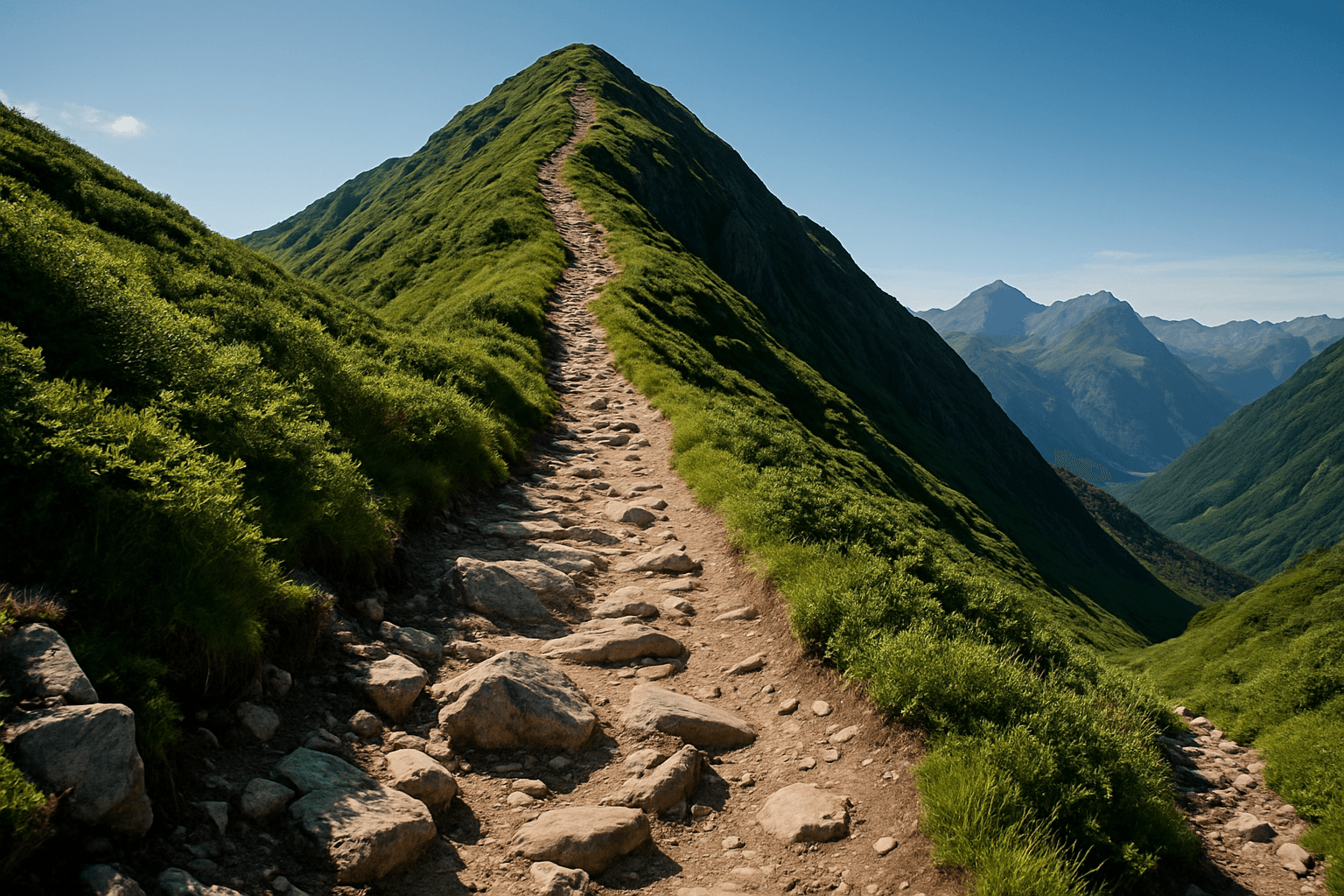
Does the idea of climbing 1,000 meters of elevation gain fill you with as much excitement as apprehension? Rest assured: there are precise tips to turn this vertical challenge into an exhilarating adventure, without ending up out of breath around the next bend. Here is a lively guide, enriched with personal experiences, to accompany you step by step to the summit.
The reality of positive elevation gain: much more than a simple climb
When looking at a map, the number representing elevation gain can seem abstract. Yet, 1,000 meters is like climbing a giant staircase, step by step, until you feel gravity pulling on every muscle fiber. It’s not the difference between the starting point and the summit that counts, but the total of all the ascents.
Sometimes, starting at 2,000 meters altitude can deceive your vigilance: the real difficulty is the steepness of the slope. The steeper it rises, the faster your heart beats, and each step becomes a victory over yourself.
Climbing is walking… but amplified
Remember this valuable equivalence: 100 meters of elevation gain corresponds to 1 kilometer on flat ground. Thus, a 10 km hike with 1,000 m of elevation gain is equivalent to covering 20 kilometers on flat terrain. The effort is much more intense, localized in the legs and breath.
On the trail, your speed collapses as soon as the slope steepens. Forget the idea of running: consistency is key. Roots and rocks break your rhythm, taxing every joint. Climbing is the dance of short breath and burning muscles.
How much time to allow?
For a beginner, count about 300 meters of elevation gain per hour. To cover 1,000 meters, plan at least 3 hours 30 minutes of pure ascent, not forgetting photo breaks, hydration, and the descent which, although faster, will put your knees to the test. Trained hikers can cover up to 700/800m of elevation gain per hour depending on terrain, or even more for extraterrestrials like Kilian Jornet.
Personally, when I took the mountain guide probationary test a long time ago (1994), I maintained an average pace of about 700m of elevation per hour, which is already quite good. But this can vary greatly depending on the terrain profile, of course.
Fatigue accumulating insidiously, always keep a safety margin, especially when the light fades and the summit still seems far away.
Know yourself to progress better
Before setting off, take stock of your current fitness. There’s no point in rushing if your body isn’t ready to follow the call of the mountains. At best, you’ll discourage yourself; at worst, injure yourself.
Listen to your body and your history
Note your weekly activities: cycling, running, walking… but nothing replaces the specific practice of hiking. Be attentive to old injuries. A sensitive knee on flat ground will quickly become your Achilles’ heel on the descent.
If your daily life is sedentary, wake up your body gently. I myself was surprised, after months of teleworking, by the stiffness in my legs during the first serious climb.
The local hill test
Climb a 200 or 300 meter hill without stopping. Feel your breath rise, the burn in your thighs. If the next day you struggle to walk down stairs, the room for improvement is still large!
Also test your balance on unstable ground, and walk one hour with a weighted backpack: your back and ankles quickly reveal their weak spots.
After 40, a medical check-up is necessary. Have your heart checked, talk about your project. A simple breathing test can reassure and avoid many setbacks.
Build endurance that can withstand anything
To triumph over elevation gain, you need to build a solid engine. Endurance is developed, week by week, with method and passion.
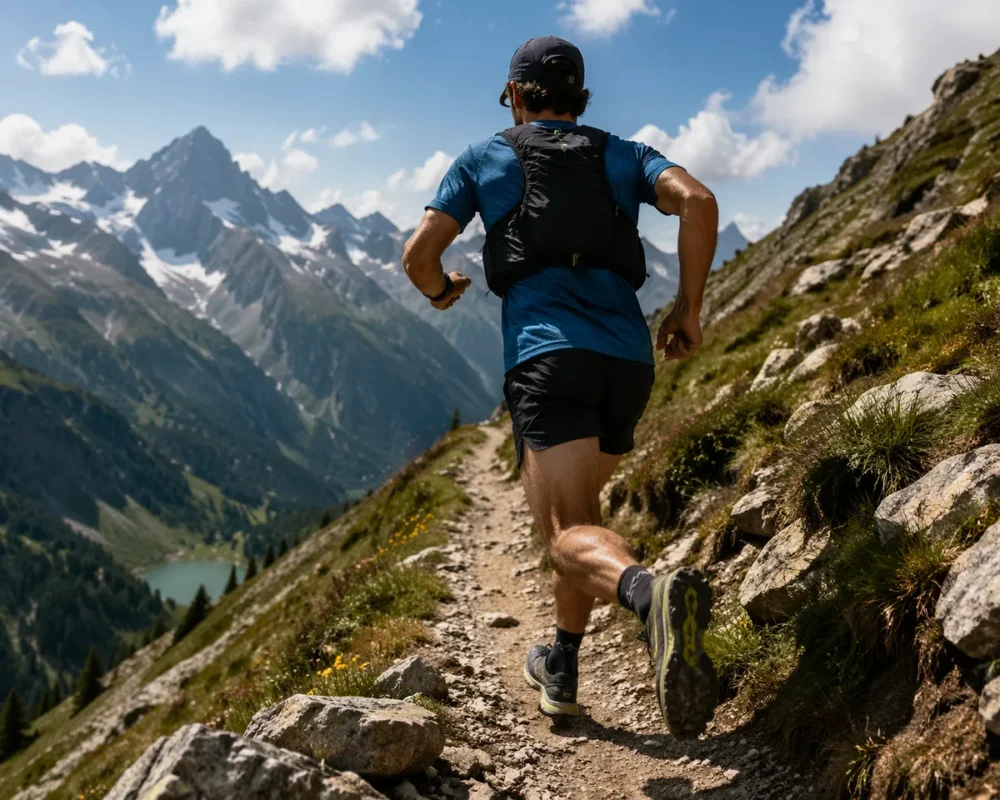
Brisk walking and interval training
Alternate 5 minutes of brisk walking with 2 minutes slower. On rolling trails, this rhythm game transforms your breath and sharpens your mind. Gradually, increase your outings by 15 minutes each week.
Cycling to protect the joints
Cycling is the magic of a gentle workout for the knees. Pedal long at moderate intensity to train your body to draw on its reserves. Change routes to avoid routine. Of course, if you mountain bike, avoid cycling uphill to Lake Gers or any other outing with a medium to high elevation gain. Prefer flat terrain outings, in the valley bottom, or at worst slightly hilly.
Swimming for breath and posture
Swimming requires breath control and engages all muscles. The water gently strengthens your back and abs, preparing you to carry your backpack painlessly.
Consistency, the key to success
Three sessions a week is ideal. Move every day, even a little. Consistency always beats isolated feats.
Legs ready to face the slope
Nothing beats powerful legs to tame the mountain. Targeted exercises make all the difference.
Quadriceps and glutes: your engines
Squats, lunges, controlled descents: these movements build strength and resistance to muscle burn. Work them in sets of fifteen, feel the heat rise in your thighs, learn to master this sensation.
Calves and ankles: stability and propulsion
Rise on your toes, slowly lower your heels into the void. Strong calves save energy, stable ankles prevent sprains. Good balance allows you to admire the scenery, without fixating on your feet at every step.
The abdominal belt, a guarantee of comfort
Core strengthening, especially the plank, protects your back from the weight of the pack. A strong trunk stabilizes every step, especially on technical trails.
Taming the weight of the pack and the terrain
Carrying 10 kg on your back disrupts balance and effort. Better to get used to it gradually.
Increase the load step by step
Start your outings with a very light pack, then add 500 g with each new hike. Place the heaviest items close to your back to avoid being pulled backward. Test your final setup on an hour’s walk to track rubbing points.
Simulate elevation gain in the city
Take advantage of bridges, ramps, urban hills. Inclined treadmills at the gym are also perfect for preparation. Ten minutes of stairs are worth an hour of flat walking!
Breathe, manage your mind, and savor the ascent
When your legs burn and the summit is slow to come, it’s your mind that takes over. Control your breathing, set small goals, and above all, lift your eyes to admire the panorama. Climbing 1,000 meters is above all a personal adventure, a story of overcoming and pride.
On the trail, every step, every breath, every landscape crossed enriches your memory. You will never truly come back the same after mastering the slope. So, ready to experience this climb as a victory over yourself?