
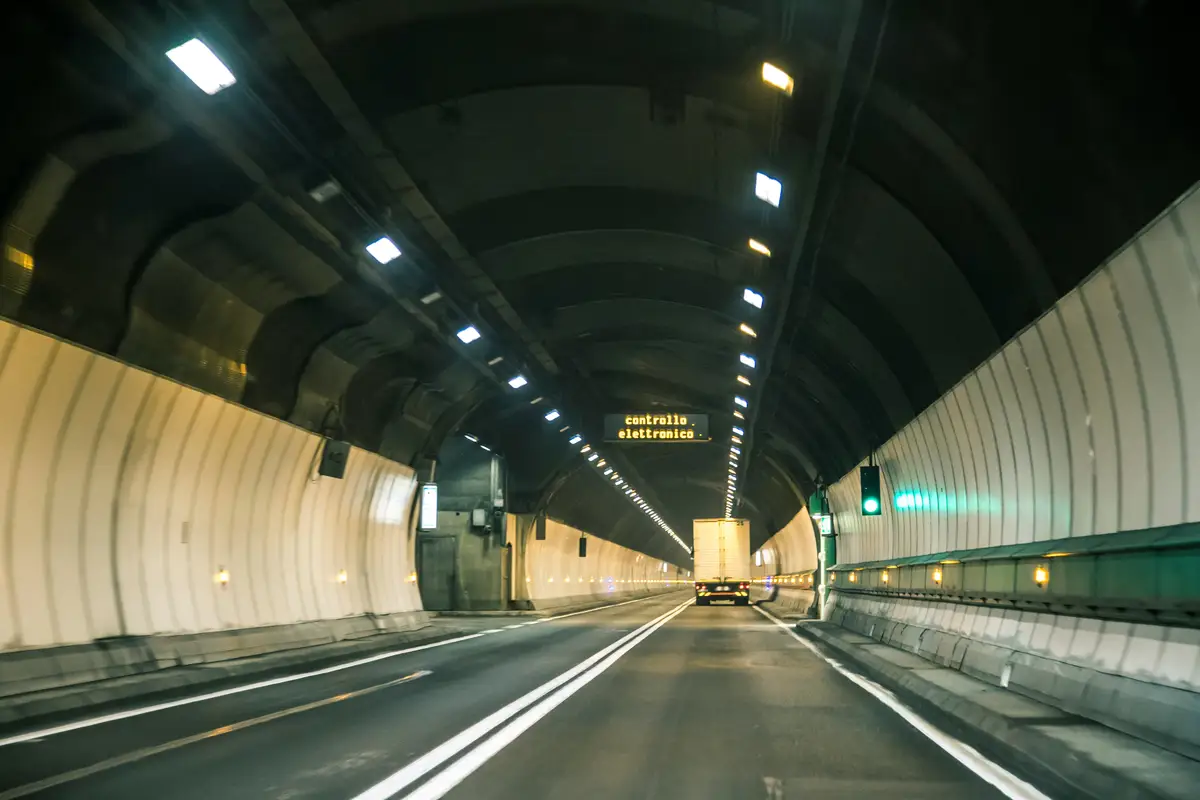
The elected representatives from Savoy have confirmed a major decision for the future of the Mont-Blanc tunnel: from 2030, the structure will undergo a series of planned closures lasting 17 years, with several months of shutdown each year. This option, preferred over a total closure of more than three years, aims to reconcile safety, modernization, and the maintenance of transalpine traffic.
A strategic choice to limit the impact on traffic
Gathered in the departmental council, the elected officials had two scenarios on the table:
- A complete closure of the tunnel lasting about three and a half years,
- A series of partial closures spread over 17 years.
The second option was chosen. Although longer, it allows to reduce economic and logistical disruptions on this major axis between France and Italy, used each year by more than 1.5 million vehicles.
The work will involve the complete refurbishment of the vault, nearly 6 kilometers of structure to be thoroughly modernized. This project will officially begin in 2030, following a phase of technical and regulatory preparation.
A large-scale project raising many questions
The departmental majority now calls on the State to implement accompanying measures, notably to:
- Manage traffic diversion towards the Fréjus tunnel, already heavily used,
- Assess the environmental impact of this redistribution of heavy vehicle traffic,
- Support the affected territories, which fear traffic jams, nuisances and increased pollution.
The elected officials remind that Mont-Blanc is one of the most sensitive road corridors in the Alps. Any change in usage immediately has consequences on air quality, road safety, and the local economy.
The State must now validate the schedule
The Department’s decision is only a step: the government must still officially confirm the schedule and the modalities of intervention. The discussions will also involve Italian authorities, as the tunnel is co-managed by both countries.
The first government decisions are expected in the coming months. If phased closure is confirmed, users will have to prepare for 17 years of regular disruptions, an unprecedented situation in the history of this strategic axis.