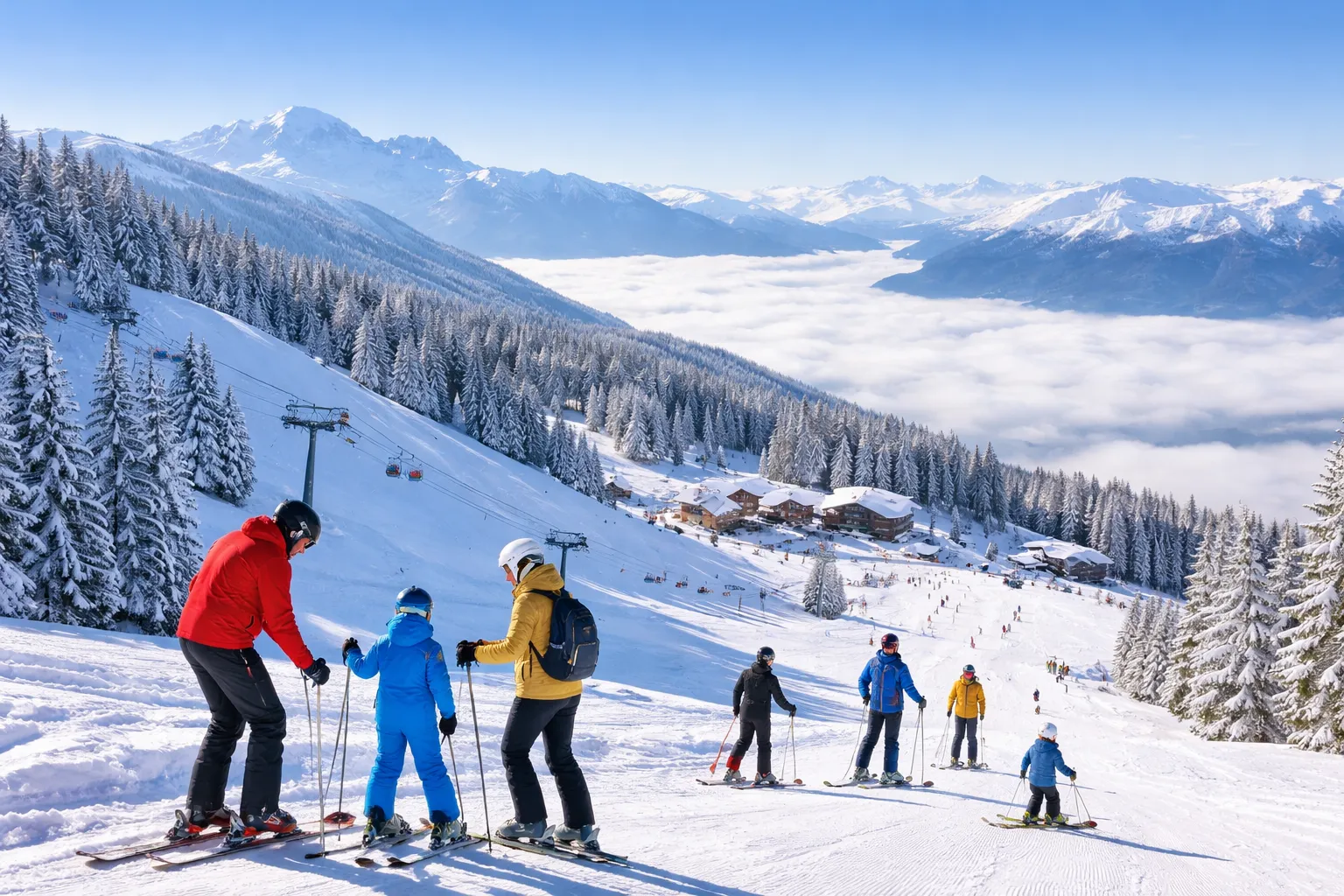
Haute-Savoie (the famous “74”) is not just a department, it is an institution of sliding sports. Between Mont Blanc rising on the horizon and the villages with wooden-shingled roofs, the experience is unique. But to avoid ending up stuck in a traffic jam or frozen at the top of a chairlift, here is the ultimate guide for the informed skier.
Access: the secret of regulars
Coming to Haute-Savoie often means aiming for Annecy or Chamonix. But the real logistical “hack” is called Geneva.
- The transport tip: Geneva Airport is less than an hour from the first resorts. The Léman Express (cross-border RER) now allows you to easily reach the Arve valley.
- Saturday is the enemy: If you can, avoid arriving or leaving on Saturday. Access to the Aravis resorts (La Clusaz) or the Giffre (Samoëns) quickly gets congested.
Geography: which mountain range for your style?
Not all slopes are alike. Here is how to choose your base camp:
| Type of skier | Recommended mountain range | Main asset |
| Sporty & Alpine | Mont Blanc massif | Dizzying slopes and legendary off-piste (Grands Montets). |
| Family & Tradition | Aravis massif | Sunny slopes, lively villages, and alpine farms. |
| Contemplative & Nature | Giffre massif | Wild landscapes and breathtaking views over the Cirque du Fer-à-Cheval. |
| Trendy & Design | Portes du Soleil | Pedestrian resorts (Avoriaz) and a ski area without borders (Switzerland). |
Equipment: the technique of 3 layers

In Haute-Savoie, the climate is described as “oceanic influence”: it can be very humid. Forget the thick wool sweater that weighs three tons once wet.
- The breathable layer: A thermal base layer (synthetic or merino wool).
- The insulating layer: A fleece or a light down jacket to keep warm.
- The protective layer: A waterproof and windproof jacket (Gore-Tex type).
Pro tip: Do not neglect sun protection. With the reflection on glaciers, even on cloudy days, “glasses tan” can turn into a second-degree burn in less than an hour.
Mountain Law: don’t play with the snow
Since 2021, the Mountain Law II requires specific equipment from November 1st to March 31st.
- Mandatory: Winter tires or removable anti-slip devices (chains/socks).
- Reality on the ground: Even if the road seems clear at the bottom, a “white out” can happen in 15 minutes. Knowing how to put on your chains before being in the dark, in a storm, at 1600m altitude, is a survival skill.
Gastronomy: beyond melted cheese
Yes, fondue and raclette reign supreme. But Haute-Savoie has other gems:
- Farcement: A sweet and savory dish made from potatoes, bacon, prunes, and raisins. It’s the secret of the mountaineers to last all day long.
- Craft beer: The department is full of microbreweries (like Marmotte or Brasserie du Mont-Blanc).
- Etiquette: Don’t order a “vin de Savoie” at random. Ask for a Mondeuse (red) for meat or a Chignin-Bergeron (white) for cheese.
Did you know?: the spirit of Haute-Savoie
- Reblochon: Its name comes from “re-blocher,” meaning to milk a second time. Farmers did this to pay less tax to landowners in the Middle Ages!
- Ski touring: It’s a major trend. Many resorts now offer marked routes to climb using your legs before descending the slopes.
A magnificent destination… if you plan ahead
Coming to ski in Haute-Savoie remains an exceptional experience, provided you arrive prepared. Choosing your resort carefully, anticipating travel, adapting your expectations, and staying flexible are the keys to a successful stay.
The reward? Spectacular landscapes, often generous snow, a unique atmosphere, and that incomparable feeling of escape that only the mountains can offer.