
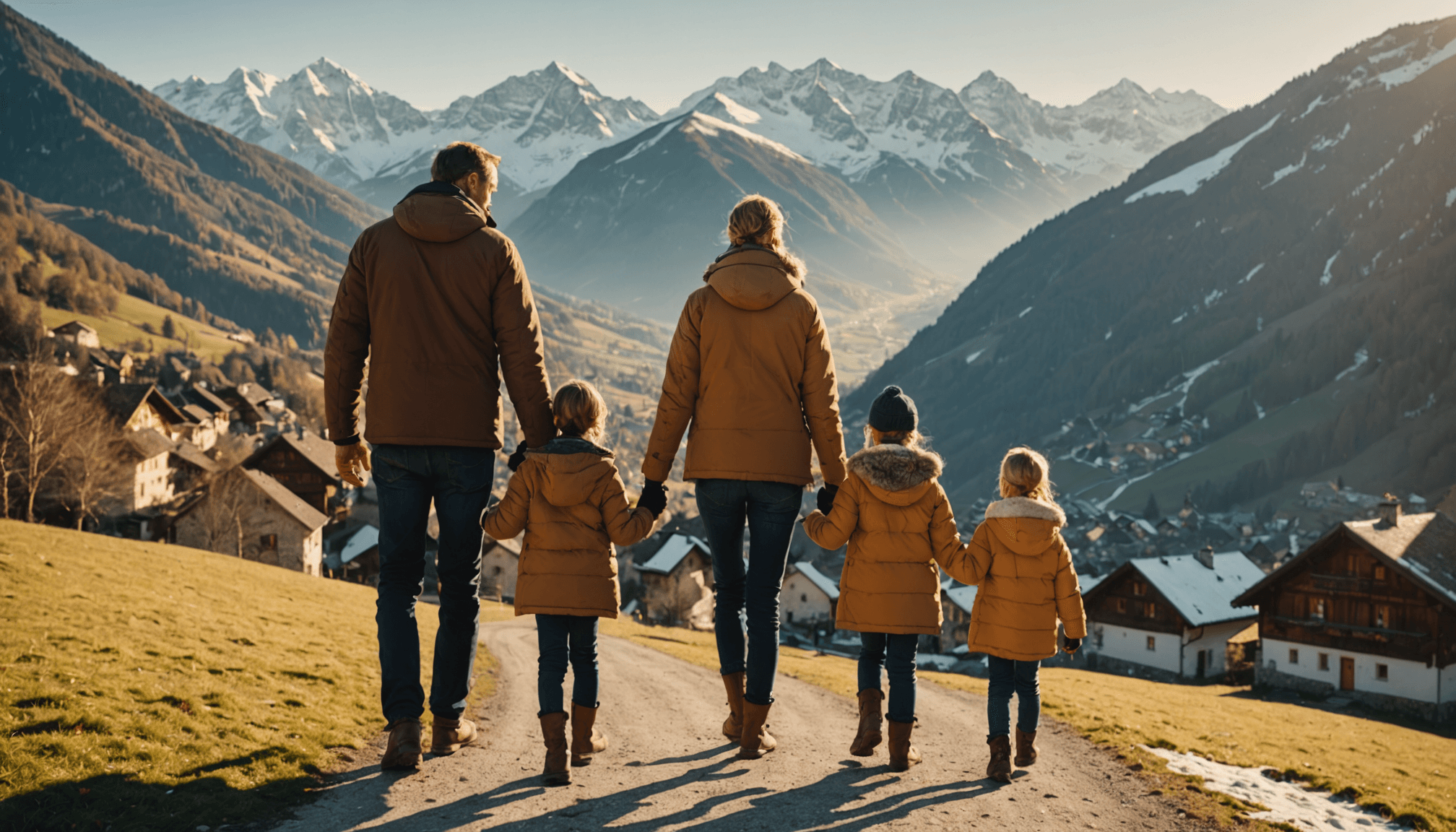
Between lake and peaks, Haute-Savoie attracts very different profiles: families seeking space, working people who want to breathe without cutting ties with the city, independents dreaming of a simpler daily life. I see here a territory that improves quality of life, but which also demands a real clarity. Here, the weather sometimes decides for you, every little trip has to be planned, and you quickly learn that comfort depends as much on insulation as on organization. This “life at the top” is not a slogan: it is a way of life, with its immediate joys (nature nearby, light, silence) and its small demands (heating, snow, roads, less nearby services).
To make things concrete, I will follow the story of a fictitious couple, Camille and Samir, with a school-aged child, and an activity combining teleworking and travel. Their journey resembles that of many newcomers: exploration through stays, choices between city and altitude, housing that finally ticks the right boxes, procedures, integration… and adjustments during the first months. If you are considering this change, the challenge is not to “idealize everything,” but to turn a desire into a solid project, with assumed choices. That is exactly what this guide aims to help you do, step by step.
Mountain life in Haute-Savoie: climate, seasons, and daily realities
Living in Haute-Savoie means accepting that the seasons structure your schedule. In the plains, you can improvise more easily. At altitude, you anticipate. Camille, who came from a big city, understood from the first autumn that the light falls faster behind the hills. She also discovered a simple rule: it’s not “cold” or “not cold,” it’s “humid,” “dry,” “windy,” “night frost,” and each nuance affects the road, health, or even mood.
The mountain climate changes the way you get around. Snow episodes are not constant, but when they fall, the logistics are mandatory: school schedules, travel time, parking, snow removal. Even at mid-altitude, the risk of early morning black ice is classic. I always advise thinking in “margins”: leave earlier, have a plan B, and avoid scheduling an important appointment on the first announced day of snowfall.
Preparing for constraints without giving up pleasure
The mountains offer a setting that, in my eyes, quickly becomes addictive: the sharper air, the panoramas, the feeling of space. Sunday outings no longer need to be “organized”: they are there, at the end of the path. Many new residents cite this proximity as their main driving force, and I understand them. But to enjoy it, you have to secure the basics: well-heated home, equipped car, suitable clothes, and a “weather” routine.
Some habits make an immediate difference. Camille installed a local weather app, and Samir put a shovel, a blanket, and gloves in the trunk. It’s not alarmism: it’s comfort. And at home, the heating budget deserves to be estimated from the start, because it can surprise you. A beautiful house, poorly insulated, can cost you dearly and exhaust you daily.
Relative isolation: it all depends on the valley and your lifestyle
Isolation is often talked about, but it is not uniform. Between a well-served municipality in the Annecy basin and a hamlet higher up, the reality changes. For some, it is sought-after peace. For others, it becomes heavy, especially in winter when social life tightens. The right criterion, in my view, is how often you need to “go down”: shopping, sports, healthcare, children’s activities.
I invite you to ask yourself a simple question: how many trips per week are you willing to make when the weather complicates everything? That is often where the success of the settlement is at stake. And since this success also depends on the choice of location, it’s time to talk about zones and housing.
Choosing where to settle in Haute-Savoie: zones, municipalities, housing, and essential criteria
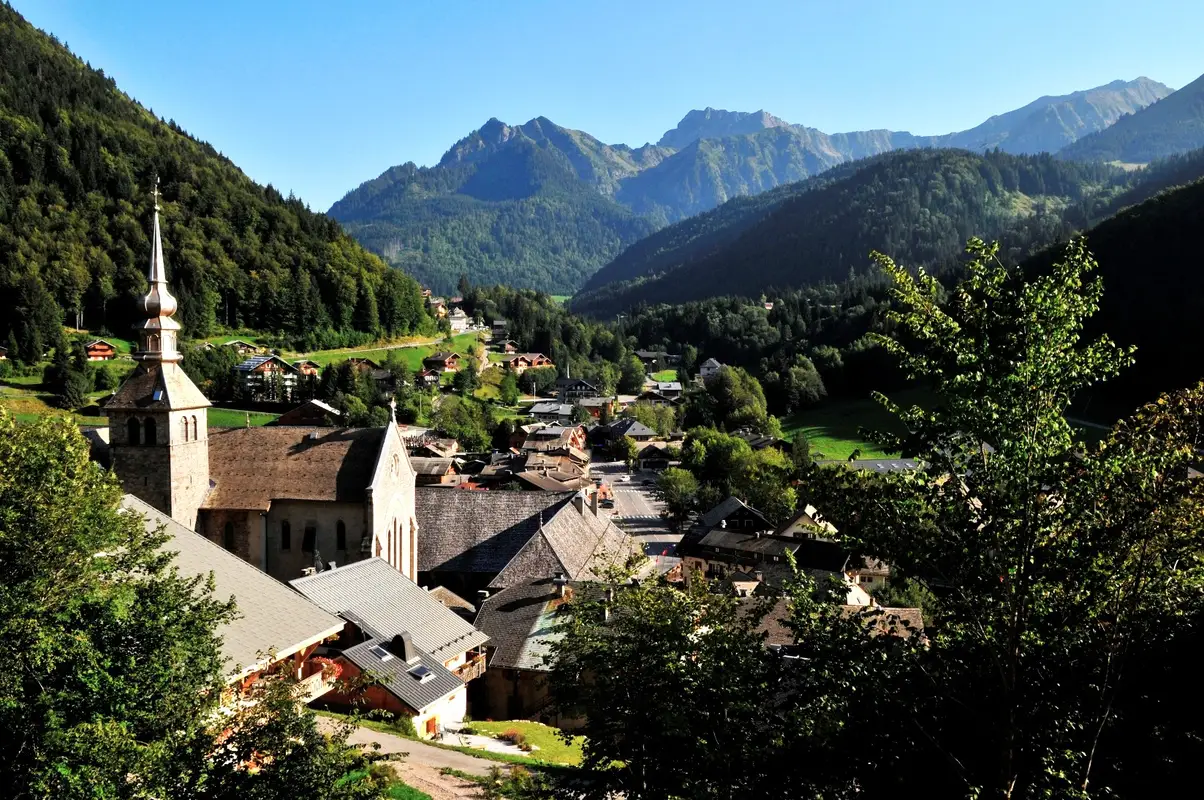
Choosing Haute-Savoie often means choosing a balance: nature + access. Some dream of an isolated chalet. Others want a lively town and services. I am convinced there is no “best” choice, just a choice consistent with your lifestyle. Camille and Samir hesitated between Chablais, the Annecy area, and a higher perched valley. Their decision was made on very concrete details: travel time, schools, internet connection, and the possibility of reaching an employment center.
Quick overview of massif ranges in France, then focus on Haute-Savoie
The Alps seduce by their variety: large lakes, resorts, inhabited valleys. The Pyrenees often offer a more “border” atmosphere, wilder, with very identity-rich valleys. The Massif Central offers gentler altitudes, sometimes more affordable budget-wise, but with long winters depending on the area. The Vosges play the card of forests and a rounder mountain, with interesting proximity to major routes.
In Haute-Savoie, the main asset is this rare combination: active cities, resorts, proximity to Switzerland, and work. To understand the territory’s appeal, just look at recent demographic dynamics: at the end of the 2010s, the department recorded a positive migration balance of about 9,000 inhabitants over a short period, a sign of a territory that continues to attract. In 2026, the resulting real estate pressure remains a central issue.
Lake, city, mid-mountain: how to decide without regret
If you love water as much as relief, the Annecy area is an obvious landmark. I encourage gathering information and going on site at several times of the year, as attendance changes greatly. To project yourself, practical information about discovering Lake Annecy helps visualize beaches, access points, and the general atmosphere.
Chablais often attracts cross-border workers, with municipalities oriented towards Lake Geneva, commutes to Geneva, and a local life mixing historic residents and newcomers. Another option I like, when looking for a compromise between centrality and human scale, are towns like La Roche-sur-Foron, which can reassure families thanks to a network of services and a practical location.
Housing: chalet, house, apartment… what I would check before signing
The “postcard” house is not always the one that simplifies life. A chalet can be wonderful but demanding: access, maintenance, snow management, humidity. An apartment near a center may seem less romantic, but it reduces daily effort. In all cases, I favor a factual checklist.
- Insulation: double glazing, attic, wall quality, feeling of cold surfaces.
- Heating: type, age of installation, estimated cost, availability of wood or fuel.
- Access: slope, snow removal, winter parking, “real” walking distance with snow.
- Connection: stable internet if you telework, test on site at different times.
- Natural risks: municipal information, sector history, zones to avoid.
- Practical life: distance to school, doctor, shops, transport, children’s activities.
To finish this choice stage, I recommend a simple exercise: write your typical week and “test” each neighborhood or village in light of this week. Only then can you proceed with steps without experiencing surprises.
However, beware, housing in Haute-Savoie is a real problem: few available housing, high rents, high or even exorbitant real estate prices… not everything is rosy, it is important to get good information beforehand. Many people had to change their plans because of this: even if they had easily found a job, finding housing is much more complicated.
Moving and settling legally in Haute-Savoie: procedures, local rules, and useful aids

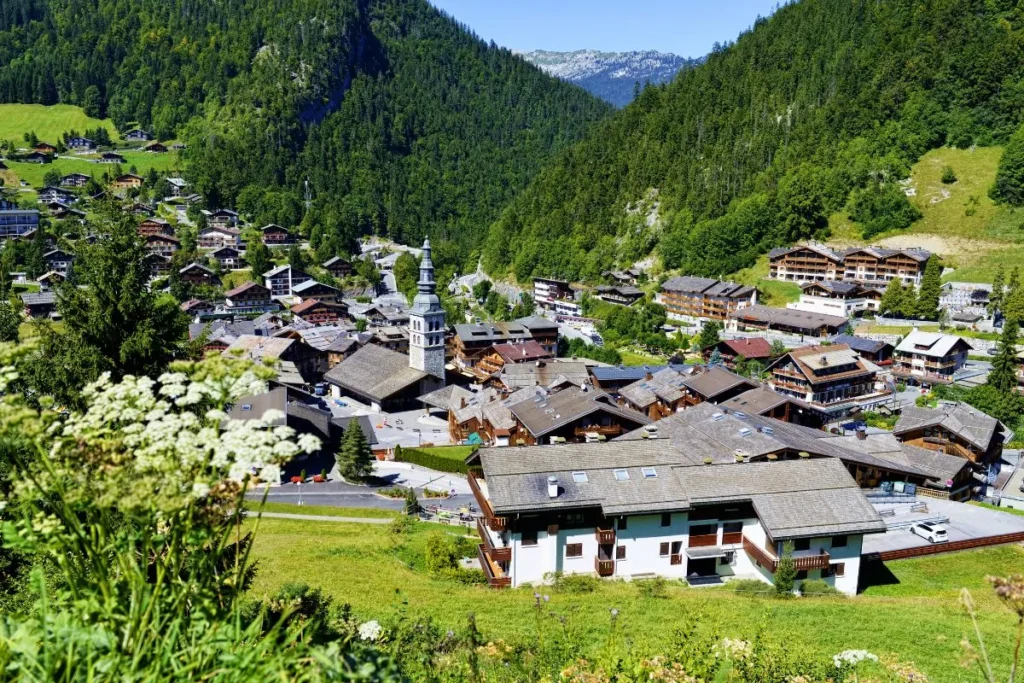
Procedures are not the most pleasant part, but they can become smooth if taken in the right order. What changes in the mountains is that an administrative detail can turn into a practical constraint. An example: a late address change can complicate school registration or certain medical appointments, especially in municipalities where spots are limited. I therefore prefer a “calendar” approach, with clear milestones.
Basic formalities, to plan like a checklist
Camille and Samir started by locking two periods: lease signing (or purchase deed) and moving-in date. Between the two, they listed what had to be done, without waiting until the last minute. This avoids stress, especially when winter approaches.
In most cases, you will notably have to: declare your new address to organizations, transfer your energy contract, insure the housing, update your vehicle registration if necessary, and arrange schooling. The most important thing, in my view, is to anticipate realistic deadlines, because providers may be more solicited at certain periods (back to school, winter season).
Urban planning and local specificities: keep it simple but rigorous
In the mountains, urban planning is often more regulated, to preserve landscapes and limit risks. If you buy a property to renovate, or are considering an extension, get informed early on municipal rules. It’s not about entering a labyrinth: just avoiding bad surprises. A project for a skylight, a terrace, or façade change may require authorization. This is not a punishment, it’s the logic of a sensitive territory.
And there is also current news that can affect organization. For travel, some works or closures can alter flows. For example, when a major route is impacted, the effect is felt far around. For those commuting to Italy or working with long trips, it is useful to keep an eye on information such as Mont Blanc tunnel closure periods, as this type of event really changes the game for a few months.
Aids, grants, and boosts: where they matter most
Without promising “miracles”, there are aids depending on situations, notably for energy renovation. At altitude, they take on particular meaning: improving insulation is reducing the bill and increasing comfort. I advise focusing effort on actions with immediate impact: attic insulation, joinery, heating improvement. When well done, you feel the difference from the first winter, and it’s not just a money issue: it’s also a nicer house to live in.
Once paperwork is organized, the most lively part remains: building a daily life that works, and finding your place locally.
Succeeding in daily life in Haute-Savoie: services, health, school, integration, and leisure
Daily life in the mountains, I see it as an art of balance: enjoy nature without complicating life. During the first months, Camille felt like “recalculating everything”: where to shop, which day to avoid busy roads, how to manage the child’s activities without spending evenings in the car. Then, little by little, a routine sets in. It is at this moment that one stops “adapting” and starts really living.
Shopping, health, school: organizing smart trips
The golden rule: group. In the mountains, doing three short trips can cost more (time, fuel, fatigue) than one well-thought trip. Many families end up defining a weekly “round”: shopping, pharmacy, library, appointments. This frees up time and makes weekends lighter.
For school, proximity counts, but safety of access counts as much. In the morning, an exposed road can become stressful. I recommend observing the school surroundings at the actual arrival time, not at midday on a sunny day. It’s a detail, but it’s a detail that weighs every day.
Integrating into a community: the mountains have their codes, and they are rather beautiful
Mountain communities may seem reserved at first. In reality, they are often close-knit and very practical. People help each other, share contacts, advise on craftsmen, warn when roads are tricky. But you have to take the first step. For Camille, it was the parents’ association. For Samir, a sports club. And soon, faces become familiar.
Local events help enormously in creating bonds. Traditions, festivals, markets, all give a natural entry point. I find it useful to identify, from the first year, two or three key events, and go without pressure. A good starting point is to follow festivals and key moments in Haute-Savoie to understand the cultural rhythm of the department.
Leisure in all seasons: marveling without putting yourself in danger
The mountains offer a huge palette: hiking, biking, skiing, snowshoeing, summer swimming, thermal spas, festivals. Regularly practicing physical activity is finally a priority displayed by a growing part of the population, and here, the environment makes you want to start. But the mistake would be to think everything is “easy” just because it’s accessible. Caution is part of local culture.
If you ski or are tempted by off-piste routes, inform yourself seriously. A clear resource for framing good habits is this guide on off-piste skiing. I say it without dramatizing: knowing the rules is giving yourself the means to enjoy for a long time.
This successful daily life naturally opens the next question: how to work, evolve, and build a sustainable lifestyle without suffering seasonality?

Working and building your lifestyle in Haute-Savoie: jobs, teleworking, and seasonality
Haute-Savoie offers opportunities, but it also demands strategy. I have seen very happy settlements because a couple thought “lifestyle” before thinking “job.” Conversely, I have seen projects fade when work was chosen without considering distances, winter season, or overall cost. Camille and Samir found their balance by combining teleworking and regular presence in an activity sector close to a transport axis. It is not the only model, but it is one of the most robust.
Teleworking: a chance, provided you secure the base
Since the mid-2020s, especially during and after Covid, teleworking has become embedded in habits, and it has clearly encouraged moves to more “breathable” territories. In the mountains, it becomes a powerful lever, but only if the connection is reliable and you have a comfortable workspace. I emphasize this: working in a poorly heated or insulated room is a guarantee of quick fatigue.
A very simple tip: test your network on site, at several times (morning, evening). And if you depend on videoconferences, plan a backup solution (connection sharing, accessible coworking space, or occasional office in a nearby town).
Tourism, hotel and catering, crafts, agriculture: very concrete professions
The mountains also live at the rhythm of seasons. Tourism, hospitality, catering, snow professions, sports coaching are pillars. Craftsmanship is also very sought after: renovation, wood, roofing, maintenance, personal services. And mountain agriculture, even if it demands strong commitment, offers exciting paths, sometimes in diversification (processing, local sales).
I often advise thinking in “activity portfolios.” For example: a stable part-time job + a seasonal activity + a locally valuable skill (DIY, maintenance, tutoring, coaching). This setup may seem unusual, but it fits the mountain reality very well, where flexibility is worth gold.
Decision aid table: which lifestyle for which sector?
To make this reflection more tangible, here is a simple reading of compromises. It is not an absolute truth, rather a pragmatic compass.
| Life sector | Main strengths | Watch-outs | Profiles who feel good there |
|---|---|---|---|
| Around a lake and an urban area | Services, schools, mobility, varied leisure | Housing budget, traffic during tourist season | Families, hybrid teleworkers, mobile workers |
| Medium town / accessible valley | Good balance between calm and amenities | Trips to plan, neighborhood choice crucial | Young couples, craftsmen, independents |
| Resort or marked altitude | Direct access to sports, mountain atmosphere | Seasonality, snow, heating cost, access | Mountain lovers, tourism jobs, athletes |
When work is clear, the project becomes easier to secure. Then, it remains to prepare the installation like a small “launch plan,” without being overwhelmed.
Preparing your installation in Haute-Savoie: scouting, planning, checklist, and mistakes to avoid
A successful installation often happens before the move. I really believe in “test stays.” Not idealized vacations, but weekends experienced as if you lived there: shopping, trips, weather, schedules, noise, parking. Camille and Samir did three scouting trips. The last one, deliberately in cold season, was decisive. They understood that a road they found charming in summer became painful when night fell early.
Do visits that really test real life
During a visit, people often focus on the property. I look at the immediate environment: where is the waste collection point, how is snow removal done, what does the trip to school look like, and if the reception is good. I also advise talking to a neighbor, even briefly. A simple question like “how does winter go here?” sometimes gives more than ten real estate ads.
To project yourself as a family, outing ideas can also serve as scouting tools: they make you cross neighborhoods, observe the atmosphere, measure distances. Around Annecy, for example, these family outings provide useful leads while making scouting pleasant.
Classic mistakes I see too often
The first mistake is underestimating the overall cost. Rent or mortgage is only part of the equation. Heating, winter equipment, maintenance, trips: all this counts. The second mistake is choosing “too high” too fast, out of enthusiasm. The mountain does not run away: you can climb gradually, find your comfort altitude, then adjust.
The third mistake is social: staying only among “newcomers.” It’s comfortable but limiting. Joining a local activity, going to a village festival, offering a hand, these are simple gestures that change everything. Integration is not decreed, it is built.
Checklist before moving
I finish with a checklist that, in my view, avoids painful omissions:
- Test access to the housing by day and night, including in case of rain or cold.
- Check internet (speed and stability) and plan a backup.
- Ask for a realistic estimate of heating and check insulation.
- Locate essential services: doctor, pharmacy, school, supermarket.
- Prepare winter equipment: suitable tires, scraper, lamp, clothes.
- Plan procedures: address, insurance, energy, schooling.
- Identify a local first circle: association, club, resourceful neighbor.
If you check these points, you will not have a “perfect” life, but you will have a life that holds up. And that is exactly what allows you to love the mountains long term.
{“@context”:”https://schema.org”,”@type”:”FAQPage”,”mainEntity”:[{“@type”:”Question”,”name”:”Is it absolutely necessary to live in a resort to enjoy the mountains in Haute-Savoie?”,”acceptedAnswer”:{“@type”:”Answer”,”text”:”No, and it is often even easier to choose a valley municipality or close to a city, then go up to the resort according to your wishes. You keep access to services and enjoy the reliefs at weekends. Many newcomers thus find a better balance between daily comfort and nature.”}},{“@type”:”Question”,”name”:”What is the most important point to check in housing at altitude?”,”acceptedAnswer”:{“@type”:”Answer”,”text”:”I would prioritize insulation and heating system, because they influence both budget, comfort, and winter fatigue. Ask for concrete information, observe joinery, and test cold sensations near walls. A house pleasant in summer can become difficult to live in in January if these elements are neglected.”}},{“@type”:”Question”,”name”:”How to integrate when coming from outside?”,”acceptedAnswer”:{“@type”:”Answer”,”text”:”The most effective way is to join a regular local activity: parents’ association, sports club, festival committee, library, communal events. In the mountains, trust is built through presence and simplicity. A regular hello, exchange of services, and bonds form faster than you imagine.”}},{“@type”:”Question”,”name”:”Is teleworking compatible with settling in Haute-Savoie?”,”acceptedAnswer”:{“@type”:”Answer”,”text”:”Yes, provided you secure the internet connection, have a comfortable workplace, and plan a fallback solution (connection sharing, coworking, occasional office). Test the network on-site before committing, as quality can vary by neighborhood and valley configuration.”}}]}Is it absolutely necessary to live in a resort to enjoy the mountains in Haute-Savoie?
No, and it is often even easier to choose a valley municipality or close to a city, then go up to the resort according to your wishes. You keep access to services and enjoy the reliefs at weekends. Many newcomers thus find a better balance between daily comfort and nature.
What is the most important point to check in housing at altitude?
I would prioritize insulation and heating system, because they influence both budget, comfort, and winter fatigue. Ask for concrete information, observe joinery, and test cold sensations near walls. A house pleasant in summer can become difficult to live in in January if these elements are neglected.
How to integrate when coming from outside?
The most effective way is to join a regular local activity: parents’ association, sports club, festival committee, library, communal events. In the mountains, trust is built through presence and simplicity. A regular hello, exchange of services, and bonds form faster than you imagine.
Is teleworking compatible with settling in Haute-Savoie?
Yes, provided you secure the internet connection, have a comfortable workplace, and plan a fallback solution (connection sharing, coworking, occasional office). Test the network on-site before committing, as quality can vary by neighborhood and valley configuration.