
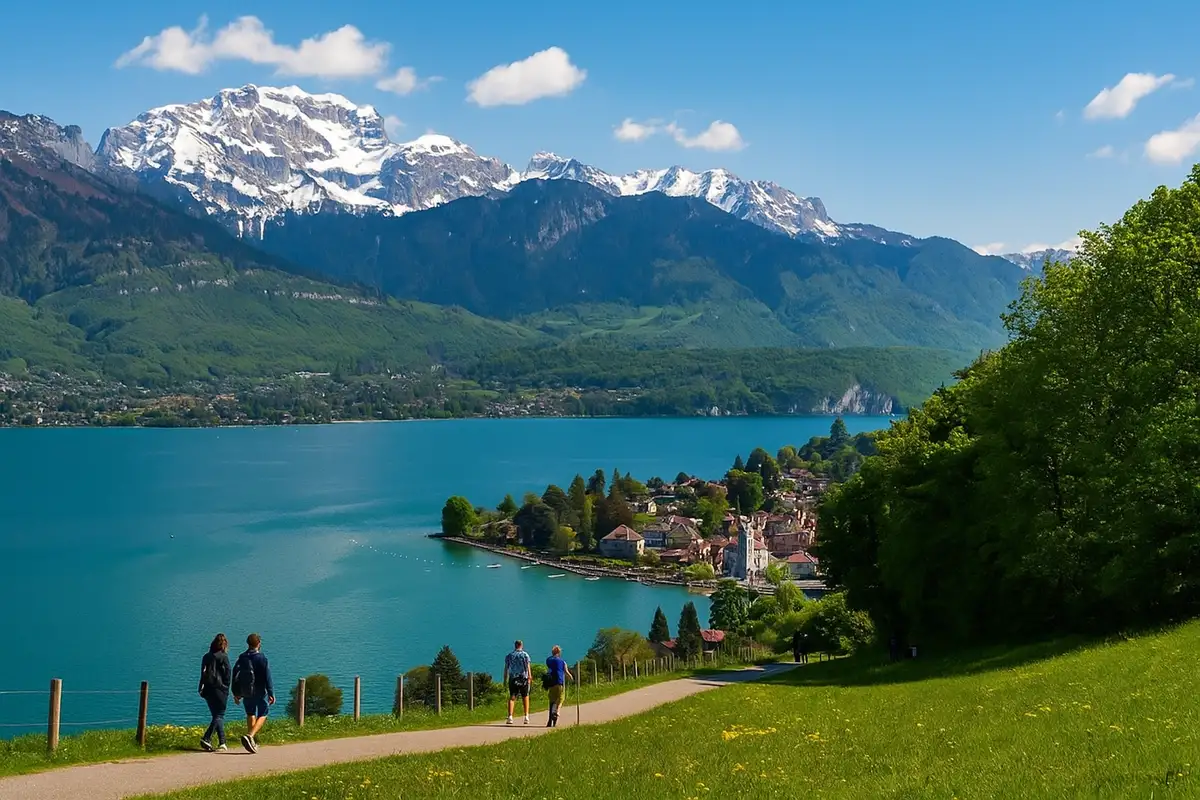
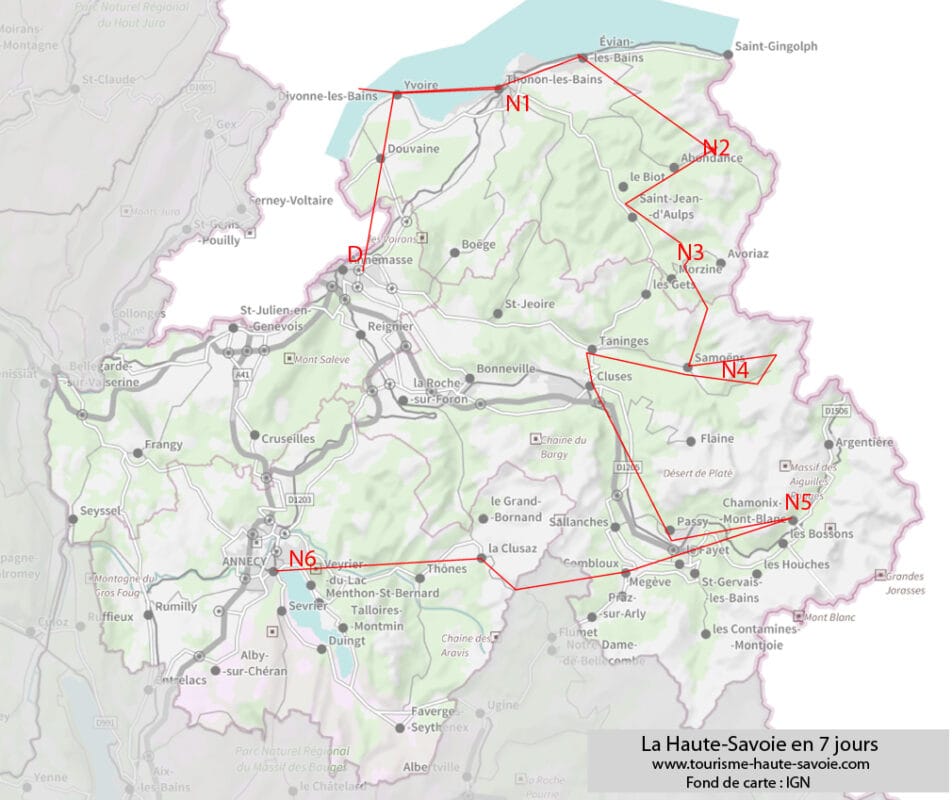
The Haute Savoie is a department rich in places and activities, and it is difficult to discover everything in a short time. In this article, we will offer you a 7-day itinerary that will allow you to discover as many must-see places as possible, but also more discreet spots known only to locals. We created this itinerary starting from Annemasse, but you can adapt it according to your arrival location.
From its majestic mountains to its charming villages, passing through its enchanting lakes and gastronomy, each day offers you a unique experience. Get inspired by this guide for a holiday full of discoveries and adventures.
Day 1: Yvoire – Thonon les Bains
The village of Yvoire: the medieval pearl of Léman
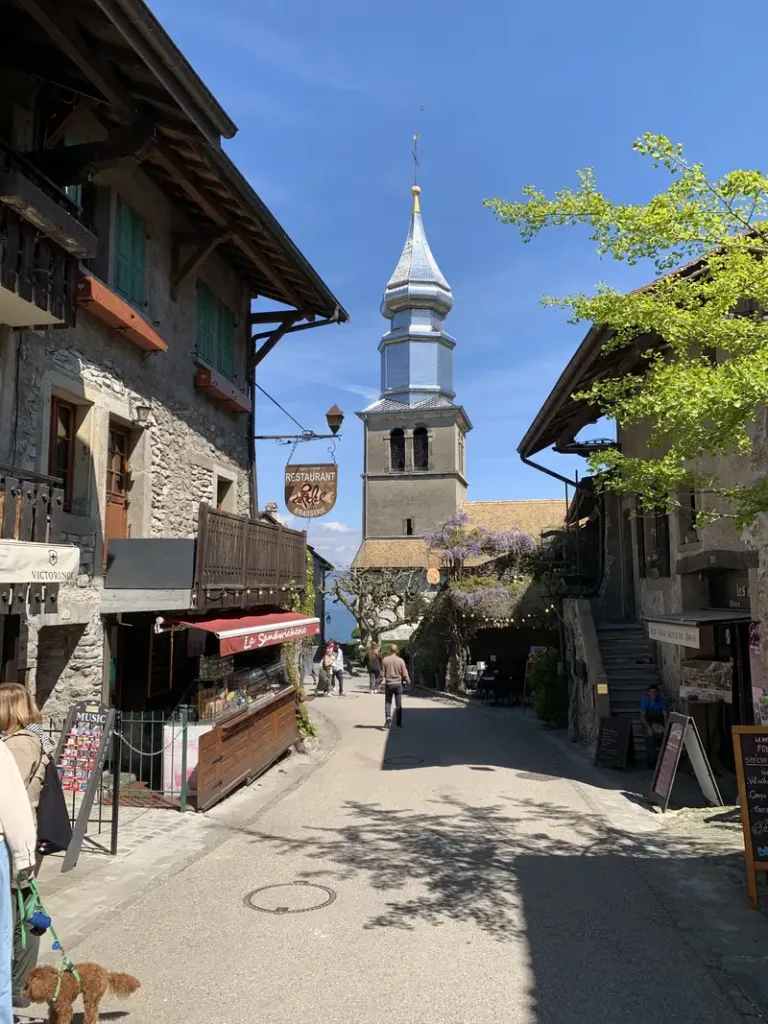
Perched on a promontory at the southern tip of the Lake Léman, the village of Yvoire is a medieval gem classified among the Most Beautiful Villages of France. Founded at the beginning of the 14th century to protect lake trade, it today preserves its ramparts, its fortified gates (Nernier and Rovorée), and its imposing keep, remains of the lordly castle. Its picturesque architecture is enhanced by remarkable floral displays, the result of numerous national and European awards.
Main sites to visit:
- The gates of Nernier and Rovorée: village entrances dating from the 14th century, classified as historic monuments, they testify to Yvoire’s former strategic role.
- The castle of Yvoire: built by Count Amédée V of Savoy, overlooking the lake from its quadrangular keep, it is now privately owned and not open to visitors, but its silhouette remains impressive from the quays.
- Saint-Pancrace Church: recognizable by its shiny bulbous bell tower, it was erected from the Middle Ages and restored in the 19th century, with a sober and harmonious interior facade.
- The Garden of Five Senses: created in the former castle vegetable garden, this remarkable garden invites a sensory walk around 900 varieties of plants, classified among the most visited sites in Haute-Savoie. More info: The Garden of Five Senses
Practical information:
- Access: Yvoire is accessible by car via the A40 (Annemasse or Nangy exits), about 25 km from Geneva. A SNCF train station is located at Perrignier (13 km), and boat shuttles (CGN or solar shuttle) connect Yvoire to Nernier and neighboring Switzerland.
- Circulation in the village: only pedestrian alleys allow wandering. Outdoor parking is available near the gates.
- Opening hours & rates: shops, cafes, and the Garden of Five Senses are open from April to October. The town can be visited freely all year round, with seasonal events such as the Venetian parade or the summer jazz festival.
- Recommended visit time: allow between 2 and 4 hours: stroll through historic alleyways, wander at the port, visit the garden, and enjoy a gourmet break overlooking the lake.
Why Yvoire?
Halfway between medieval heritage, floral elegance, and exceptional lakeside, Yvoire combines history, nature, and quality of life. It’s a perfect stop to enrich your itinerary in Haute-Savoie, between Chablais and Lake Léman.
The little extra: for a quieter walk, visit the Rovorée estate – La Châtaignière, just a few kilometers from Yvoire.
To read: Visiting Yvoire
Boat trip on Lake Léman: From Yvoire to Nyon
After strolling through the medieval alleys of Yvoire, extend the experience with a crossing of Lake Léman towards Switzerland. Several companies offer regular cruises between Yvoire (France) and Nyon (Switzerland), allowing you to discover the lake from a unique perspective, between flowered shores, castles, and Alpine peaks in the background.
A picturesque crossing
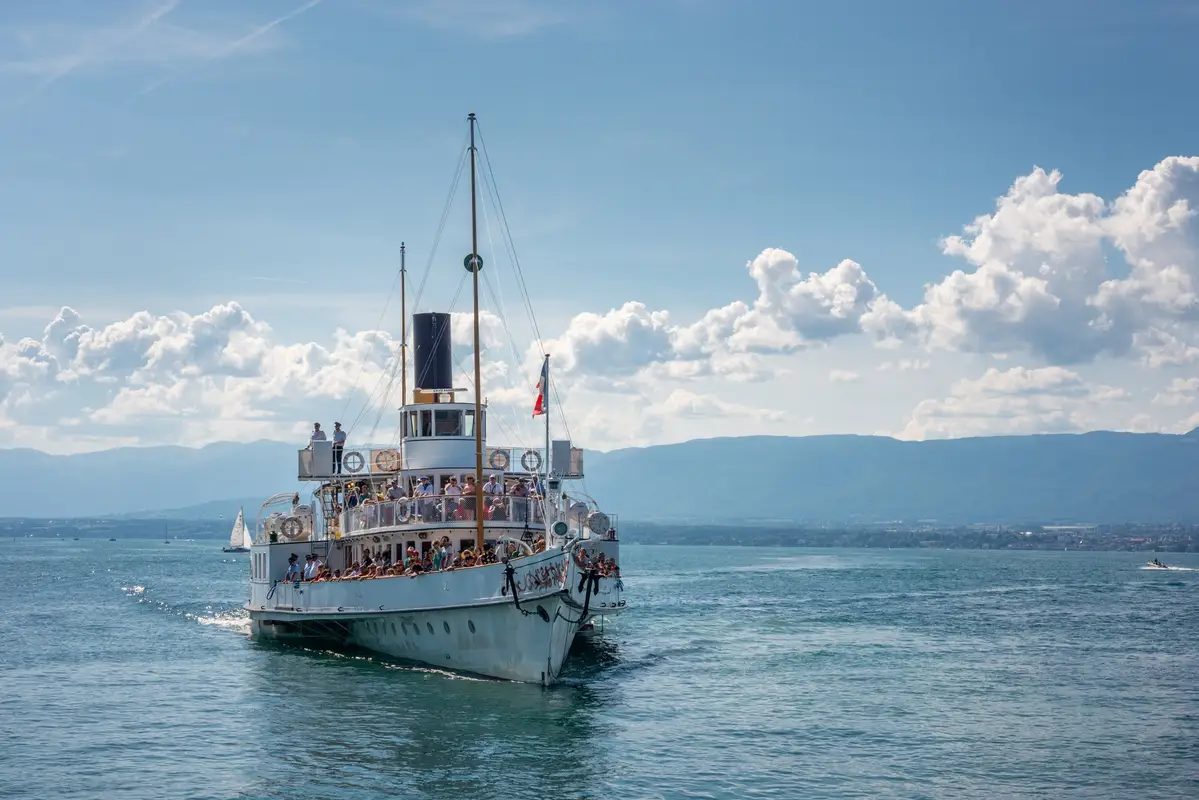
The Yvoire–Nyon crossing lasts about 20 to 25 minutes. On board a modern boat or a Belle Époque steam boat (depending on schedules), you enjoy an exceptional panoramic view of Léman and the Savoyard reliefs. The departure is directly from the small port of Yvoire, just steps from the Nernier gate.
Itinerary in Nyon: half a day between heritage, lake, and Swiss charm
➤ 1. The Castle of Nyon (5 min on foot from the port)
Overlooking Lake Léman, the castle of Nyon is a symbol of the city. Built in the 12th century and later remodeled, it now houses a museum dedicated to faience and decorative arts. Its inner courtyard, white towers, and exhibition rooms offer an exceptional view of the lake.
- Visit duration: about 45 minutes
- Price: CHF 8 (~8 €), free with the Nyon Région Card
➤ 2. Old Town and its flowered alleys
From the castle, walk through the cobbled alleys of the old town. You will discover a peaceful atmosphere, punctuated with ancient fountains, craft shops, and charming cafes. Stop at Place du Marché or Rue Saint-Jean for a sweet break or local ice cream.
➤ 3. The Museum of Léman (10 min on foot, on Quai Louis-Bonnard)
Located in an old arsenal, this original museum is dedicated to Lake Léman. You will see boat models, aquariums, and interactive exhibits on ecology, navigation, and lake-related professions. Fun and educational, perfect for families.
- Visit duration: 45 minutes to 1 hour
- Price: CHF 8 (~8 €)
➤ 4. Walk along the quays and the Conservatory garden
Finish your visit with a walk along the Rive quays to the Conservatory garden. This flowered park overlooks the port and offers a splendid view of the lake, the distant French mountains, and… Yvoire, where you came from. A quiet moment to end this Swiss interlude beautifully.
Practical information
Bonus tip: if you have some extra time, visit the Roman archaeological site of Colonia Iulia Equestris (just outside the center), which recalls the importance of Nyon in ancient times.
- Company: CGN (General Navigation Company on Lake Léman)
- Hours: regular crossings from April to October, with 5 to 8 round trips per day in high season.
- Rates: about 17 € one-way for an adult (discounts for children, families, Swisspass or Léman Pass available).
- Tickets: at the Yvoire port ticket offices, online on the CGN website or via some tourist offices.
- Good to know: bicycles are accepted on board (with supplement), as well as dogs on leashes. Remember your ID card or passport, as you cross an international border.
- Currency: On the Swiss side, although some shops accept euros, prefer credit cards or Swiss francs. If you pay in euros, your change will most likely be given in Swiss Francs.
Why choose this cruise?
This short escape on the lake offers a peaceful break between two stages of your stay, while adding an unusual cross-border dimension. A suspended moment, perfect to soak up the gentle and majestic atmosphere of Léman.
Thonon les Bains: end of day and night in Thonon
To end your day gently, nothing beats a stop in Thonon-les-Bains, a lively and elegant spa town situated between lake and mountains. In late afternoon, stroll along the Belvédère promenade, which offers an exceptional panorama of the port and Lake Léman. Then descend to the Rives port via the historic funicular (or on foot for the more motivated): this peaceful neighborhood, with the air of a fishing village, is ideal for a terrace aperitif or a dinner with your feet in the water.
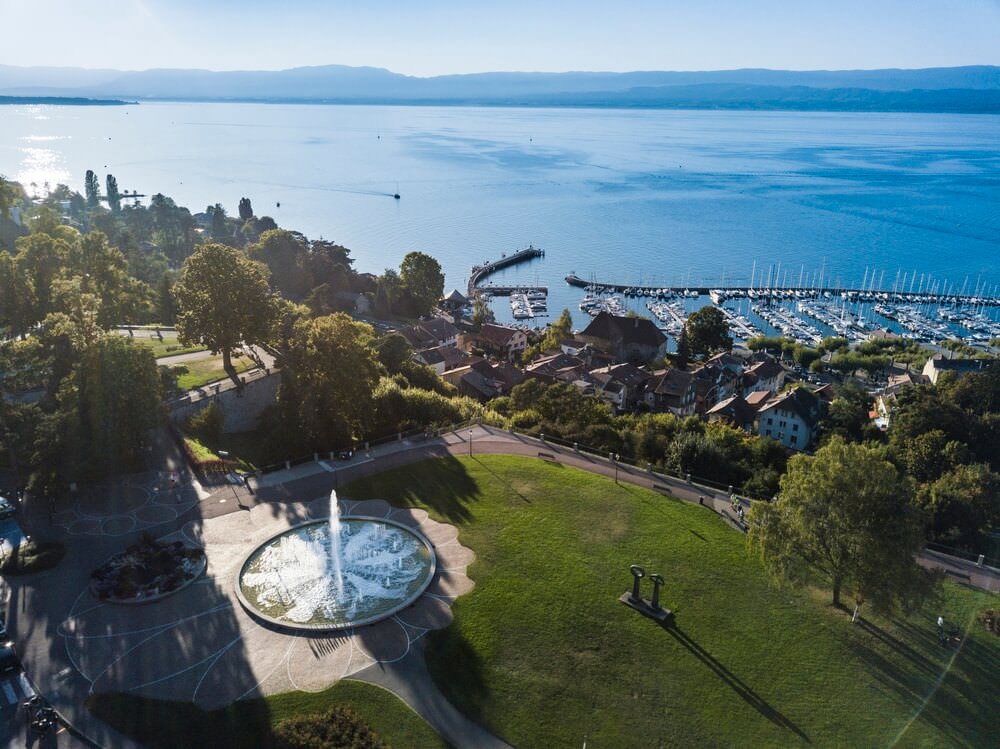
In the evening, opt for a digestive walk along the quays or a relaxing moment at the Thonon thermal baths, if you stay during the week. Regarding accommodation, the town offers a wide choice of hotels, guest rooms, and residences. For a comfortable stay, prefer establishments with lake views or located in the historic center, just steps from restaurants and cafes. A perfect setting to recharge before continuing your Haute-Savoie journey.
Good addresses for dinner in Thonon-les-Bains
Here are some quality establishments for a successful dinner, combining local cuisine, charming settings, and a friendly atmosphere just steps from the lake:
Ô Vent d’Anges
Located near the belvedere with views of Léman, this restaurant offers modern, creative homemade cuisine made with fresh and high-quality products. The welcome is warm, in a contemporary industrial-inspired decor. Open from Tuesday to Saturday, lunch and dinner service. An ideal address for a refined culinary experience.
Les Marronniers – Place de Crête
A local institution founded in 1920, highly appreciated for its traditional French and Savoyard cuisine. Homemade dishes, daily specials, and menus at reasonable prices (daily dish around 14 €, menu at 23–25 €), floral setting with terraces and garden. Open for lunch and dinner from Monday to Saturday.
La Brasserie du Général
Founded in 1864, this historic brasserie offers quality traditional cuisine served in a renovated bistro atmosphere. Possible lake view terrace, authentic ambiance, seasonal dishes, and recognized service quality for several generations. Open Monday to Saturday, continuous service.
Le Temps d’M
Bistro appreciated for its affordable menus (starter–main–dessert around 37 €) and contemporary French cuisine, often cited among the best tables in downtown Thonon. Friendly atmosphere with a menu mixing classics and seasonal creations.
Day 2: Evian les Bains - Abondance Valley
Evian les Bains: thermal elegance and Léman softness
Start this second day with a morning in Évian-les-Bains, a spa town renowned for its refinement and beneficial mineral waters. Bordered by Lake Léman, the town charms with its Belle Époque atmosphere, cared-for gardens, fountains, and historic facades.
Walk along the lake promenade to the marina, then head back toward the town center to discover the must-see sites: the Palais Lumière, a former thermal establishment now turned cultural and exhibition center, and the Cachat spring, the emblematic heart of the Évian brand, which can be tasted freely. Also don’t miss visiting the Villa Lumière, the current town hall and a true neo-classical architectural gem.
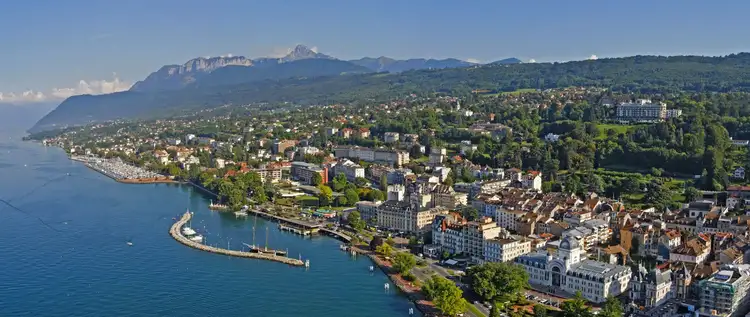
For a gourmet break, sit on a terrace facing the lake or under the arcades on Rue Nationale, where fine bakeries, tea rooms, and small brasseries compete in charm. Evian thus offers a moment of calm and freshness, between art of living and thermal heritage, perfect to start the day beautifully.
Heading for the mountains: direction La Chapelle d’Abondance
After a morning between thermal heritage and lake pleasures in Évian-les-Bains, it’s time to leave the shores of Léman and gain the first Alpine reliefs of the Chablais. Take the road southeast, following the Abondance valley, to reach La Chapelle d’Abondance, a charming mountain village nestled at 1,000 meters altitude. Count about a 45-minute scenic drive, punctuated by forests, pastures, and typical chalets. Along the way, you will cross the town of Abondance — known for its abbey and AOP cheese — before reaching this little piece of paradise, perfect for a natural and authentic break in the heart of the Savoyard Alps.
La Chapelle d’Abondance: nature, traditions, and alpine cheeses
Nestled in the heart of the Abondance valley, just a stone’s throw from the Swiss border, La Chapelle d’Abondance is a human-scaled mountain village, renowned for its family atmosphere, authenticity, and pastoral heritage. Here, pure air, green alpine pastures, and cowbells compose a soothing alpine symphony.
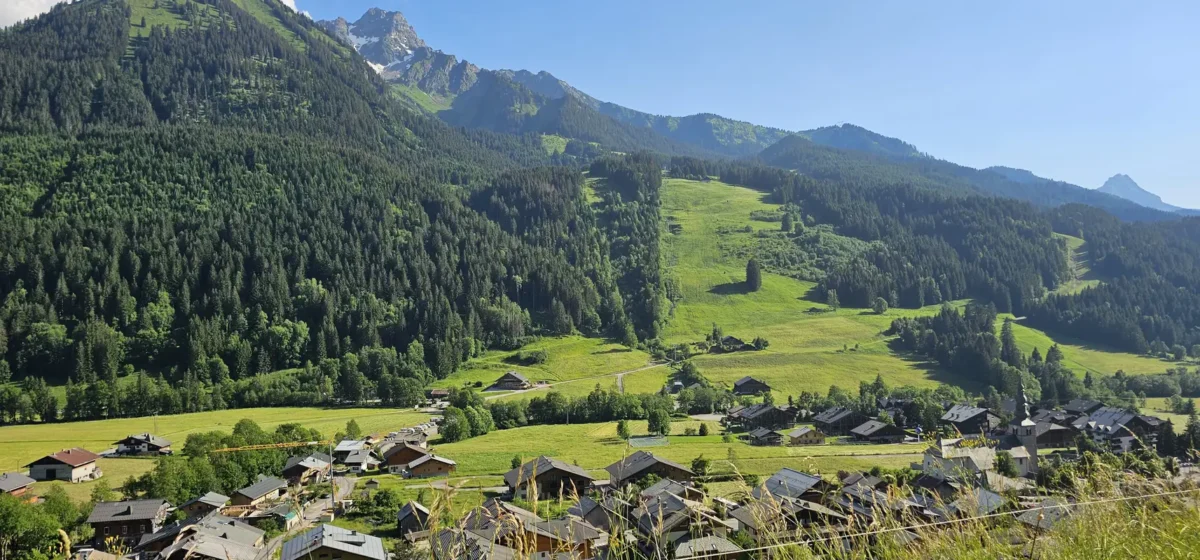
Begin your visit with a riverside walk along the Dranse banks trail, accessible to all and perfectly arranged. For walking enthusiasts, several easy routes lead to alpine chalets or offer beautiful views of the surrounding peaks (Mont de Grange, Cornettes de Bise). In summer, you can also opt for a guided walk with a mountain guide or a "cheese heritage discovery" outing, to visit a local farm and taste the essential Abondance AOP cheese.
Don’t miss visiting the village itself, around its baroque church, its craftsmen, and a few good restaurants where you can enjoy tartiflette, croûte savoyarde, or cheese fondue… In the evening, enjoy the absolute calm of the valley, with a night in a chalet, a mountain inn, or a typical hotel with views over the meadows. It’s the perfect place to disconnect, recharge, and savor the mountain in total simplicity.
Easy hike from La Chapelle d’Abondance
Sentier de l’Abray – easy walk along a stream
- Estimated duration: 1 h 15 to 1 h 30, ideal for a quiet afternoon outing.
- Distance / Elevation gain: about 3 to 4 km, very slight elevation (+ a few tens of meters).
- Level: easy, suitable for all (walkers, families, people with strollers).
- Start: in the village center, near the Notre-Dame-de-Compassion chapel. The route begins on Chevenne road then joins a peaceful forest trail.
Highlights:
- Immersion in a mountain forest rich in spruces, firs, and local species.
- Open view of Mont de Grange then the Cornettes de Bise from a small scree offering a beautiful panoramic view.
- Passage through a fallow deer park for an interesting wildlife discovery.
- Gentle return along the Chevenne stream, in the heart of the alpine pasture. Benches, rest areas, and even a small fitness trail are available.
Day 3: Abondance Valley - Morzine

After a restful night in La Chapelle d’Abondance, it’s time to leave the green peaks of Chablais and plunge into a whole different, more mysterious and mineral world. Take the road southwest, following the Dranse valley to the village of La Vernaz, about 45 minutes away.
Along the way, enjoy some photo stops around Lake Montriond or the steep landscapes bordering the Dranse de Morzine.
Your morning destination: the Devil’s Bridge Gorges, a spectacular site carved by the river over millennia. Here, the limestone rock has hollowed out narrow galleries, deep potholes, and vertiginous cavities, offering a striking contrast with the softness of the alpine pastures you walked the day before. It’s the perfect opportunity to experience an underground immersion, between local legend and raw natural power.
The Devil’s Bridge Gorges
The Devil’s Bridge Gorges, located in the Aulps valley near Morzine in Haute-Savoie, offer an impressive natural spectacle carved by thousands of years of erosion. This spectacular site takes its name from a local legend: it is said that the Devil himself created this mysterious place and imprinted the landscape with his power.
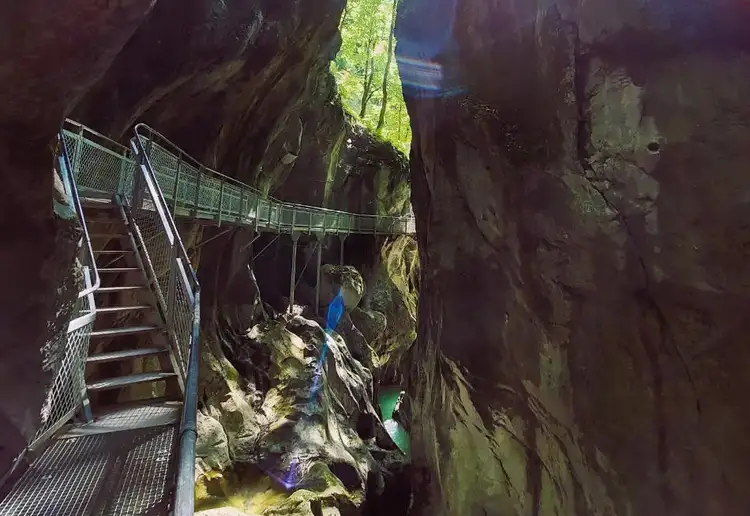
These deep gorges, carved by the turbulent waters of the Dranse de Morzine, reveal a succession of rock formations and steep walls, making the walk as beautiful as it is captivating. Access is via a developed trail that allows visitors to descend into the heart of the gorges and admire the play of light on the limestone, the constant humidity making the walls a deep and lively green.
Besides the beauty of the site, the place offers a thematic route with panels explaining the geology, fauna, flora, as well as the history and legends associated with the gorges. A guided tour is also available for a complete immersion, enabling a better understanding of the secrets of this unique environment.
Practical information:
- Address: 205 route des Grandes Alpes (D902) Place called “Le Jotty” 74200 LA VERNAZ
- Opening hours:
- Open daily from April 1st to October 13th without reservation
- April/May/June: 10:30 AM to 4:30 PM continuous. Last ticket sold at 4 PM
- July/August: 9 AM to 6 PM continuous. Last ticket sold at 5:30 PM
- September: 10:30 AM to 4:30 PM continuous. Last ticket sold at 4 PM
- Rates (2024):
- Adults (from 16 years): 18 €
- Youths (4-15 years): 14 €
- Children (-4 years): Free
- Group rates on request from 20 persons
- Visit duration: Between 1 hour and 1 h 30 for the round trip.
- Parking: Large parking near the entrance to the gorges
Now head to Morzine, but passing through one of the most unusual and charming places in Chablais
The village of Lindarets: the mountain... and the goats!
Before reaching Morzine, make an unforgettable stop at the village of Lindarets, perched at 1,470 meters altitude in the Aulps valley. Accessible by car from Montriond (15 to 20 minutes along switchback roads), this small alpine hamlet is famous for a unique feature: goats wandering freely in the heart of the village.
They delight children and surprise visitors, letting themselves be approached and fed (in moderation). The atmosphere is decidedly mountain-style, between wooden chalets, flowered terraces, and artisanal cheese shops.
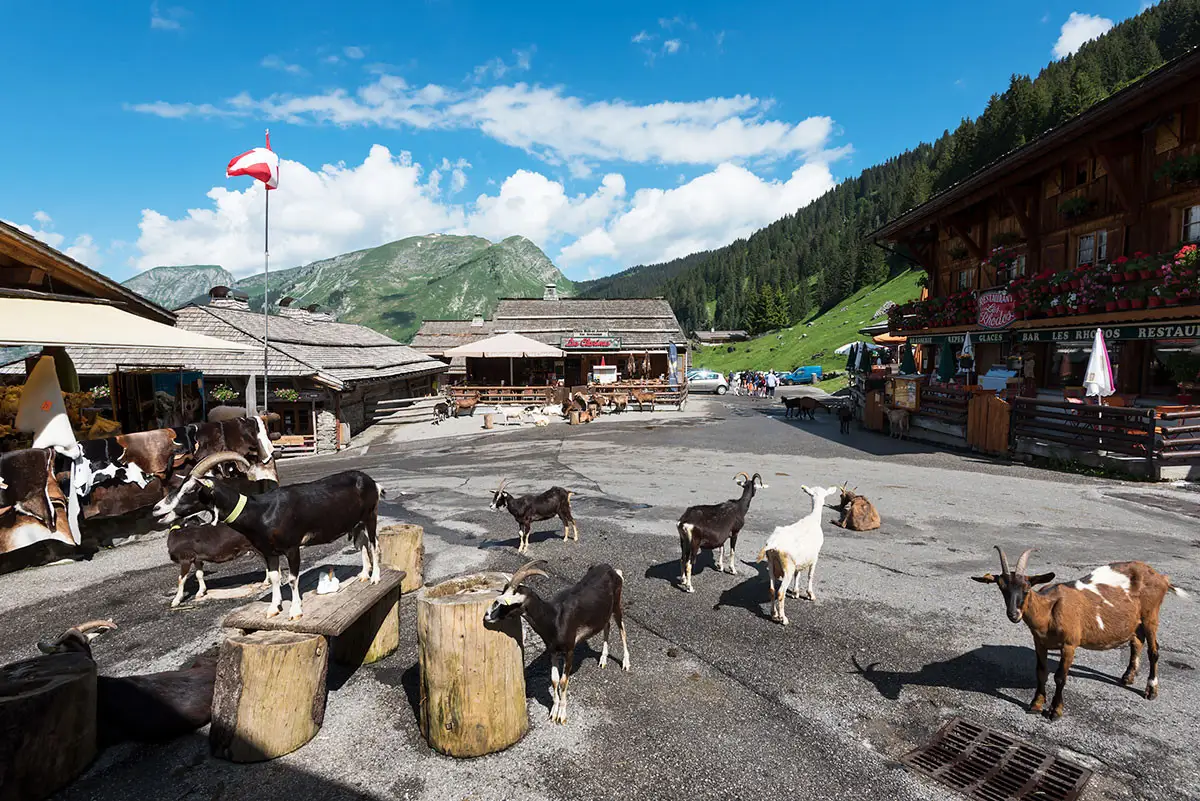
You can stroll between local product shops (tomme cheese, sausage, jams) or have lunch in one of the small alpine restaurants offering Savoyard platters, cheese toasts, or homemade blueberry tarts. In summer, the village is accessible by car but also by chairlift or on foot from Lake Montriond for the more motivated.
After this original and gourmet interlude, resume the road to Morzine, only 20 minutes from Lindarets. This emblematic Portes du Soleil resort village will mark the last major stop of your day, between dynamic alpine atmosphere, mountain activities, and Savoyard quality of life. Perfect for spending the evening, dining in a lively center, and enjoying traditional accommodation in chalet or welcoming hotel.
Morzine: a lively evening at the heart of the Portes du Soleil
Nestled in the Dranse valley at 1,000 meters altitude, Morzine is a mountain resort both authentic and lively, blending chalet spirit with a vibrant village atmosphere. In summer, the resort reveals another face beyond skiing: a dynamic, festive, and sporty holiday destination.
Start your discovery with a walk in the village center, between wooden chalets, small flowered squares, and shopping alleys. Don’t miss the Sainte-Marie-Madeleine church and the old bridge spanning the Dranse in the heart of the village. Cycling fans can enjoy the Morzine Bike Park or simply watch riders in action on the pump tracks and mountain bike trails crossing the resort.
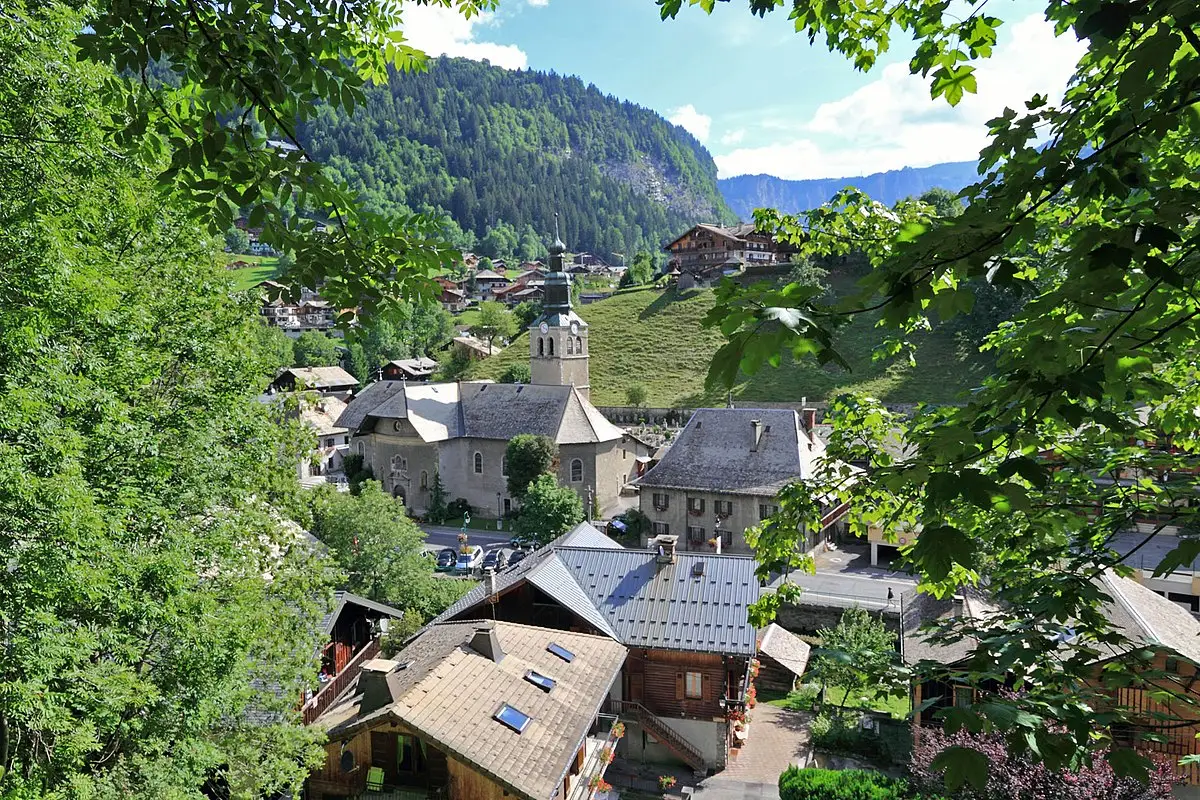
For dinner, Morzine offers a nice selection of restaurants: traditional Savoyard cuisine, mountain bistronomy, or terraces with views of the peaks. The atmosphere is relaxed, often animated by concerts or outdoor events in the summer season.
Regarding accommodation, the resort offers a wide range: charming hotels, rental chalets, guest rooms, or residences. Many addresses are ideally located around the center or on the heights with mountain views. Morzine is an excellent base to rest before another Alpine day… or to prolong the evening on a terrace under the stars.
Day 4: Morzine - Giffre Valley
Leave Morzine in the fresh morning air and gain altitude by taking the panoramic road climbing to the col de Joux Plane (1,690 m). This spectacular ascent offers one of the most beautiful views in the region: Mont-Blanc, majestic, stands out in the distance above the alpine pastures and forests. The pass, often used by the Tour de France, connects Morzine to Samoëns and is a must-see spot for landscape lovers.
Col de Joux Plane
At Col de Joux Plane, enjoy the viewpoint, and if you have some time, discover the panorama from the summit of La Bourgeoise.
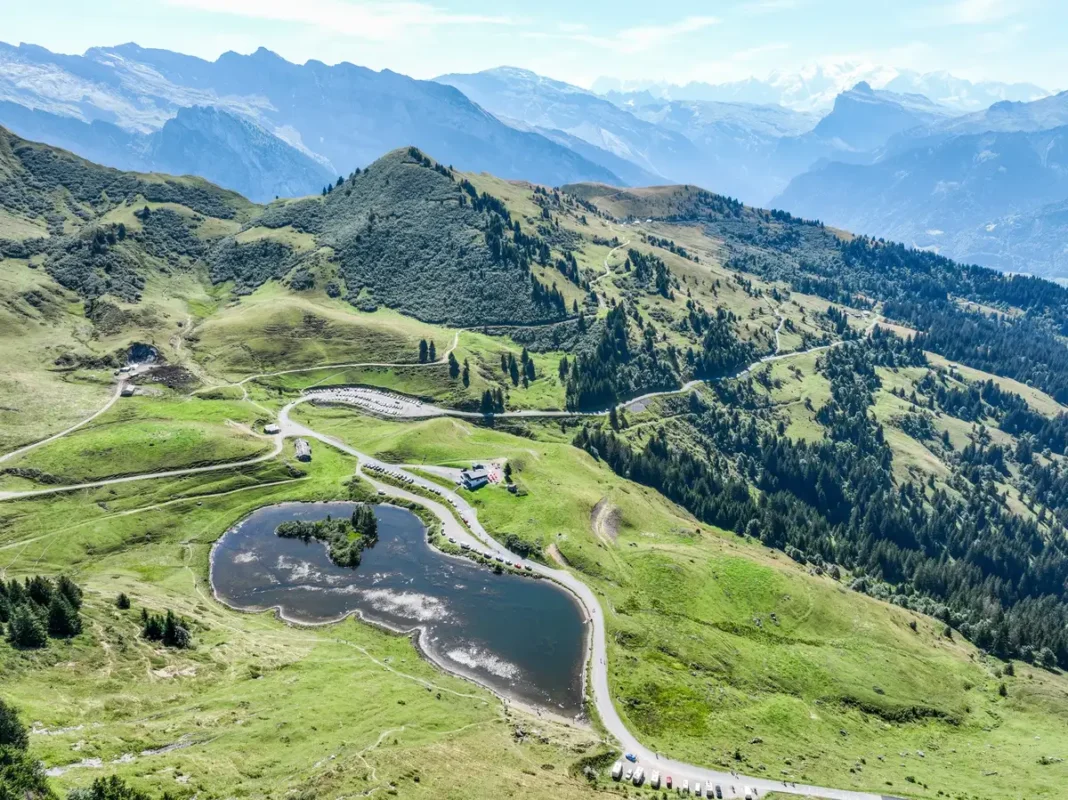
Short hike: summit of La Bourgeoise
From Col de Joux Plane, you can take an easy and quick hike to the summit of La Bourgeoise (1,770 m), ideal for a 360° panoramic view.
- Round-trip duration: 1h to 1h30
- Elevation gain: around +150 m
- Difficulty: easy, accessible to all levels
- Start: from the pass parking lot, follow the "La Bourgeoise" signs
- Exceptional view: on Mont-Blanc, the Giffre valley, the White Teeth (Dents Blanches), and even the Aravis range.
The trail winds through flowered pastures, sometimes crossing herds and ending at an orientation table on a rocky plateau: one of the best viewpoints in the region. Ideal for a picnic or a contemplative break.
After this Alpine interlude, slowly descend toward Samoëns, your next stop of the day, nestled in the heart of the Giffre valley.
Samoëns: heritage, carved stone, and quality of life
After crossing the alpine pastures of Col de Joux Plane, descend toward Samoëns, one of the rare mountain villages classified as a “Historic Monument” for its heritage and stone architecture. Nestled in the heart of the Giffre valley, this age-old town charms with its peaceful atmosphere, its alpine botanical garden (La Jaÿsinia), its stone-carver artisans, and traditional houses.
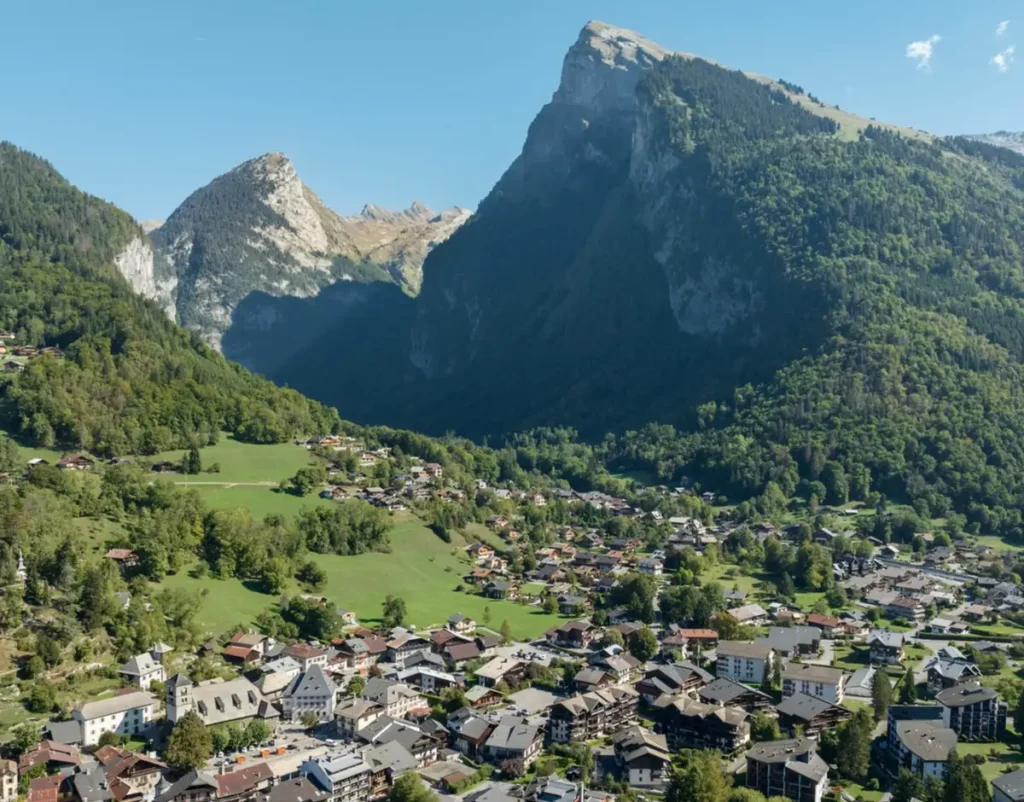
Start with a walk in the pedestrian center: the main square with its old lime tree planted in 1438, the Notre-Dame de l’Assumption church, cobbled alleys, and flowered balconies tell the story of a lively and authentic mountain village. If you have some time, push open the door of a stone sculptor’s workshop or taste some tomme cheese at an artisan cheese shop.
Samoëns is also a good starting point for outdoor activities: mountain biking, via ferrata, swimming at Lac aux Dames, or discovery of the valley by electric bike. But for the afternoon, a natural jewel awaits just a few kilometers away…
The Cirque du Fer-à-Cheval: nature’s cathedral
Take the road from Samoëns towards Sixt-Fer-à-Cheval, then continue to the Cirque du Fer-à-Cheval, one of Haute-Savoie’s most impressive natural sites. This gigantic horseshoe-shaped limestone wall, over 700 meters high, is punctuated by vertiginous waterfalls, some exceeding 200 meters in descent.
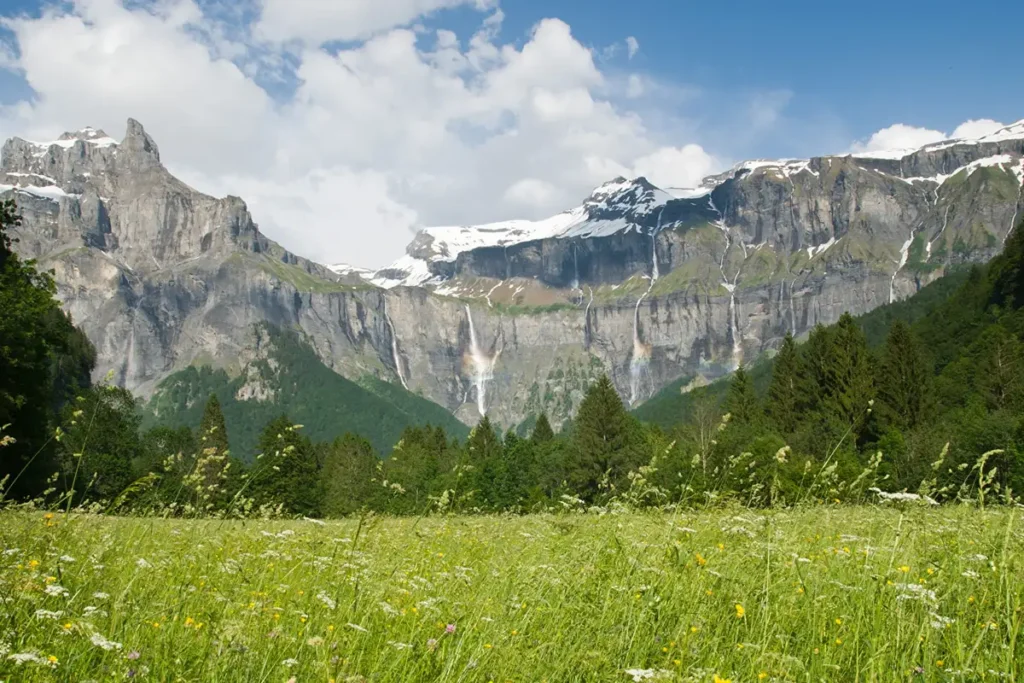
Accessible to all, the site can be visited on foot via several developed trails:
- The discovery trail (an easy loop of about 1h30), perfectly marked, allows immersion in the scenery without difficulty.
- For the more motivated, continue to the Fond de la Combe, at the foot of the Prazon glacier, in absolute silence — a moderate 3-hour round trip hike.
On site: a paid parking (in season), a reception point, a small café-restaurant, and the possibility to rent binoculars to observe wildlife (ibex, bearded vultures, marmots).
Best period: May to October, ideally after snowmelt, when the thirty waterfalls flow across the entire wall.
Last stop of the day: the Rouget waterfall, the “Queen of the Alps”
On the return route after the Cirque du Fer-à-Cheval excursion, stop at one of the most spectacular jewels of the Giffre valley: the Rouget waterfall. Nicknamed the “Queen of the Alps”, this vertiginous fall of nearly 90 meters is a true wall of water that bursts from the cliffs with an impressive roar.
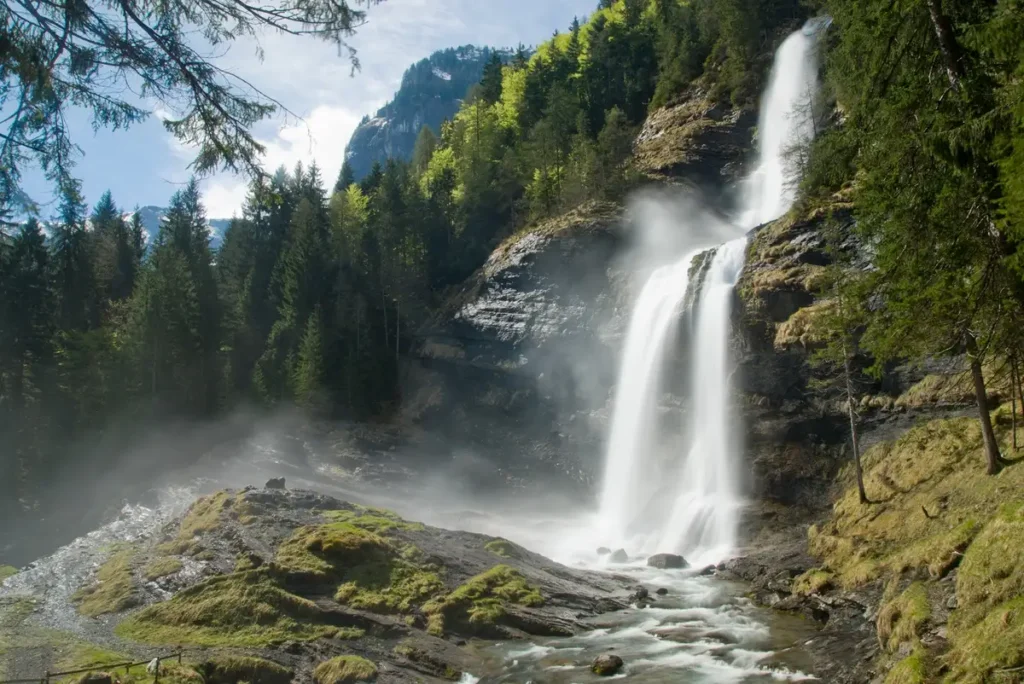
Accessible by car via a small mountain road from Sixt-Fer-à-Cheval (about 15 minutes), it can be enjoyed effortlessly from a developed viewpoint, but can also be approached on foot by a short trail allowing you to feel all its power up close. At the end of the day, when the sun’s rays light up the curtain of water, the effect is magical — and the crowds much thinner.
Visit time: 20 to 30 minutes, or longer if you wish to picnic or extend the walk. Rouget waterfall
Access: route du Fer-à-Cheval, free parking at the foot of the waterfall (or main parking below if the road is closed to traffic).
Hiking possible: If you spend an extra day on site, go discover the Sales Waterfalls and the Sales chalets from the Lignon. This hike will reveal a series of beautiful waterfalls, but also many ibex and marmots.
Night in Samoëns or Sixt: calm and nature guaranteed
To end this rich day of emotions, settle for the night in Samoëns, in a charming hotel, a wooden chalet, or a village guest room, near the restaurants and shops of the center. If you seek more calm, you can also choose to spend the night in Sixt-Fer-à-Cheval, in a mountain inn at the foot of the cliffs, to fall asleep to the sound of the river and under the stars.
Day 5: Chamonix Valley, between sky and ice, in the heart of Mont-Blanc
The fifth day of your stay takes you to one of the most mythical places in the Alps: the Chamonix valley, the birthplace of mountaineering and gateway to the highest peaks in Europe. Prepare for a magnificent day, between dizzying verticality and millenary sea of ice.
From Samoëns or Sixt, take the road toward Cluses, then Sallanches and Chamonix. Count about one and a half hours drive (one hour if you take the highway at Cluses toward Chamonix).
The Aiguille du Midi, tête-à-tête with Mont-Blanc
Start your day early to avoid crowds, heading to the departure station of the Aiguille du Midi cable car, south of Chamonix.
To read: The Aiguille du Midi, the complete guide
In two vertiginous sections, you will be propelled to 3,842 meters altitude, facing Mont-Blanc, within reach. From the panoramic terrace, the view opens 360° on the French, Swiss, and Italian Alps. A suspended, unforgettable moment.
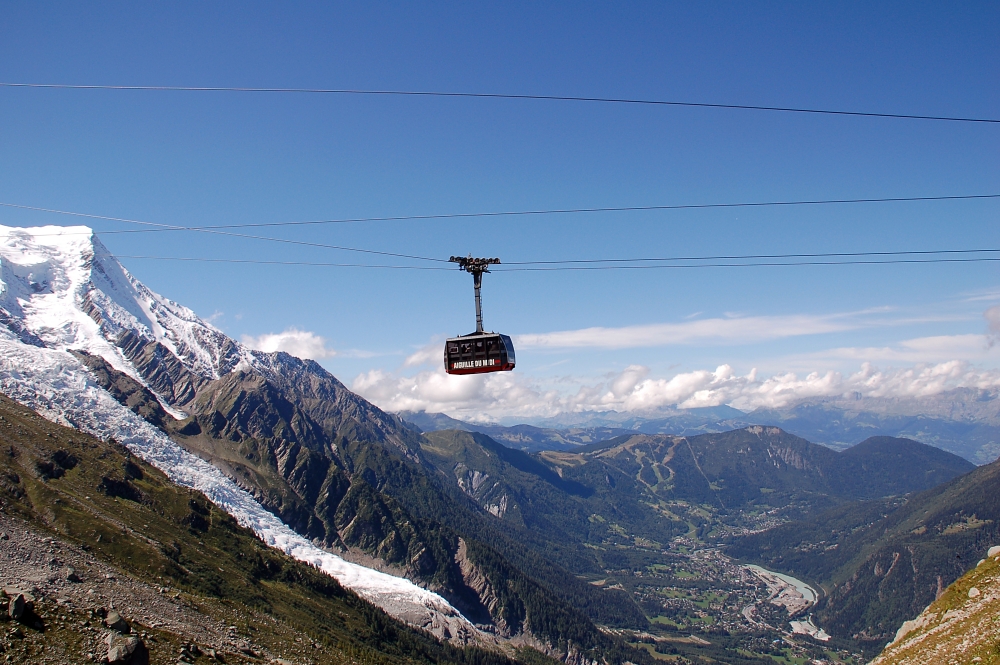
Plan for: warm clothes, even in summer (temperature often below zero at the summit)
- Must-sees on site:
- the summit terrace with view on Mont-Blanc
- the footbridge between the two rocky peaks
- the famous "Step into the Void", a glass box suspended in the void for thrill-seekers
- the mountaineering museum and the crystal gallery
- expedition departures towards the glaciers (to observe in summer)
- Practical information:
- Time on site: 1h30 to 2h
- Round-trip ticket: from €70 per adult (reservation strongly recommended)
The Montenvers train and the Mer de Glace
Then descend into the valley to experience another alpine adventure: board the legendary Montenvers cog railway, in service since 1908. In 20 minutes of travel from Chamonix, it takes you to 1,913 meters altitude, at the foot of the largest glacier in France, the famous Mer de Glace.
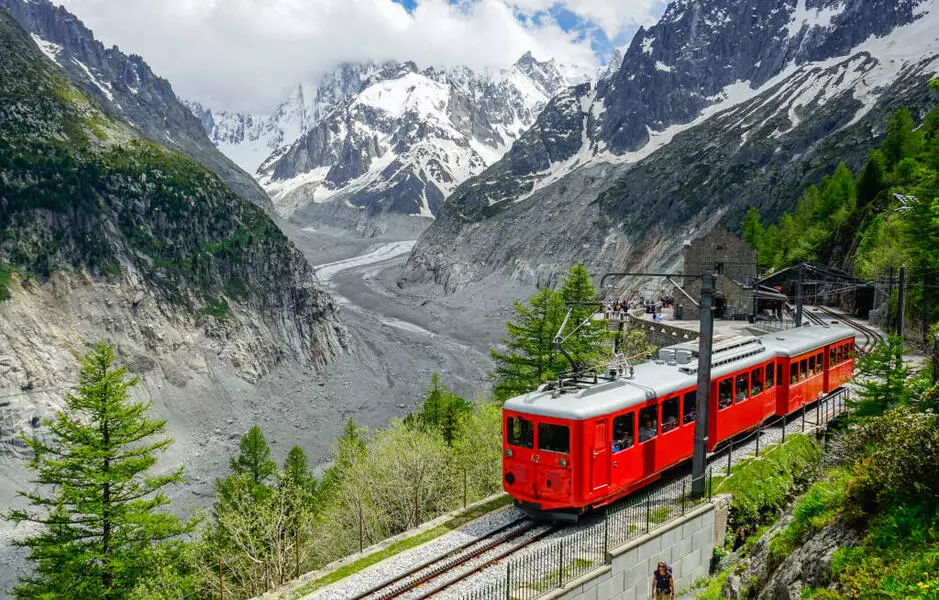
The site is impressive in scale but also moving: glacier retreat is clearly visible, and exhibits about climate change take on full meaning here.
Plan for: good shoes, water bottle, and allow time to ascend if you visit the ice cave
- On site to see:
- the ice cave carved annually in the glacier (accessible by cable car + 500 steps)
- the Glaciorium, a small interactive glacier museum
- the Crystal Gallery
- views of the Drus and the Giant’s Tooth
- Practical information:
- Visit duration: 2h to 3h
- Round-trip ticket: about €38 (included in the Mont-Blanc Multipass)
End of the day in Chamonix: stroll and mountain atmosphere
Back in town, enjoy the late afternoon strolling in the lively streets of Chamonix: mountain shops, ice cream parlors, friendly terraces, and cosmopolitan atmosphere await you. Don’t hesitate to visit the Saint-Michel church, the Maison de la Montagne, or simply settle with a view of the massif for a well-deserved rest.
For dinner and overnight, Chamonix offers many options: from traditional hotels to contemporary chalets, from Savoyard fondue to world cuisine, you will surely find your happiness in this unique town where the mountain is everywhere.
Practical tips in Chamonix
Mont Blanc Multipass
Remember to get the Mont Blanc Multipass, a very advantageous combined ticket giving access in one day to:
- The Aiguille du Midi
- The Montenvers train
- The Planpraz or Brévent cable cars
- And several other lifts in the valley
- It is valid for one or more days (1 to 3-day pass) and avoids queues at each site. Purchase possible online or at the Tourist Office.
Hours to anticipate
- Arrive early (before 9 AM) for the Aiguille du Midi cable car: it gets busy, especially in summer.
- Plan at least 3 to 4 hours between Aiguille du Midi and Montenvers if doing both in one day.
- The ice cave at Montenvers closes earlier than the station (last descent around 4:30–5 PM).
Lunch break
- To avoid crowded restaurants, consider bringing a picnic or sandwich to enjoy facing Mont-Blanc: parks and the Arve riverside are perfect for that.
- Otherwise, try a gourmet break at Crèmerie du Glacier (near Bois), or at Cool Cats (downtown), for quick and tasty lunch.
Parking and transport
- Parking in the center is paid and often full in the afternoon. Prefer the Grépon parking lot, large, near the cable car, and connected to the center by a free shuttle.
- The Mont-Blanc Express train and free valley shuttles (Mulet) make it easy to get around without a car.
Check the weather
- Always check the weather at altitude on chamonix.com or at the Tourist Office: in the mountains, the sky can change quickly.
- Even in summer, it can be 0°C at the summit of Aiguille du Midi: bring fleece, windbreaker, and sunglasses.
Day 6: From Megève to Annecy: mountain elegance, alpine pastures, and dream lake
This sixth day is a true crossing of Haute-Savoie atmospheres: from the chic alleys of Megève to the flowered alpine pastures at col des Aravis, passing through the lively village of La Clusaz, to Annecy, the lakeside pearl where you will end the day with your feet in the water.
Megève, between refinement and panorama
From Chamonix, leave early to reach Megève (about 1h10 drive). In this village with a unique charm, traditional architecture and high-end shops coexist with an authentic art of living.
What to see and do in Megève:
- Stroll in the pedestrian center, around the Church Square
- Climb to the calvary for an open view on the village
- Enjoy a coffee or pastry in an Alpine tea room
- (In summer) Take the cable car up to Mont d’Arbois or Rochebrune for a short walk and Mont-Blanc views
Recommended time on site: 1h30 to 2h
Col des Aravis – balcony on Mont-Blanc
Then take the scenic road of the Val d’Arly toward col des Aravis (1,486 m). Count about 45 minutes drive, crossing Flumet and La Giettaz. At the top of the pass, a magnificent viewpoint opens on the Mont-Blanc chain, often considered one of the most beautiful in Haute-Savoie.
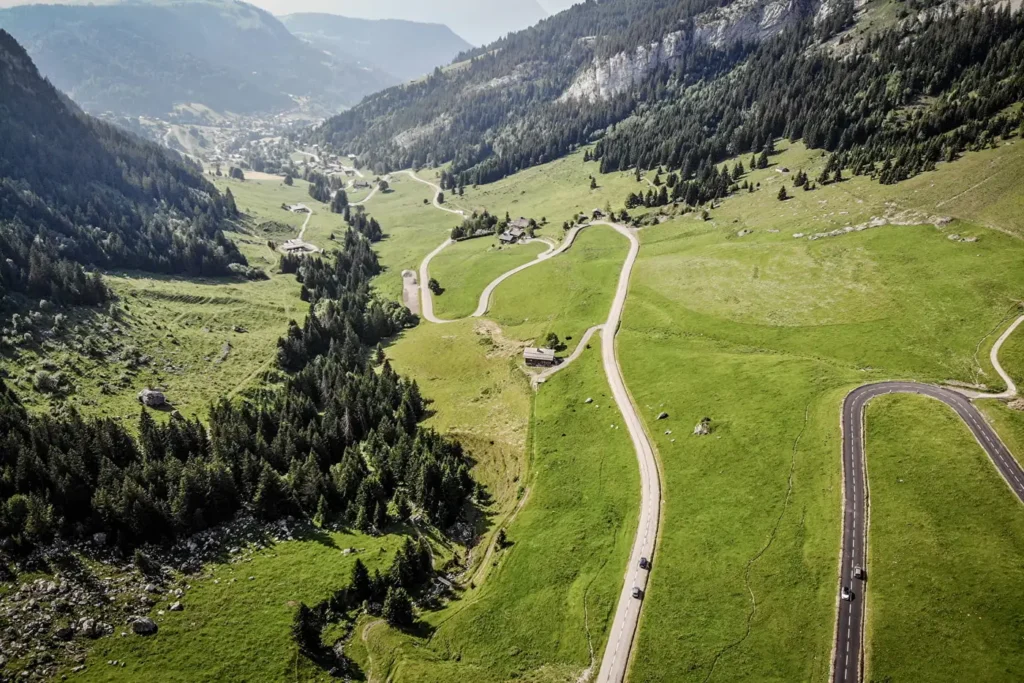
Things to do at the pass:
- Buy local products directly from alpine farms: farm-made reblochon, tomme cheese, sausages
- Have lunch in a small chalet-inn with panoramic terrace (raclette or croziflette optional)
- Visit the Sainte-Anne chapel, nestled in a mountain setting
La Clusaz, the lively charm of the Aravis
Then descend to La Clusaz (20 min drive), an emblematic village of the Aravis massif, appreciated both for its family-friendly resorts and authentic atmosphere.
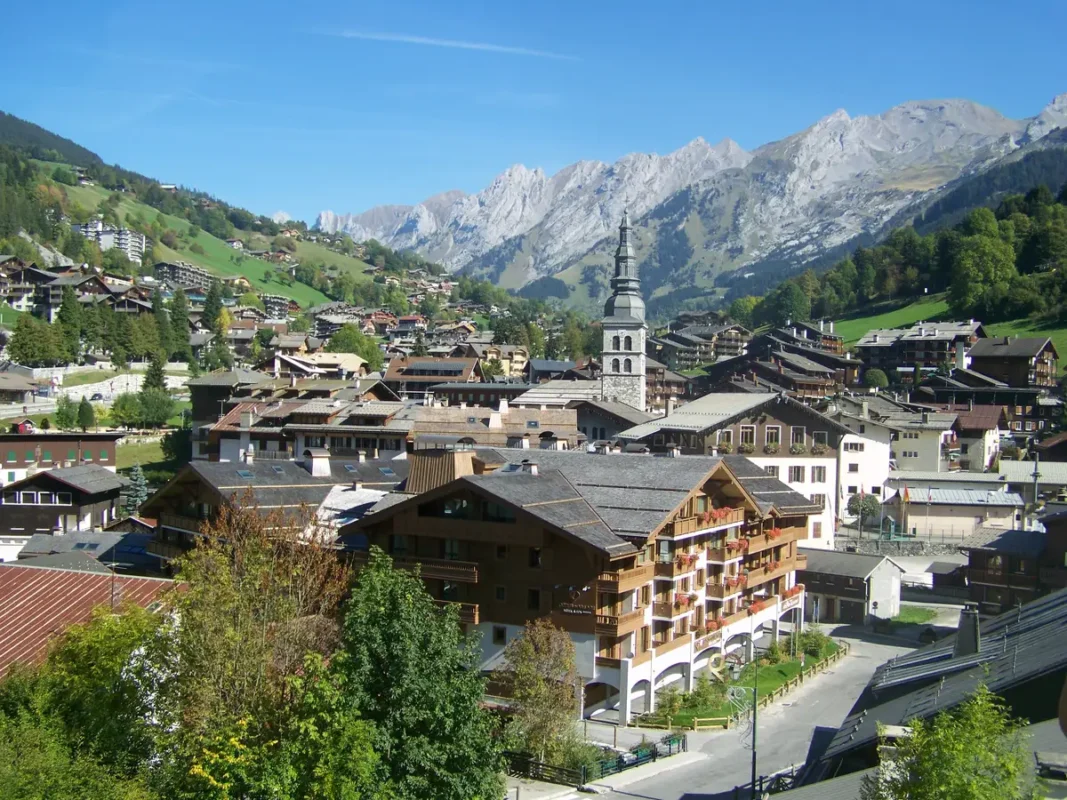
Things to do in La Clusaz:
- Discover the village center, its church, and flowered chalets
- Walk in the alpine pastures accessible by chairlift, or take a short hike around Beauregard
- Refresh in the Confins park or a café in the center
- For children: small amusement park, playful trails, mini-golf
Recommended time: 1h30 to 2h on site
End of day and night in Annecy, the pearl of the lake
In late afternoon, take the road to Annecy, about 50 minutes from La Clusaz via Thônes. Descending through the valley, the mountains gently give way to the turquoise waters of the lake, for an end of day as poetic as it is relaxing.
Once in Annecy:
- Evening walk in old Annecy: canals, arcades, cobbled alleys, and pastel facades
- Dinner on a terrace by the Thiou canal or on the lake quays
- Stay in a hotel, guest room, or aparthotel in the center or with lake view
Practical tip: if you’re visiting in summer, book your accommodation in advance – Annecy is very popular.
Good plans for the evening in Annecy old town
After a day on mountain roads, nothing beats an evening in Annecy to combine relaxation, gastronomy, and romantic atmosphere. Here are some suggestions to fully enjoy the old town at dusk:
Where to dine?
- L’Etage: Savoyard bistro nestled in a half-timbered house, perfect for a fondue in peace.
- La Table d’Élise: more contemporary cuisine, fresh products, and a nice wine list in a clean setting.
- Le Fréti: a local institution to try all kinds of fondues in a mountain décor.
Where to have a drink?
- Captain Pub (Rue Sainte-Claire): large beer selection and lively terrace.
- Bar Roux d’Heure: cozy lounge and cocktail bar with retro charm.
- Le Savoie: ideal for a drink by the canal, with a relaxed atmosphere and views of the illuminated bridges.
Short digesting walk
- Walk along the Thiou canal by night up to the Pont Perrière
- Pause facing the illuminated Palais de l’Île
- End with a stroll under the plane trees of the Pâquier, with a view of the shimmering lake
In July/August, many concerts, night markets, and open-air screenings are offered in the center.
Day 7: Annecy and its lake: quality of life by the water
For your last day in Haute-Savoie, treat yourself to a moment of calm, beauty, and strolling. Between pastel alleys, turquoise water, and mountains in the background, Annecy is the ideal place to finish your stay beautifully.
Discovering old Annecy
Start the day with a walk in the historic center, known as the "Venice of the Alps." Stroll through cobbled alleys lined with arcades, admire the ochre and pink facades, and let yourself be carried away by the peaceful morning atmosphere.
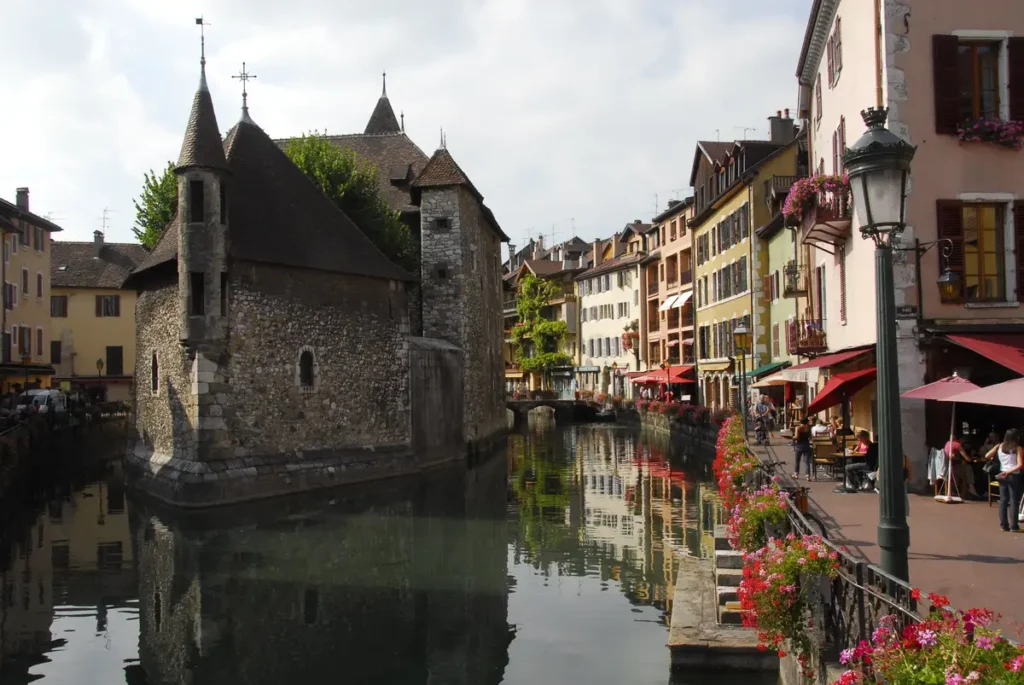
Must-sees:
- The Palais de l’Île, emblem of Annecy (former courthouse on an island)
- The Annecy Castle, museum and viewpoint over the city roofs
- Rue Sainte-Claire and its market (Tuesday, Friday, or Sunday morning)
- The Thiou canal, one of the shortest in France but remarkably beautiful
Midday: lunch with your feet in the water
Choose a restaurant with a terrace by the canal or on the lake shore. For an unforgettable experience, opt for:
- Les Terrasses du Lac in Albigny for a direct view of the water
- La Bicyclette Rose in the old town, for a more intimate gourmet break
Afternoon: cruise or swim on Lake Annecy
To fully enjoy Lake Annecy, three options are available according to your desires:
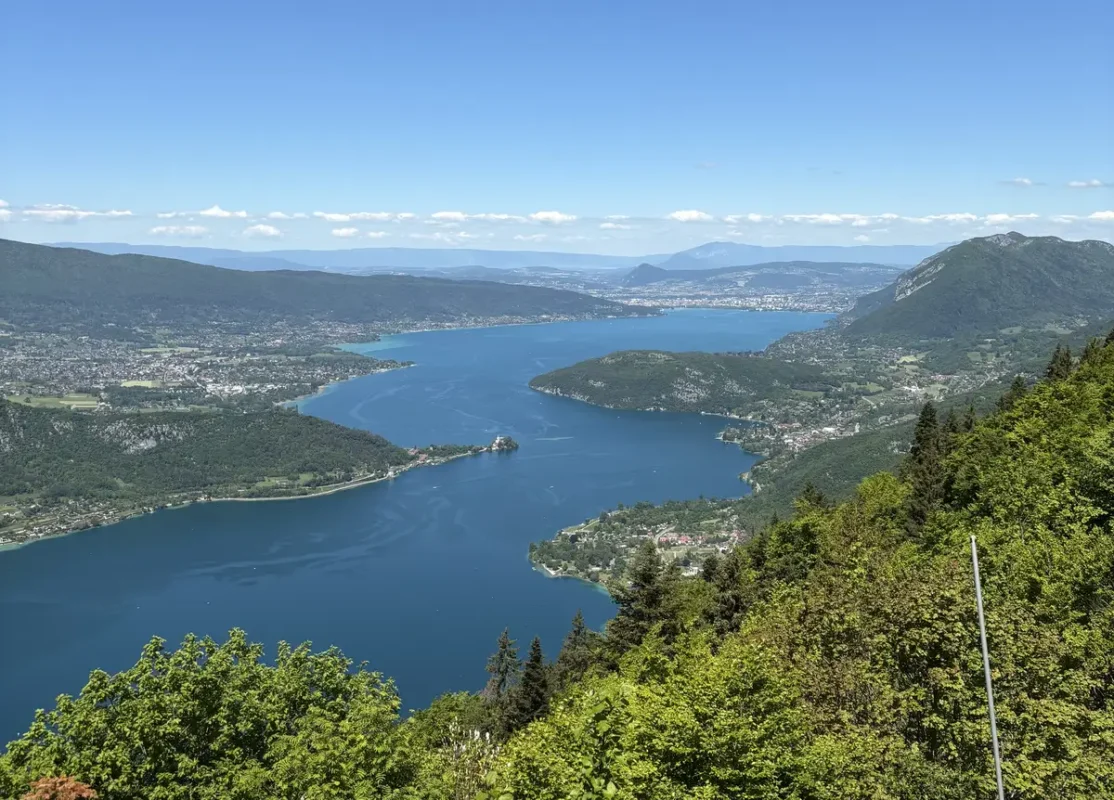
Option 1: panoramic cruise
- Board a commented one-hour cruise departing from the Napoléon III quay
- Admire Talloires, Menthon-Saint-Bernard, Roc de Chère, and the wild beaches
- Price: approx. €17–20/adult
Option 2: swim and relax
- Settle on the Marquisats beach (free, supervised, grassy area)
- Or choose Albigny beach, larger, with pedal boat and paddle rentals
To read: The beaches of Lake Annecy: The complete guide to enjoy your stay
Option 3: Lake Annecy bike tour
- Rent a bike from one of the many rental shops: rent a bike in Annecy
- Discover the lake differently by cycling around it (40 km).
To read: Lake Annecy bike tour
Last stroll and departure
End your afternoon with a walk around the Pâquier, this large flat park by the water, much loved by locals. Then head to the Love Bridge, an iconic spot for a last picture or a contemplative moment facing the mountains.
Thus ends your week in Haute-Savoie, between peaks, waterfalls, authentic villages, and azure reflections. A balanced itinerary between nature, heritage, gastronomy, and unforgettable landscapes. So, have a great stay!
The route map
Article mis à jour le 23 February 2026