
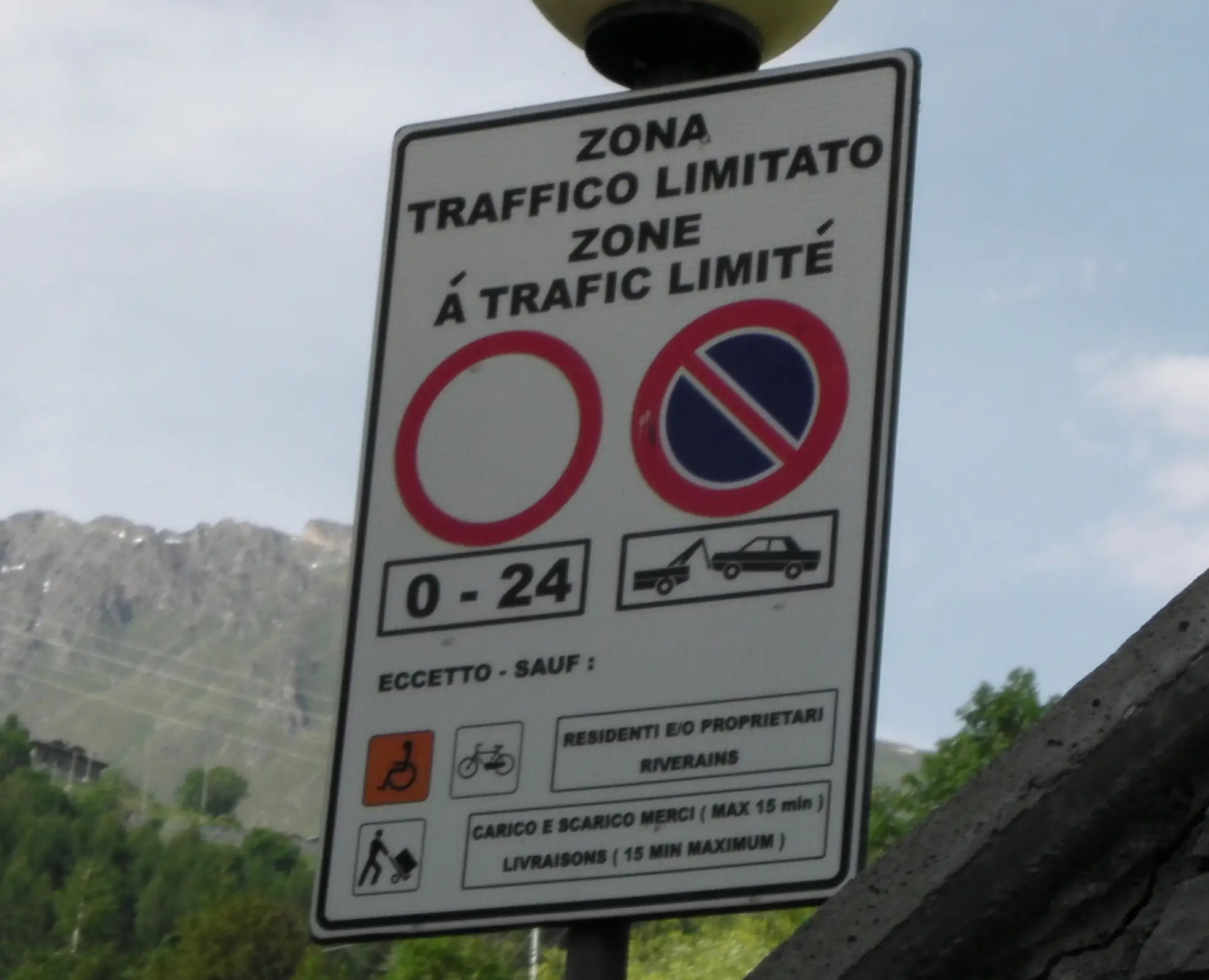
Many visitors and residents of Haute-Savoie take advantage of a getaway to neighboring Italy thanks to the Mont Blanc tunnel. In less than an hour from Chamonix, you are already in Courmayeur, the gateway to the Aosta Valley, then Aosta, Turin, Milan, or the Ligurian Riviera. Traveling by car offers unparalleled freedom to explore Italian villages, lakes, and mountains. But before diving into this Mediterranean road trip, a trap awaits many drivers: the ZTL (Zone à Traffico Limitato), omnipresent in Italian city centers.
What is a ZTL?
In Italy, ZTL—or Zona a Traffico Limitato—refer to restricted traffic zones, often located in the historic centers of cities. Their main objective: to protect old neighborhoods from heavy traffic, reduce pollution, and noise nuisance.
These zones can be active all day or only during specific time slots. Only authorized vehicles (residents, public transport, emergency services, sometimes electric vehicles) are allowed access according to local regulations.
How to recognize a ZTL?
The sign is similar to a “no entry” sign: a red circle on a white background, often accompanied by the inscription “zona traffico limitato”. An additional sign usually indicates the restricted hours. However, there is a wide variety of signs, so be vigilant.
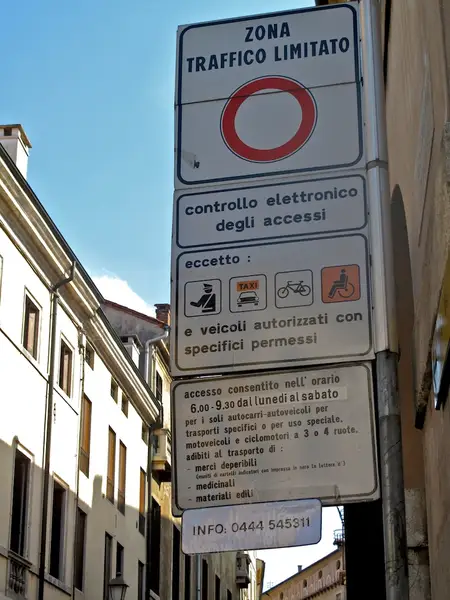
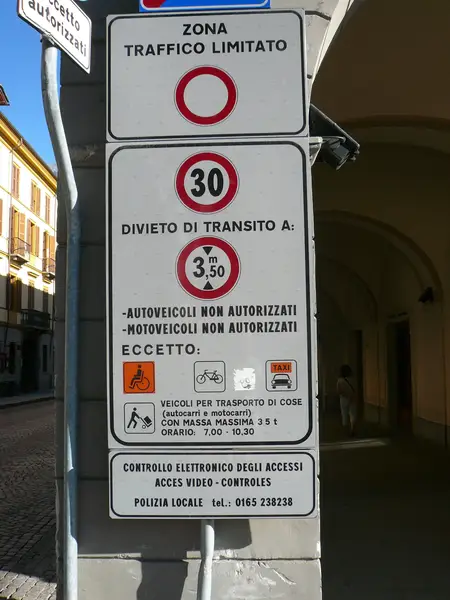
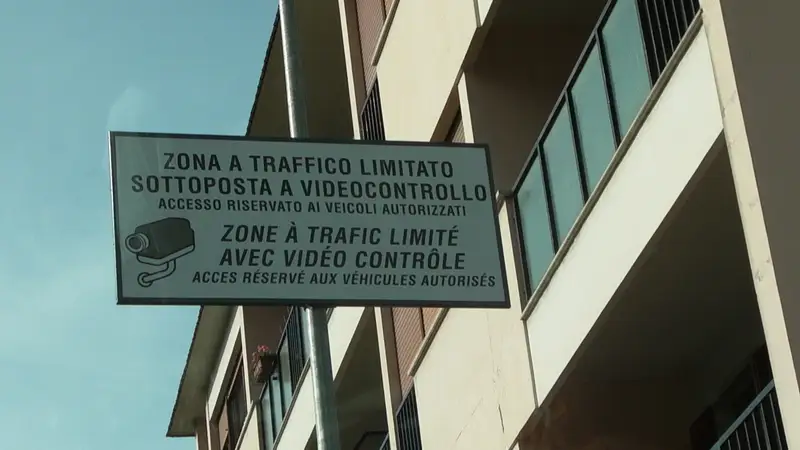
Very often, an electronic control device (camera) is installed at the entrances. If you enter the zone without authorization, your license plate is recorded and you will receive a fine later.
Be very careful, the slightest incursion into a ZTL zone will result in a ticket. During a stay in Italy, while visiting Aosta, I wanted to access a parking lot and entered the wrong lane. I crossed the ZTL boundary to turn around, so over about 20m at most. A few months later I did receive a letter from an Italian collection agency with a nice fine to pay.
Fines and consequences

Penalties for ZTL violations generally range between €83 and €333, depending on the city and the number of offenses. It is better to be vigilant: fines can arrive at your home months after your stay. There is no point in thinking you won’t pay. Collection agencies duly mandated by Italian municipalities will track you down. It is therefore imperative to pay your fine or risk heavy surcharges.
If you use a rental car, know that the rental company first receives the fine, to which administrative or management fees may be added.
What to do if your hotel is located in a ZTL?
Many establishments located in a ZTL zone collaborate with municipalities to register guests’ license plates in advance. It is therefore essential to inform your hotel of your arrival time so they can register you and avoid an unfair fine.
Practical tips to avoid ZTLs
- Stay attentive to road signs: they often clearly indicate when a ZTL starts.
- Use reliable navigation apps like Google Maps, which can display ZTL zones and help you avoid them.
- Park on the outskirts of historic centers, in parking lots not subject to ZTL, then visit on foot or by public transport.
In which cities can ZTLs be found?
Here is a non-exhaustive, but representative, list of main ZTLs (Limited Traffic Zones) in Italy, including major cities and several small historic centers.
Iconic cities with ZTL
- Bologna, Florence, Genoa, Milan, Naples, Pisa, Rome, Verona
These major cities are among the best known for implementing ZTLs to protect their heritage and reduce pollution. - Turin, Palermo
Commonly mentioned examples in the context of fines related to ZTLs. - Milan (Area C)
Technologically advanced, the “Area C” congestion zone functions as a paid ZTL, monitored by cameras and with a daily charge.
Secondary cities and small municipalities with ZTL
The Italian ministry’s database lists many cities, ranging from small towns to medium-sized cities, equipped with a ZTL. Here is a selection:
Lombardy & Piedmont: Abbadia Lariana, Alessandria, Alghero, Asti, Bellagio, Bergamo, Borgomanero, Brescia, Cernobbio, Como, Cremona, Lecco, Moncalieri, Novara, Saronno, Varese, etc.
Tuscany: Arezzo, Florence, Lucca, Pistoia, Siena, San Gimignano, Volterra, etc.
Campania & Sicily: Acerra, Amalfi, Capri, Catania, Ercolano, Napoli, Palermo, Sorrento, Taormina, etc.
Emilia-Romagna & Veneto: Bologna, Ferrara, Modena, Parma, Padova, Verona, Vicenza, etc.
Other regions: Ancona (Marche), Perugia (Umbria), Aosta (Aosta Valley), Bari (Apulia), Trento (Trentino), Cagliari (Sardinia), etc.
The Aosta ZTL: a concrete case near the border
Only 40 minutes’ drive after the Mont Blanc tunnel, the city of Aosta is often the first stop for Savoyard travelers in Italy. Its historic center, rich in Roman remains and shopping streets, is entirely protected by a ZTL.
- The zone covers the streets around piazza Émile Chanoux, via Porta Pretoria, and the old neighborhoods.
- Access is monitored by cameras, and only residents, service vehicles, or authorized visitors (such as hotel guests) may enter.
- Restriction hours vary, but in most cases, access is forbidden during the day to unauthorized vehicles.
To avoid a fine, it’s best to park in one of the outer parking lots (for example Parking Piazza Plouves or Parking at the train station) and then walk to the center. A practical solution that also allows you to fully enjoy the pedestrian charm of the old town.
Special case: Milan and its Congestion Zone (Area C)
Milan has a similar system called Area C, which functions as an urban toll in the city center. It is in effect on weekdays from 7:30 a.m. to 7:30 p.m., except Thursdays from 6 p.m., and requires a payment of about €5 per entry.
The most polluting vehicles are excluded, while electric cars, public vehicles, taxis, or those belonging to residents benefit from some facilities or exemptions.
In summary
| Key points | Recommendations |
|---|---|
| ZTL signs | Be vigilant as you approach historic centers. |
| Automatic controls | No unauthorized passage escapes the cameras. |
| Potentially high and delayed fines | Choose caution, even if penalties arrive later. |
| Hotels within a ZTL | Notify them so they can register your access if possible. |
| Parking planning | Choose well-marked outer parking lots. |
| Implementation of Area C in Milan | Prepare for an additional cost if you need to access it by car. |
Driving in Italy comes with its share of surprises, but by paying attention to signs, coordinating with your accommodation, and favoring peripheral parking, you can avoid fines. In particular, don’t forget the Zone C of Milan with its specific toll. This way, you will fully enjoy your Italian getaways… with a light heart and an intact wallet!