
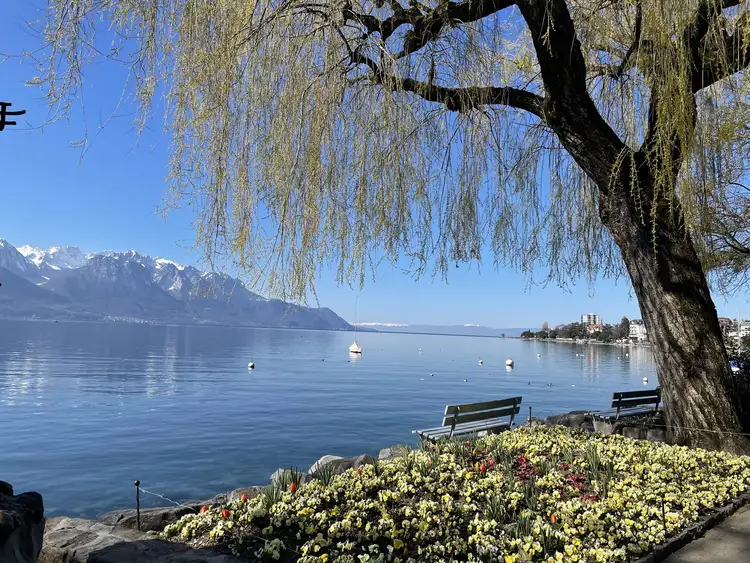
Lake Geneva, or Lake Geneva, is one of the largest lakes in Western Europe, marking the border between Switzerland and France. It combines natural beauty, rich history, and diverse activities over its 580 km² surface and up to 310 meters deep. Surrounded by the cantons of Geneva, Vaud, Valais and Haute-Savoie in France, this Alpine gem offers spectacular views.
Historically called “Liménos Límnē” by the Greeks and “Lacus Lemanus” by Latin writers, it is currently known by several names. Its crescent shape between the Jura and Alps mountains creates a breathtaking landscape. Fed by the Rhône, the lake is a crossroads of nature, history and culture, attracting those interested in beauty, water activities, dynamic cities like Geneva and Lausanne, as well as the thermal resorts of Évian and Thonon.
A bit of history
Glacial origin of the lake
Lake Geneva originates from glacial activity, having formed about 15,000 years ago with the gradual retreat of the Rhône glacier after the last ice age. At that time, a vast ice sea, reaching up to 900 meters in height, covered the region, stretching from the Alps to the current location of Geneva. The movements of glaciers shaped the Rhône valley and moved rocks and pebbles, thus creating the basin of Lake Geneva.
The lake’s role in local history
Since prehistoric times, Lake Geneva has been a pivotal element in local history. The shores of the lake, inhabited since then, revealed their secrets through archaeological discoveries exhibited in the museums of Sciez, Nyon, Lausanne and Geneva. The pile-dwelling sites of Chens sur Léman and the cup-marked stone of Anthy illustrate this ancient human presence.
In the Middle Ages, the lake was a major commercial route. Mariners transported building materials, wine, cereals, fish, salt and cheese, despite occasional disturbances caused by pirates. Combat galleys also patrolled the lake during the Delphino-Savoyard wars until the 18th century, leaving historical traces in the villages of Yvoire and Chillon.
With the arrival of steam boats in the 19th century, commercial navigation on the lake experienced a revolution, gradually shifting toward pleasure and passenger transport. Having become a major tourist activity center, Lake Geneva now offers a variety of recreational and cultural activities to its visitors.
Geography of the lake
Location and dimensions
Lake Geneva, nestled at the western end of Switzerland and north of Haute-Savoie in France, occupies a privileged position between the Alps and the Jura. Its average altitude is 372 meters above sea level.
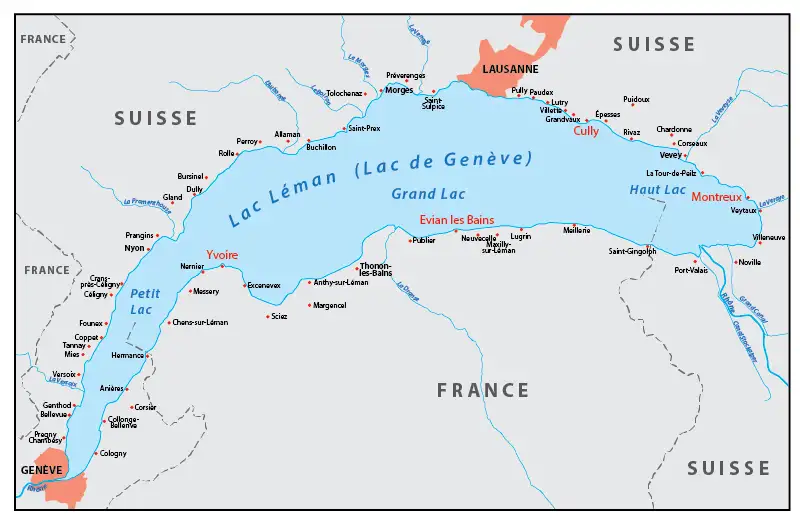
Covering an area of 582 square kilometers, about 348 square kilometers are in Switzerland and the remaining 234 square kilometers in France. The lake stretches 72 kilometers long and reaches a maximum width of 13.8 kilometers between Morges and Amphion. Its shape resembles a crescent, oriented northwest/southeast. The Rhône, which enters the lake at the east between Villeneuve and Saint-Gingolph and exits at the west near Geneva, is essential to its formation and regulation.
Main tributaries of the lake include the Dranse and the Venoge.
The lake shores and their characteristics
The shores of Lake Geneva offer a diversity of remarkable landscapes. The northern shore, mostly in the canton of Vaud in Switzerland, is renowned for its fertility and terraced vineyards rising up to the Jura foothills. This area counts important cities such as Lausanne and Montreux, as well as famous thermal resorts like Vevey.
The southern shore, belonging to the French Chablais in Haute-Savoie, is backed by the Savoyard and Valais Prealps. It is dotted with charming towns and villages like Thonon-les-Bains and Évian-les-Bains, famous for their thermal resorts and natural splendor.
The lake shores also stand out by wetlands and riparian forests, habitats of rich biodiversity. The rocky terraces, formed by glacier meltwaters and torrents, testify to the lake’s evolution up to its current level and shape the region’s landscape.
Key towns of Lake Geneva:
To name just a few, these towns or villages are must-sees of Lake Geneva:
- French side:
- Swiss side:
- Geneva of course
- Montreux
- Lausanne
- Nions and its castle (accessible from Yvoire by boat shuttle)
Fauna and flora around the lake

Emblematic aquatic species
Lake Geneva is a biodiversity reservoir, hosting a variety of aquatic species vital to its ecosystem. Among them, pike, perch, roach, whitefish, carp, and Arctic char stand out.
The pike in particular depends on charophytes for spawning and finds refuge among other aquatic plants for hunting. Aquatic meadows, made up of species such as Broad-leaved Pondweed, Fennel Pondweed, and Shining Pondweed, are essential for the survival of fish fauna, providing shelter and food for young fish such as perch, roach, and pike.
Besides fish, the lake is home to crustaceans such as American crayfish and signal crayfish, playing an important predatory role in the ecosystem. These omnivorous crayfish feed on plankton, plants, mollusks, and sometimes small fish and their own kind.
Biodiversity protection
The preservation of Lake Geneva’s biodiversity is paramount. Human modifications of the shores, such as rock armor, walls, quays and roads, have strongly impacted natural habitats, fragmenting and weakening them.
Renaturation initiatives of shores and waterways play a key role in conserving and improving lacustrine biodiversity. Fighting pollution, protecting habitats and raising public awareness are essential to safeguard and enrich the biological diversity of the lake.
A noticeable improvement in water quality has favored the diversity of aquatic plants and, by extension, that of fish. Wetlands and reed beds, like those of Grangettes or Pointe à la Bise, are indispensable for amphibians and micromammals, highlighting the importance of preserving these environments for the ecological wealth of Lake Geneva.
Activities around the lake
Boating and pleasure boating
Lake Geneva, a true paradise for water lovers, offers a wide range of nautical activities. Thonon-les-Bains, distinguished by the label “France Station Nautique 4*”, offers sailing, windsurfing, canoeing, kayaking, rowing, and diving.
The ports at Thonon-les-Bains, Évian-les-Bains and along the shore welcome boaters with many berths. Cruises on the lake can be enjoyed aboard Belle Epoque steamers, or more unusual means like the solar shuttle or the sailing boat “La Savoie”.
Swimming is also popular, especially at the natural beach of Excenevex, with its fine sand reminiscent of the Mediterranean.
To read: The most beautiful beaches of Lake Geneva in Haute-Savoie
Hiking and leisure
The shores of Lake Geneva and its surroundings entice hikers and nature lovers. The region offers varied hiking routes, revealing spectacular landscapes and magnificent views of the lake and mountains.
The Pays de Gavot, behind Évian, is perfect for hiking, with superb views over the lake from Thollon-les Mémises and the nearby cliffs.
Aerial sports, such as paragliding, gliding and ultralight aviation, provide strong sensations and exceptional panoramas over the lake and the Alps.
The villages and castles bordering the lake, such as Yvoire, Ripaille Castle and Chillon Castle, offer exciting cultural and historical visits. The animal park Les Aigles du Léman in Sciez, dedicated to birds of prey, is a captivating attraction for families and nature lovers.
In winter, the region becomes a playground for winter sports, with Swiss and French resorts offering skiing, snowboarding, and other activities.
Culture and traditions
Cultural events and festivals
The Lake Geneva region shines through its cultural events and festivals, reflecting the diversity and energy of its cultural scene. The Montreux Festival, which takes place every summer, is particularly emblematic. It attracts internationally renowned artists in various genres such as jazz, blues and classical music.
Since its creation in 1967, this festival has become one of the most prestigious European gatherings, attracting thousands of international visitors. The Fête des Vignerons in Vevey, celebrated every 20 to 25 years, is another important event. Recognized by UNESCO, this celebration of local wine tradition offers a grand spectacle of theater and dance, illustrating the viticultural history of Lavaux.
The villages bordering the lake, such as Yvoire and Saint-Saphorin, enliven the region with festivals and local markets throughout the year, promoting local crafts and gastronomy.
These events are a great opportunity to immerse yourself in customs and savor regional products in a friendly atmosphere.
Local gastronomy and Lake Geneva wine
The Lake Geneva region is famous for its varied gastronomy and local products. Viticulture holds a central place, especially in the canton of Vaud where the Lavaux terraces, listed as a UNESCO World Heritage site, offer exceptional wines. Varietals like Chasselas and Pinot Noir stand out for their delicacy and complexity, the result of specific climatic and geological conditions in the region.
Local gastronomy is also characterized by specialties such as Lake Geneva perch fillet, papet vaudois and Abondance cheese, coming from surrounding mountain pastures. Cheeses like Emmental from Gruyère and Sbrinz play a major role in regional cuisine, notably in traditional dishes such as fondue and raclette.
Exploring local markets and artisanal farms is an excellent way to discover and taste these fresh and seasonal products, plunging visitors into the authenticity of Lake Geneva gastronomy.
Protection and preservation of the lake
Environmental initiatives
The protection and preservation of Lake Geneva are at the heart of many environmental initiatives. Among them, the Association for the Protection of Lake Geneva (ASL), founded between 1980 and 1984 in Switzerland and France, plays a prominent role. One of its notable actions was contributing to the ban of phosphates in detergents, significantly reducing lake eutrophication.
Continuing to promote awareness of environmental issues, ASL organizes operations such as “Net’Léman” to clean the lake shores of accumulated waste. Additionally, it fights invasive species like Japanese knotweed through the “Stop Knotweeds” program, a key initiative to protect lacustrine biodiversity.
Water management and pollution control
Since 1963, the International Commission for the Protection of Lake Geneva’s Waters (CIPEL), a Franco-Swiss organization, coordinates water management in the Lake Geneva basin. It monitors water quality, conducts studies on aquatic ecosystems, and identifies pollution sources to better combat them.
CIPEL plays an important role by recommending measures to improve water quality and aquatic habitats to the Swiss and French governments. It also encourages collaboration among local actors, promoting the sharing of experiences and the creation of synergies. Its objective is to inform and raise public awareness about the importance of protecting the lake’s waters, thereby ensuring their quality for human consumption after simple treatment, recreation, and the preservation of noble fish species.
Thanks to improvements in treatment plants and other initiatives, Lake Geneva has become a success story in environmental protection. However, the fight against new challenges such as micropollutants and microplastics requires constant attention.
Tips for visitors
To make the most of your visit around Lake Geneva, here are some practical recommendations.
Best times to visit: Lake Geneva is attractive year-round, but some seasons are more favorable. Spring and summer are perfect for water activities and hiking. Autumn charms with its colorful landscapes and mild climate. Winter delights winter sports enthusiasts with nearby resorts like Thollon-les-Mémises and Les Rousses.
Preparation and equipment: Adapt your preparation according to the season and planned activities. For hiking and outdoor leisure, favor comfortable shoes and weather-appropriate clothing. For water activities, think of safety equipment and sun protection.
Transport and travel: The Lake Geneva region benefits from an excellent public transport network. Trains, buses and boats from Compagnie Générale de Navigation (CGN) facilitate scenic travel around the lake. Bikes and mountain bikes are also an excellent way to explore the lake’s surroundings.
Reservations and planning: To avoid inconvenience, book your activities in advance, especially in high season. Cruises, castle visits and popular restaurants may require prior reservation to guarantee your place.
Respect for the environment: Lake Geneva and its surroundings form a fragile ecosystem. Be sure to follow environmental rules, not leave waste, and protect natural habitats. Participating in cleanup actions or supporting local associations are ways to help conserve this exceptional setting.
Discovering villages and towns: Explore the picturesque villages and towns bordering the lake, such as Yvoire, Nyon, Lausanne and Montreux. Each place is full of cultural and historical treasures, offering local markets, monuments, and gardens to discover.
Best times to visit
The Lake Geneva region lends itself to discoveries throughout the year, offering each season its own charm and activities.
Spring (March to June): Spring marks an ideal period to explore Lake Geneva, thanks to mild temperatures and nature’s awakening. Temperatures range between 8° and 15°C, thus favoring hiking and exploring towns and villages without the discomfort of summer heat or winter cold. Occasionally, the föhn wind, a dry and warm wind, may blow, adding a unique touch to this season.
Summer (June to August): Summer offers the warmest and sunniest conditions, with temperatures ranging from 18° to 28°C. This season is perfect for enjoying nautical pleasures such as swimming, sailing, water skiing and windsurfing. Towns such as Geneva, Lausanne and Montreux come alive, hosting many festivals and cultural events, including the famous Montreux Festival.
Autumn (September to November): Autumn wraps Lake Geneva in a charming atmosphere, with mild temperatures (between 8° and 15°C) and landscapes tinged with vivid colors. It is the ideal time for hiking, vineyard visits and strolls along the shores, especially as precipitation is generally less frequent than in summer.
Winter (December to February): Winter is the preferred season for winter sports enthusiasts. Nearby ski resorts, such as Thollon-les-Mémises and Les Rousses, offer optimal conditions for skiing, snowboarding and other snow activities. Temperatures, ranging from -2° to 7°C, give the region a special winter charm.
Although the period from June to September is often favored to visit Lake Geneva due to its pleasant climate and variety of activities offered, each season reveals its own attractions, allowing visitors to choose the time of their visit based on personal preferences and planned activities.
Accommodations and lodgings
The picturesque Lake Geneva region offers a wide range of accommodations designed to satisfy all preferences and budgets. Whether you are looking for a cozy, luxurious stay or an authentic experience, you will likely find the perfect place for your getaway.
Apartments and studios are among the favorite choices, particularly in cities such as Geneva, Lausanne and Montreux. These accommodations, often featuring modern design and full amenities, offer appreciated flexibility, ideal for couples or families. Apartments are available from €43 per night, including conveniences such as internet connection and, in some cases, access to a swimming pool.
Chalets and villas represent a wonderful option for those seeking a more rustic and authentic setting. Generally located in peaceful and nature-close places, they offer a warm atmosphere typical of Savoy. You can choose spacious chalets equipped with a garden, pool and jacuzzi, perfect for family vacations or friends, with rates starting at €66 per night.
Bed and breakfasts and guesthouses provide an excellent opportunity to experience local hospitality. Located in old farms or traditional houses, these lodgings guarantee a warm welcome and a true immersion in the region’s culture. Bed and breakfasts are available from €71 per night, offering gardens and breathtaking panoramic views of the lake.
Some accommodations around Lake Geneva offer specific amenities to enrich your stay, such as swimming pools, gardens, terraces with lake views and internet connections. It is also possible to find rentals accepting pets, which is a considerable advantage for travelers wishing to bring their four-legged companions.
It is advisable to book your accommodation in advance, especially during high season, as the region enjoys great popularity. Vacation rental platforms like HomeToGo, GreenGo, Amivac and Holidu offer a wide choice of lodgings and allow easy comparison of prices and amenities to find the option best suited to your expectations and budget.
Transport and travel around the lake
The Lake Geneva region is served by a very complete network of public and private transport, making travel between surrounding towns and villages easy and pleasant.
Trains and Railways: Traveling by train around Lake Geneva is both practical and comfortable. Trains run from Geneva to Villeneuve, serving key cities such as Lausanne, Montreux and Vevey. The railway network is particularly well developed, with TGV Lyria connections between Geneva and Paris and regional trains linking small villages to large agglomerations.
Boats and Ferries: Exploring the lake by boat or ferry offers a unique and charming perspective. The Compagnie Générale de Navigation (CGN) offers cross-border lake crossings, with lines such as N1 (Lausanne
- Évian), N2 (Lausanne
- Thonon-les-Bains) and N3 (Nyon
- Yvoire). These services combine public transport and leisure cruises, with a regular schedule, especially in summer.
Buses and Trams: Buses and trams extend the public transport network, connecting localities not served by train. The Léman Pass, a single ticket, facilitates cross-border travel between Switzerland and France by bus, tram, train and boat.
Driving and Roads : Driving around Lake Geneva is pleasant thanks to well-maintained and lightly trafficked roads. The A1 and A9 motorways in Switzerland and the National Road N5 in France run along the lake, offering exceptional panoramas. However, parking can be difficult in the city centers of Geneva and Lausanne, where walking or public transport is recommended.
Cycling : Biking is an excellent way to explore the region, with flat paths along the lake and more demanding routes in the nearby hills and mountains. A well-marked circuit allows cycling around the lake, offering splendid views over the lake and the Alps.
Geneva Airport: Geneva International Airport (GVA) is a convenient arrival point for the region, with links to many international destinations. The airport is directly connected to the public transport network, facilitating access to major lakeside cities around Lake Geneva.
Final word
Lake Geneva, recognized for its splendid natural beauty, rich historical heritage and variety of activities, is a prime destination for nature, culture and leisure enthusiasts.
Stretching between Switzerland and France, this region presents a unique blend of Alpine landscapes, dynamic cities and charming villages. Environmental protection and water quality conservation are top priorities, supported by the ongoing efforts of the International Commission for the Protection of Lake Geneva’s Waters (CIPEL) and various local initiatives.
Lake Geneva attracts those interested in water sports, hiking, regional gastronomy, or those simply wishing to admire the lake’s beauty. Facing current environmental and climate challenges, supporting protection initiatives becomes essential to preserve this natural wonder for future generations.
I encourage you to plan your visit and participate in the conservation of this precious ecosystem.
Article mis à jour le 23 February 2026