
Choosing your snowshoes for this winter may seem trivial, but this choice will partly determine the pleasure you will experience while hiking. A snowshoe adapted to your terrain of practice will make things much easier for you.
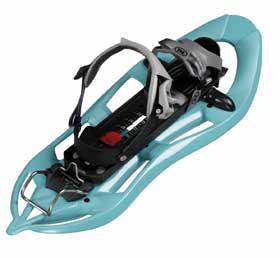
To choose your snowshoe, you need to know the type of terrain on which you will mainly practice.
For gently sloping terrain , there will be no particular constraints. A wide frame may be interesting if you practice in deep powder snow.
For steep terrain, therefore technical, favor a snowshoe with a narrower frame and choose a model equipped with good climbing bars and front points. A technical model can in any case be used on easy terrain, the only limitation being in deep powder snow where a narrow frame is somewhat lacking in flotation. But your technique will compensate!
Description of the components making up a snowshoe:
Very important, the frame. It is what creates the flotation of the snowshoe and thus prevents you from sinking. It is chosen according to the terrain, of course, but also according to the user’s build. The larger the frame, the better the flotation but the greater the bulk. Remember to spread your feet a little! This frame is also equipped with spikes (crampons) to better grip on hard or even icy snow.
The binding. Several types of bindings:
- The ratchet allows the foot to be fixed firmly to the snowshoe. On the downside, it is a bit heavy.
- The quick buckle is easier to use but more delicate to adjust.
- The quick bindings (Step In): in my opinion, this is an ideal system but it requires appropriate shoes.
The sole. It is the part under your shoe.
The climbing bar. When the slope really inclines, this bar will make your ascent easier by reducing ankle flexion. Several positions are generally available on these bars. On gently sloping terrain, the climbing bar is unnecessary.
The claw or front point. It will make the task easier on steep slopes and will also prevent slipping during the foot roll. Here too, like the climbing bars, the claw is useless on gentle slopes.
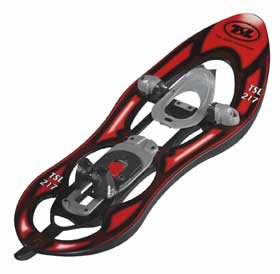
The last choice criterion, far from negligible, is weight. A lightweight snowshoe is preferable for slightly longer hikes; your legs will thank you after a few hours of walking.
Happy choosing, and enjoy your walk!