
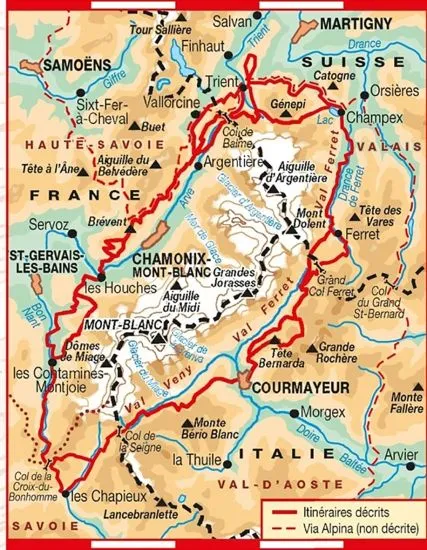
The Tour du Mont Blanc is not only a great classic of the Alps: it is a lively crossing, both sporty and accessible, connecting inhabited valleys, panoramic passes, and refuges where people share meals with walkers from everywhere. Over approximately 160 to 170 km and nearly 10,000 m of accumulated positive elevation gain, the route forms a loop around the Mont Blanc massif, passing through France, Italy, and Switzerland. Most hikers complete it in 7 to 12 days depending on pace, training level, and chosen logistics. In 2026, the success of the TMB continues unabated: refuges often full, trails very busy in midsummer, and weather conditions requiring more than ever the ability to adapt.
To make this guide practical, we will follow the thread of a realistic preparation, that of Claire and Mehdi, two friends who want to go without a guide but with method. She hikes regularly, he is discovering hiking trips: they seek a reliable plan, understandable stages, and solutions if things don’t go as planned. Between choosing the direction of walking, booking nights, managing storms, water, safety, and possible minor troubles (like bedbugs), the goal is simple: to turn a “big project” into a well-structured adventure, without losing the magic of the trail.
Tour du Mont Blanc: understanding the route, duration, and best season
The GR Tour du Mont Blanc is a marked alpine loop crossing three countries. It is often associated with a “classic” division of about 10 days, but in reality it is more flexible: some hikers aim for 7 to 8 days (sporty pace), others prefer 11 to 12 days to enjoy the villages, breaks, and wilder variants. In all cases, the experience is marked by diversity: alpine pastures, forests, moraine, scree slopes, inhabited valleys, and mountain pass crossings. This constant contrast explains why the TMB remains motivating day after day.
Claire and Mehdi hesitate between 9 and 10 days. Their main criterion is not performance: it is the ability to chain several days of hiking, to carry a backpack, and to remain clear-headed on descents. It is a good way to look at it: on the TMB, the difficulty is less “technical” than “cumulative.” You might feel strong in the morning, then realize at 4 p.m. that repeated elevation gain ends up wearing out the thighs, especially if you manage the pace poorly.
Mid-June to mid-September: ideal window, but not uniform
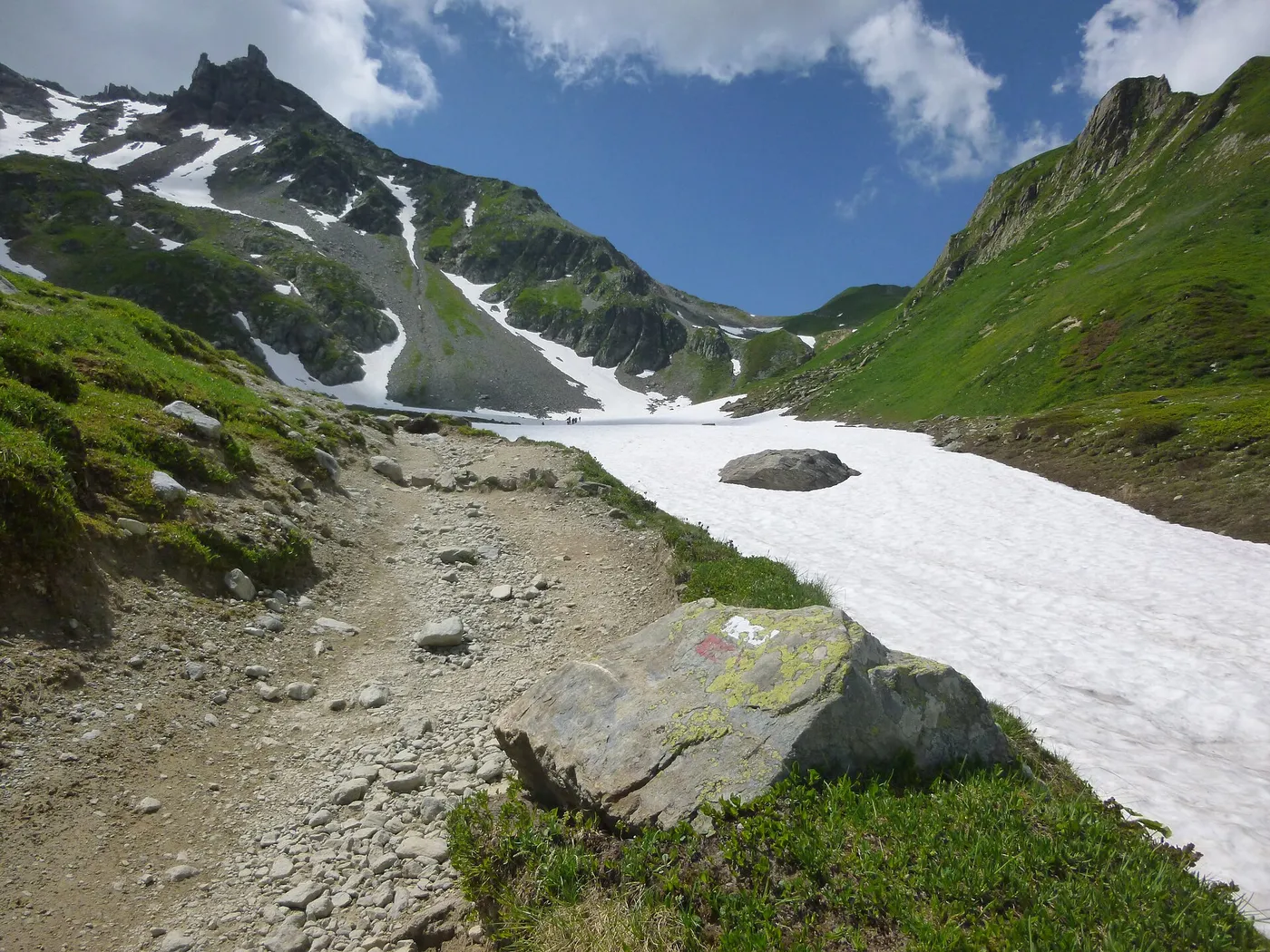
The most favorable period usually lies between mid-June and mid-September, when the refuges are open and the passes more passable. However, conditions change dramatically depending on the week. Early June can still reserve snow patches on high passages, with very concrete consequences: long slips, reduced visibility, and additional mental fatigue. In these situations, equipment and skills must be adequate: stiffer boots, sometimes crampons and an ice axe for exposed sections, and stricter risk management. Trail running shoes, appreciated on dry ground, become unsuitable on hard snow when crossing passes.
Conversely, July-August generally offers milder temperatures and a well-marked path, even if snow patches persist. The downside is the crowds: many hikers start from Les Houches and go in the counter-clockwise direction. To find calm without changing dates, a simple strategy is to walk in the clockwise direction: you will then cross the main flow around the pass at lunchtime, and most of the day will go more quietly.
In September, the atmosphere changes. Mornings are cool, a first snow may reappear, and some water points are less reliable. Refuge teams sometimes come out of intense months: service may be drier, without losing the charm of the places. Betting on an “Indian summer” often works, but you must accept the idea of adapting at the last moment.
Access, start, and options to customize the adventure
The most common starting point remains Les Houches, easily accessible from the Chamonix valley. For the finish, the loop allows returning to the same place, which simplifies car or train logistics. If you travel via Geneva, allowing a margin is useful: a missed connection can disrupt a first night booked a long time ago. To prepare a transit and possibly add a visit before departure, a detour to the must-see places in Geneva can also serve as a buffer before the mountains.
Finally, the TMB lends itself to adjustments: valley buses, occasional ski lifts, taxis to skip a less interesting section or avoid a storm. This modularity does not detract from the experience: it often makes it more sustainable, as it avoids turning an unexpected event into a failure. The real luxury on the TMB is knowing how to change plans without losing the thread.
Physical and mental preparation for the Tour du Mont Blanc: endurance, elevation gain, and effort management
Preparing the TMB means preparing a sequence of days: walking long, climbing, descending, repeating. Good physical condition does not mean running fast; it means maintaining a steady pace, limiting pain, and recovering enough to set off again the next day. Claire already trains on weekends, but Mehdi mostly has an urban activity. Their plan is therefore simple: build an endurance base, then get the body used to elevation gain and carrying weight.
An effective preparation ideally spreads across 8 to 12 weeks: it’s enough to progress without injury, and short enough to stay motivated. The common mistake is to “do a lot” at once. On the TMB, overuse injuries (knee, Achilles tendon, iliotibial band) cost more than any equipment: they turn a beautiful trip into abandonment.
Realistic training plan: walking, climbing, carrying
The foundation consists of regular outings on varied terrain. Two weekly sessions often suffice: one short but dynamic, one longer and more relaxed. The goal is not to be breathless; it is to be able to talk while walking. Then add elevation gain: stairs, hills, local hikes. If you are in Haute-Savoie before departure, drawing ideas from walks and hikes in Haute-Savoie helps vary profiles and work on consistency.
From the fourth or fifth week, Claire suggests a rule to Mehdi: walk with the backpack, even if it is not yet loaded as on the trek. The back, shoulders, and hips gradually adapt. The day you leave with 8 to 10 kg, you will be glad to have “tested” the shoulder straps and hip belt beforehand.
Effort management over several days: pace as a safety tool
On the TMB, leaving too fast in the morning is a classic mistake. The heart rate follows, the ego too, then the day ends in cramps on a steep descent. A robust strategy is to mentally break down each stage: a main climb, a plateau, a descent, then the “end of day.” At each segment, ask yourself: “Am I walking sustainably?” This simple check avoids drifting.
Breaks should be short and frequent. A 2-minute pause to drink and eat every 45 minutes is better than a 25-minute stop where you cool down. In the passes, moderate altitude (often between 2000 and 2500 m) does not necessarily cause acute mountain sickness, but some people still experience headaches and nausea. In that case, hydration, slow pace, and stopping take priority.
Mental preparation: motivation, weather stress, and “Plan B” scenarios
The psychological dimension is often underestimated. The TMB can string together three splendid days, then offer rain, fog, and wind. Mehdi fears “not seeing Mont Blanc.” Claire reformulates: “We are here to circle a living massif, not for a single photo.” This shift in goal reduces frustration.
Stress management also passes through alternative plans: knowing where the valleys are, which buses exist, which refuges are nearby. Having this information doesn’t make you anxious; on the contrary, it gives a sense of control. When the mind is calm, the legs follow. The logical next step is thus to equip yourself to remain comfortable, even when the mountain decides to complicate the game.
Essential equipment for the TMB: backpack, clothing, safety, and comfort for 7 to 12 days

Equipment on the Tour du Mont Blanc is not an accumulation of objects: it is a coherent system aiming at three results. First, walking without pain. Next, staying dry and warm despite rapid changes. Finally, managing an unexpected event without immediate dependence on others. Valentin Gevaux, guide on the route, often sums up common sense like this: “Equipment doesn’t prevent mistakes, but it reduces their cost.” Claire and Mehdi understood this by testing their gear on a day hike before booking all their nights.
The basics: shoes, backpack, technical layers
Shoes are the number one element. A mid-high upper can reassure on descents and protect against shocks, while a low upper suits hikers very used to the terrain. The important thing is the sole, grip, and absence of blisters. New shoes the day before departure remain the most expensive bad idea of the season.
The backpack depends on the accommodation mode. In refuges, a volume around 35 to 45 L often suffices. In bivouac, you easily climb to 50-60 L, with a weight increase paid in elevation gain. Adjustment is crucial: the belt must carry most of the load, not the shoulders. A well-fitted backpack is almost “forgotten.”
Regarding clothing, the principle of three layers remains the most reliable: a breathable layer, a warm layer, a wind/rain protection layer. Even in summer, a neck can be cold, especially if you are wet or immobile. Adding a pair of light gloves and a neck tube is often more useful than an extra bulk garment.


Safety equipment: what is rarely used… and sometimes saves
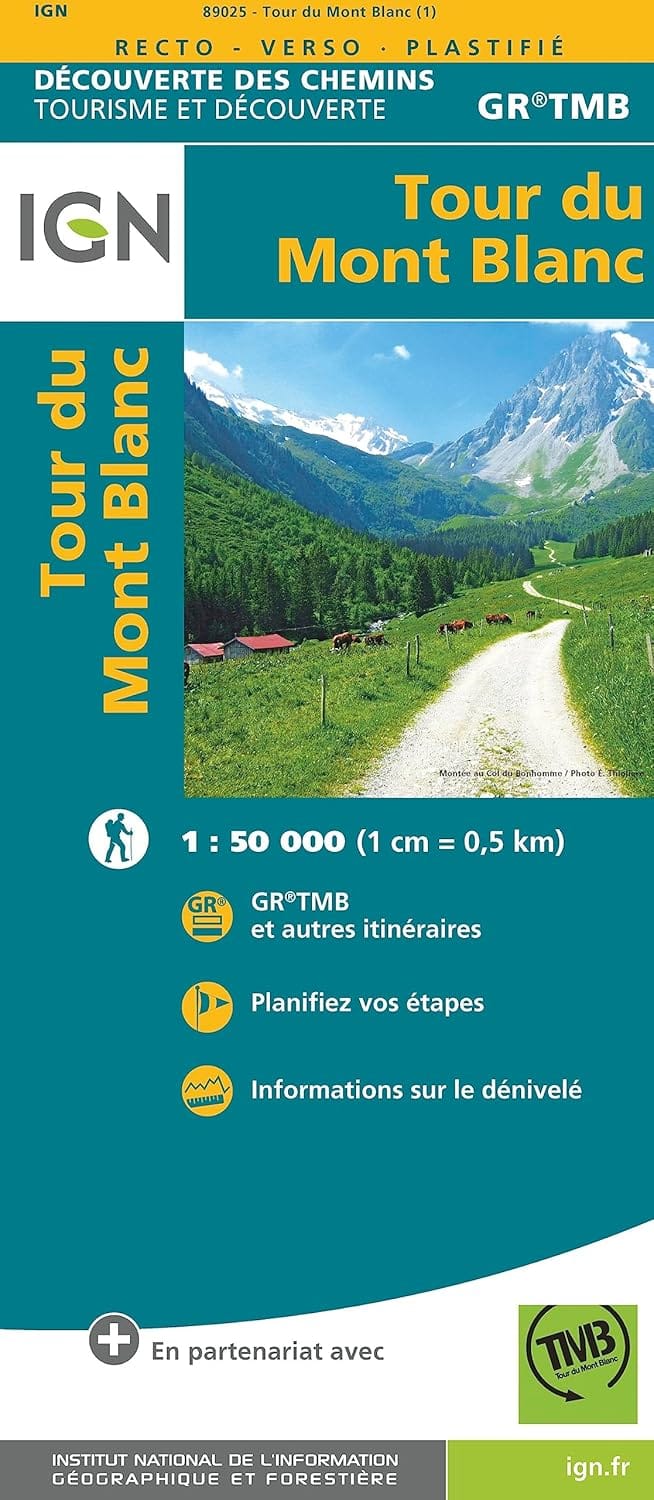
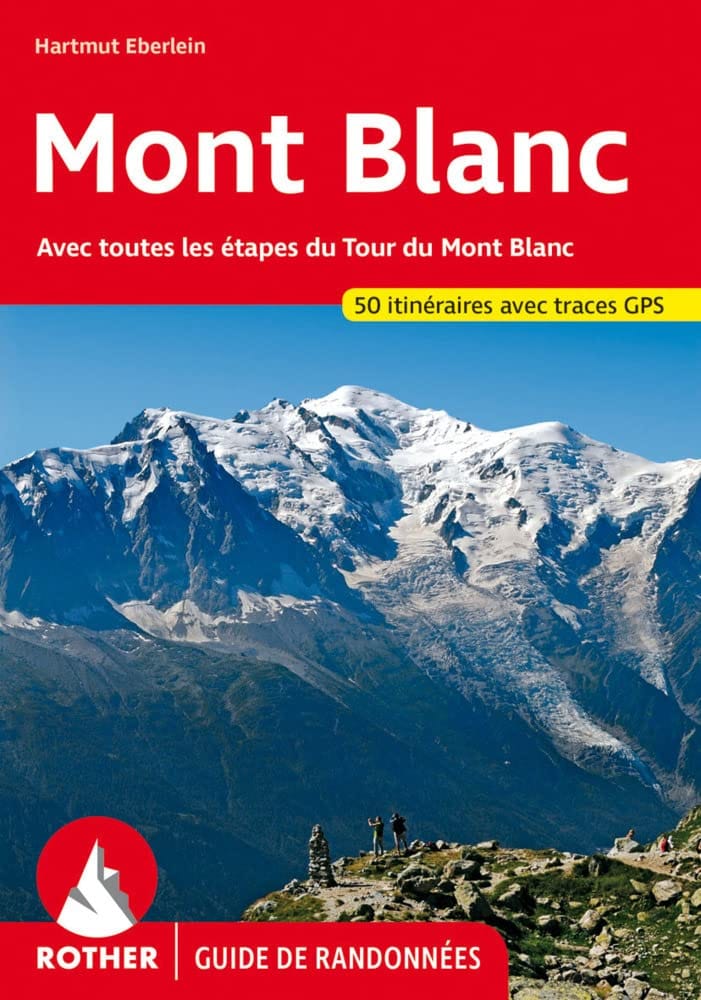
A headlamp allows managing an early start to avoid storms, or a delay without panic. A simple but planned first aid kit (blister dressings, tape, disinfectant, anti-inflammatory if compatible, survival blanket) is a standard. Add a map or a guidebook, even if the trail marking is good: fog can turn an “obvious” path into a labyrinth.
In 2026, many hikers also rely on communication means: iPhones compatible with emergency satellite calls (from some recent models), dedicated beacons, or even satellite phones for autonomous groups. It is not mandatory, but it can reassure. Keep in mind that there are no-network zones in some valleys, on the Savoie or Swiss side.
Recommended equipment list (refuges, no bivouac)
- Hiking shoes already broken in + technical socks (2 to 3 pairs)
- Backpack 35–45 L + rain cover
- Waterproof jacket (membrane) + light fleece or compact down jacket
- Walking pants + shorts (optional) + thin warm layer
- Hat or headband + thin gloves + neck tube
- Trekking poles (very useful on descents and unstable terrain)
- Water bottle or hydration bladder (1.5–2 L) + filtration system/tablets
- Headlamp + external battery
- First aid kit + survival blanket
- Sleeping liner for refuges + earplugs
To limit forgetfulness, Claire packs her bag in “blocks” (clothing, hygiene, safety, electronics) in waterproof pouches. This method becomes valuable in refuges: you pack quickly, avoid scattering your things, and also reduce risks related to bedbugs by better isolating your gear.
Table: simple landmarks to choose your hiking format
| Option | Average backpack weight | Freedom | Constraints | Typical profile |
|---|---|---|---|---|
| Refuges / guesthouses (half board) | 7–10 kg | Medium | Early reservations, higher budget | Beginner to experienced seeking comfort |
| Mix refuges + campsites | 9–13 kg | Good | Variable logistics by country, weather | Autonomous hiker, flexible |
| Mostly bivouac (adapted) | 12–18 kg | High (in theory) | Strict regulations, increased fatigue | Experienced, organized, minimalist |
With this material base, the next question naturally becomes: where to sleep, how to book, and how to eat without overloading yourself. This is often where the TMB is won… or complicated.
Accommodation and provisioning on the Tour du Mont Blanc: refuges, campsites, bookings, and water management
On the TMB, accommodation influences almost everything: backpack weight, daily pace, budget, and even calmness in the face of unforeseen events. Claire and Mehdi opt for hiking mostly in refuges and guesthouses, with one or two nights in the valley to rest. It is the most common choice, especially because bivouac is very regulated, even prohibited in some areas.
Many refuges are staffed from mid-June to mid-September. Early June or from mid-September some places close, and options decrease, especially on the Italian side. Booking is therefore a central topic. Some places even open quotas early to tour operators, which can give the impression that “everything is full” long in advance.
Smart booking: flexibility, valleys, shuttles
When a key stage is saturated, the solution is not necessarily to give up: it is to shift one night to the valley. For example, Trient in Switzerland fills up fast. An alternative is to sleep further away and join the route the next day by shuttle or taxi, such as towards Martigny depending on availability. On the Italian side, buses (often very handy) regularly connect Val Ferret, Val Veny, and Courmayeur, allowing circumventing a lack of space without breaking the whole loop.
In the Chamonix valley, buses also ease adjustments. This “soft mobility” is a safety net: it helps manage an announced storm, an early tendinitis, or a weather-related delay. The key is to keep a simple fallback plan: accommodation in the valley and a way to get down there.
Bivouac: rules by country and good practices
Bivouac is not just “pitch the tent wherever you want.” In Switzerland, it is forbidden in valleys concerned by the route. In Italy, it is often very restricted, and tolerance is limited; campgrounds in certain areas (Trient, Champex, Val Ferret, Val Veny) then become realistic solutions. In France, bivouac is frequently tolerated from evening to morning, with precise rules (often around 7 p.m. to 9 a.m.) and restrictions in some nature reserves, where permit systems have been implemented in recent years. Before considering a night under a tent, consulting the guide to good hiking practices helps frame behaviors and avoid errors that annoy residents and protected area managers.
Managing food: energy, simplicity, budget
Most hikers alternate half-board and village purchases. In refuges, prices often follow this order: about €50 per person for half-board, €10 for a prepared picnic, and €10 to €15 for a midday meal. These guides help build a coherent budget. For Claire and Mehdi, the rule is simple: dinner and breakfast in refuges, and a mixed lunch (picnic + extras bought in the valley) to limit expenses without deprivation.
Food contents should remain light and caloric: nuts, dried fruits, cheese, bread, bars, chocolate. A “pleasure” food can also become a mental tool: a square of chocolate at the pass is sometimes what gets you going again.
Water on the TMB: abundant but not always guaranteed
Water is generally present on the route via fountains, streams, and refuges. In drier periods, some places ration, and availability decreases late summer. A good rule is to fill up as soon as water is accessible, without waiting to be empty. For those drinking from streams, take water high in the course, away from herds and busy areas. To minimize risks, filtration or tablets remain simple solutions.
At this stage, Claire and Mehdi have their night plan and their water/food routine. The most awaited part remains: the division of stages and variants to turn logistics into a true crossing.
Seeing images of typical stages helps visualize ascent profiles and trail widths, but nothing replaces careful reading of distances and elevation gain before setting off.
Routes and stages of the Tour du Mont Blanc: 10-day division, variants, and weather Plan Bs
The TMB can be split in many ways, but the 10-day format remains a balanced benchmark: gradual enough to enjoy, structured enough to book. The goal here is not to impose “the” best plan, but to give a solid framework, which you will adjust according to your available nights, shape, and conditions. Claire and Mehdi choose a 10-day base, with two levers: shorten a stage if weather worsens, or lengthen if a variant is possible.
Recommended 10-day breakdown: distances, times, and interest
The times indicated below are estimates for “leisurely” walking, excluding long breaks. In the mountains, terrain quality and weather can greatly extend actual duration. The principle is to start early, especially in summer, to limit exposure to afternoon storms.
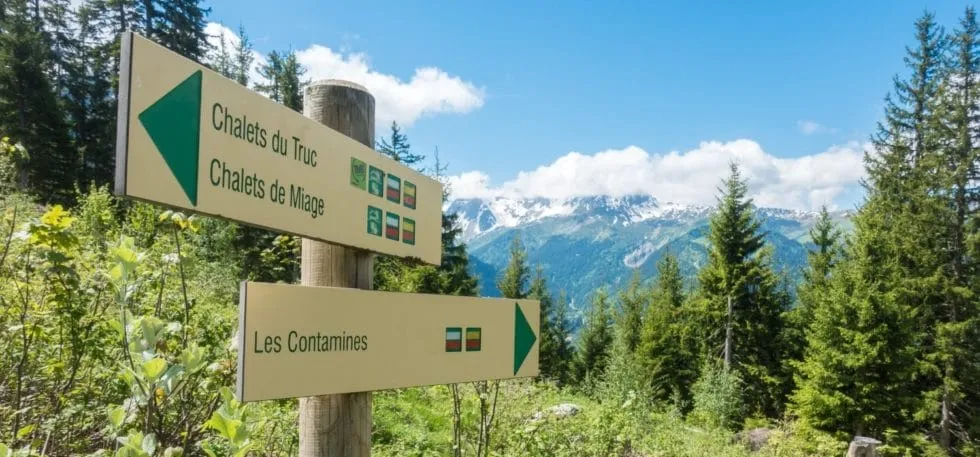
- Les Houches → Refuge de Nant Borrant: getting started, first alpine pastures, 5–7h depending on variants.
- Nant Borrant → Les Chapieux / Ville des Glaciers: open landscapes, pace management important, 5–7h.
- Ville des Glaciers → Refuge Elisabetta: Italian side passage, high mountain atmosphere, 6–8h.
- Refuge Elisabetta → Courmayeur / Refuge Bertone (depending on option): views of Italian side, marked descent, 5–7h.
- Courmayeur / Bertone → Val Ferret / La Fouly: valley route, 6–8h depending on arrival.
- La Fouly → Champex-Lac: flatter stage, useful for recovery, 4–6h.
- Champex-Lac → Trient: terrain rises again, forests and balconies, 5–7h.
- Trient → Tré-le-Champ: progressive return to France side, varied terrain, 6–8h.
- Tré-le-Champ → La Flégère: views of Aiguilles and glaciers, technical portions, 5–7h.
- La Flégère → Les Houches: loop end, alternating balconies and descents, 5–7h.
Variants: beauty, difficulty, and objective caution
Variants are often the most beautiful days… and sometimes the most demanding. The Fenêtre d’Arpette attracts hikers for its mineral ambiance and “mountain” character. It requires stable weather, good terrain reading, and particular attention to falling rocks, which have become more frequent in the Alps with changes in freeze/thaw cycles at altitude. Another vigilance area is the Col des Tufs (between Col du Bonhomme and the Lacs Jovets), where some unstable sections call for crossing quickly, keeping ears and eyes alert for sounds and movements.
In case of doubt, the best decision is often the simplest: stay on the main route or drop to the valley. This is not a sign of giving up; it is a way to finish the loop safely.
Storms: daily organization and useful behaviors
On the TMB, summer storms often arrive in the afternoon. The 48h weather forecast gives a trend, but it is especially clear in the morning. A practical strategy is to talk with the host: move breakfast earlier, leave earlier, or organize a transfer if a ridge is forecasted to be struck by lightning.
Radar apps like MétéoSwiss are particularly useful to visualize the arrival of a storm cell within hours. They don’t replace judgement on the ground but help take clear decisions. If the storm catches you, a few simple rules make the difference: avoid high points, do not cling to an isolated tree, stay away from runoff under overhangs, keep metal objects away, and isolate yourself from the ground by sitting on your backpack. The storm is generally considered over about 30 minutes after the last thunder.
With a clear route, variants chosen for good reasons, and a method to cope with weather, the last layer of preparation concerns health, safety, and those little “invisible” risks that sometimes spoil the return.
Health, safety, and practical advice on the TMB: rescue, water, falling rocks, hunting, and bedbugs
On a trek like the Tour du Mont Blanc, safety is not an isolated chapter: it is a way of walking. It starts with lucidity (knowing when to give up a variant), continues through anticipation (leaving early), and extends into refuges (hygiene, rest, discreet vigilance). For Claire and Mehdi, the goal is not to become experts, but to adopt reflexes that avoid 80% of problems.
Rescue and no-network zones: what to do if things turn bad?
The European emergency number 112 works in all three countries crossed. An important point: if your operator has no coverage, the call can sometimes switch to another available network. Despite this, some areas remain network dead zones. Hence the interest in spotting, on the map, the position of refuges and valley access: knowing where to descend is often more useful than “searching for a bar” of network.
Satellite means (beacon, satellite phone, integrated services on some recent smartphones) add security, especially for small groups. They do not replace fundamentals: protect the victim from cold, manage waiting time, and transmit clear information (precise location, condition, weather).
Altitude sickness and fatigue: early signals to take seriously
The TMB remains at moderate altitudes, but some hikers are sensitive. Headaches, nausea, dizziness, abnormal fatigue: these are signals to listen to. The priority response is simple: slow down, drink, eat, then decide. If symptoms persist, going down is the most effective solution. Pride doesn’t help breathing.
Falling rocks: increased risk in the Alps
Warming and freeze/thaw cycles weaken rocks at altitude. On the ground, this translates into practical advice: cross scree and debris cones quickly without lingering, keep eyes and ears open, and avoid stopping under unstable slopes. This is not alarmist; it is a progression hygiene. To understand how some accidents happen in the mountains, reading this article on mountain accidents and risks puts the importance of simple decisions into perspective.
Hunting in September: visibility and caution off-trail
In the fall, hunting reappears. Rules differ by country and sometimes by valley. If you plan variants off the main route, wear colorful clothing and signal your presence in dense vegetation areas. Discreet but regular noise is better than surprise.
Bedbugs: reducing the risk without obsession
The topic is sensitive but real: bedbugs can appear in refuges as well as hotels. The main danger is not the bite; it is bringing the insect home. Some habits significantly reduce the risk: quickly inspect the mattress (small dark or reddish spots), keep belongings grouped in waterproof bags, avoid spreading clothes and bag on carpet or bed, and warn the host if suspected to trigger a protocol.
Some use a light spray (including tea-tree diluted solutions) on closures and contact zones, without believing in a miracle cure. In case of doubt after a night, isolate clothes in a sealed bag and treat upon return: freezing at -18°C for 72 hours for fragile textiles, or high heat for what can tolerate it. This rigor, applied calmly, avoids many complications.
Roundtrip logistics and “recovery buffer”
Finally, TMB success also depends on what you do around it: sleep well the night before, arrive with margin, and plan a “buffer day” after. Some take advantage of this return to slow down near water or on easy routes; others extend with a gentle hike. The essential is to come back without rushing, because a trek rarely ends when you put down your pack: it ends when your body has recovered.
With these health and safety landmarks, you have a solid base to go autonomous, adjust your plans, and keep pleasure central, even when conditions change.
Video feedback is useful to visualize behaviors to adopt in case of storm or fog, and to better understand how hikers manage daily timings.
How many days should you plan for the Tour du Mont Blanc when starting out in trekking?
A format of 10 to 12 days is often the most comfortable for a first trekking trip: shorter stages, better recovery, and more margin in case of unstable weather. If you are already at ease with 6 to 8 hours of mountain walking, 9 to 10 days might suit. The decisive criterion remains the ability to chain several descents without pain.
Is it really necessary to book refuges far in advance?
Yes, especially in July-August and in the Swiss and Italian sectors where bivouac is very limited. Booking early secures your itinerary. If full, favor a flexible strategy: nights in valleys, shuttles/buses, or slight stage shifts rather than abandoning the project.
What is the best strategy against storms on the TMB?
Leave early and keep a plan B. Storms often arrive in the afternoon: a morning start allows crossing passes before the most exposed period. Consult forecasts the same morning and use a weather radar to track short-term developments. In case of threat, give up a ridge variant and descend to a valley or refuge.
Can you do the TMB entirely by bivouac?
It is possible but restrictive. Bivouac is forbidden in Switzerland in affected valleys and heavily regulated in Italy, often forcing the use of campsites or accommodations. In France, it is frequently tolerated from evening to morning depending on areas, with specific rules in reserves. Many hikers choose a mix of refuges plus a few camping nights to keep a reasonable pack.
How much water should you carry on a typical day?
Under normal conditions, 1.5 to 2 liters often suffice if you refill regularly at fountains/refuges and temperatures stay moderate. In hot periods or on drier stages, aim for 2 to 2.5 liters. A filter or tablets add a safety margin if you must take water from natural sources.