
Have you ever felt that terrible energy slump on the slopes around 11 a.m., ruining part of your skiing day? It’s a frustration we’ve all experienced, but the good news is that it doesn’t have to be inevitable. Good nutrition while skiing is the secret to transforming your days, and in this guide, I share all my practical tips to fuel yourself with lasting energy, avoid cravings, and fully enjoy the mountain from the first to the last snowflake. It’s the key to staying performant and having fun.
- Eating while skiing: why it’s so different (and so important)
- The battle plan: what to eat from morning till night?
- Smart snacks and hydration: your best allies in the mountains
- Adapting your plate to your skiing: alpine, cross-country or hiking?
Eating while skiing: why it’s so different (and so important)
Have you ever felt that terrible craving around 11 a.m. on the slopes? That sensation of your legs giving out that turns a beautiful day into a nightmare? It’s your body sending you a warning: the tank is empty. Eating while skiing is managing your energy, managing your energy to enjoy fully. And it’s much simpler than you might think.
The deadly trio: cold, altitude, and effort
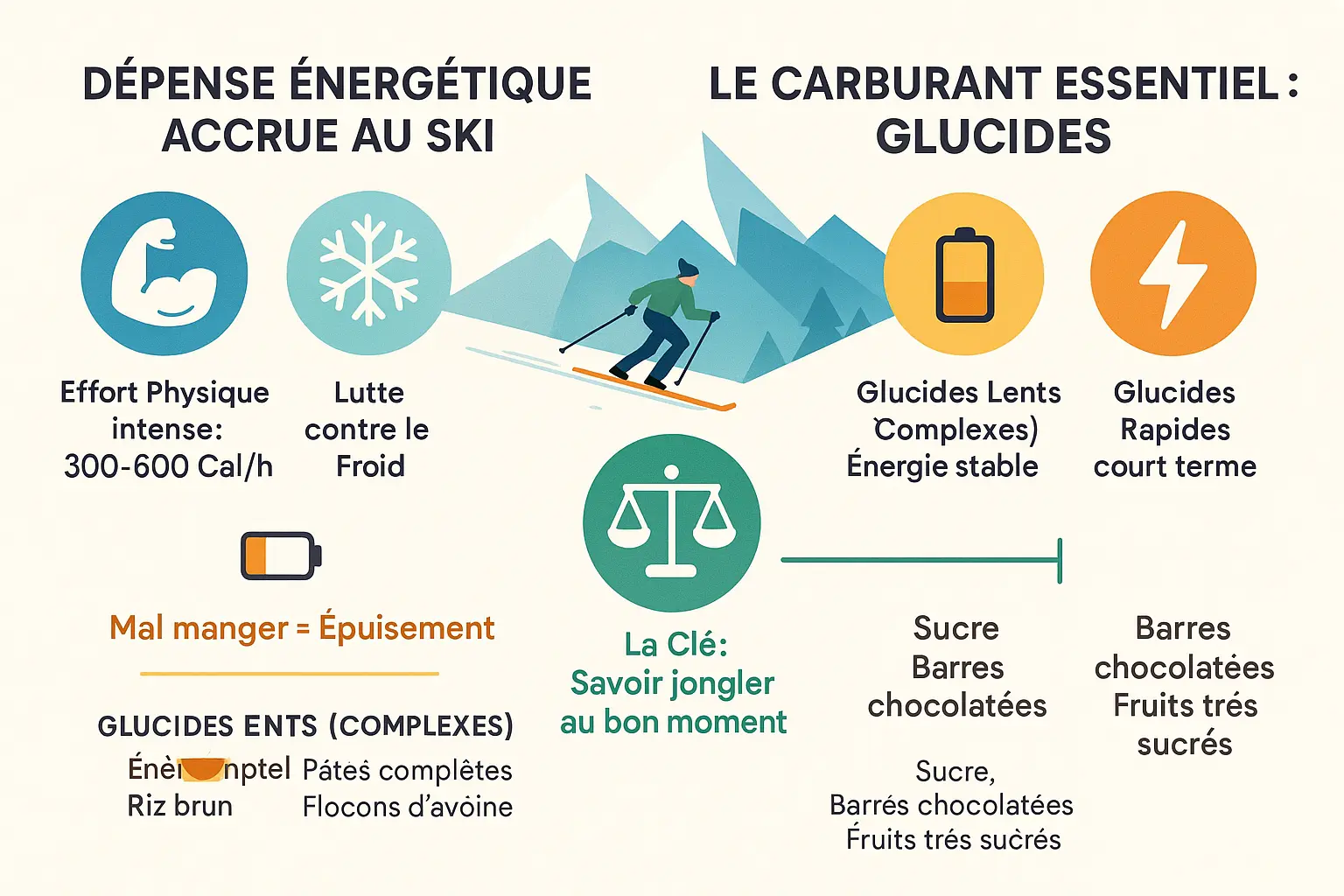
I still remember that craving on the slopes of Chamonix… In the mountains, your body becomes a furnace. It burns calories for two reasons: the physical effort of skiing (between 300 and 600 calories per hour!) and fighting the cold. Add altitude, which speeds up metabolism. Your body needs more fuel. Eating poorly guarantees you will end the day exhausted. To me, it’s a waste.
Fuel is key: slow vs fast carbohydrates
Imagine putting the wrong fuel in your car. For our body, it’s the same. Not all foods are equal during intense effort. The key is to understand the difference between two types of “fuels”.
- Slow carbs (complex): I see them as “logs” that burn long and provide stable energy. They are found in whole grain bread, whole wheat pasta, or oatmeal.
- Fast carbs (simple): These are “kindling”. They flare up quickly, perfect for an immediate boost, but don’t last long. Think sugar or chocolate bars.
Good skiing nutrition means knowing how to juggle between the two at the right time. It’s the secret I share so you never again experience that famous energy crash.
The battle plan: what to eat from morning till night?
To fully enjoy your days on the slopes, nutrition is your best ally. You need to give your body the right fuel at the right moment. I share my battle plan, tested and approved during my stays in Haute-Savoie, to never run out of energy.
1. The champion’s breakfast: fueling with lasting energy
Forget the simple coffee and croissant. It’s the most important meal of your skiing day. Really. A false start and fatigue is guaranteed before noon. What I always take is a combo that has proven its worth.
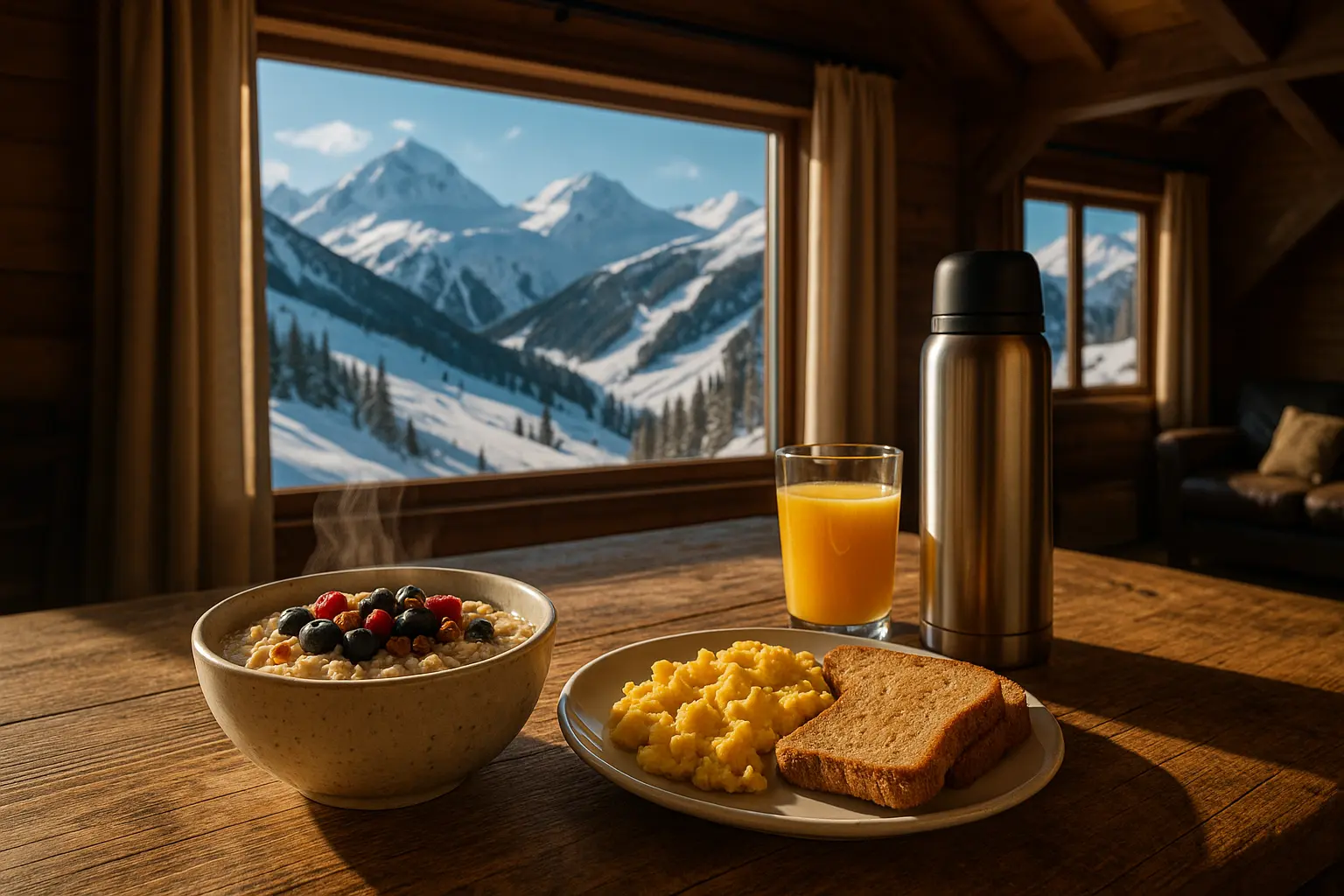
First, a hot drink, then slow carbs. My preference goes to whole grain bread or a large bowl of oatmeal. Avoid cereals that are too sugary. To keep going, you need protein: two eggs or quality ham. I complete with a yogurt and a fresh fruit. Have this meal at least an hour before putting on your skis.
2. Lunch on the slopes: the art of avoiding the afternoon slump
Noon strikes and mountain restaurants lure you with their Savoyard dishes. It’s the classic trap. My advice: tartiflette is delicious, but save it for the evening! Very fatty dishes rich in cheese drain your energy for digestion.
Fortunately, there are smart alternatives. The good sandwich plan: whole grain bread filled with chicken or country ham (like Bündnerfleisch). Simple and effective. Another option is a clever composed salad, with a base of pasta or rice, vegetables and a hard-boiled egg. If you insist on a hot dish, opt for grilled meat with vegetables.
- My 3 golden rules for lunch on the slopes:
- 1. Favor slow carbs for energy.
- 2. Limit very fatty dishes and melted cheese.
- 3. Always finish with a fruit for vitamins.
3. Dinner: recover and enjoy (wisely)
In the evening, dinner has a dual mission: recharge the batteries and enjoy yourself. It’s time to savor local gastronomy. Yes to fondue or raclette, but in moderation.
My tip for raclette: replace part of the charcuterie with Bündnerfleisch and always accompany it with a large salad. For other evenings, I recommend dishes that help muscle recovery: a soup, fish or poultry with starches like polenta. It’s comforting and perfect for repairing muscles. Eat dinner at least two hours before going to bed.
Smart snacks and hydration: your best allies in the mountains

Good nutrition and proper hydration are the pillars of a successful ski trip. They make the difference between a memorable day and battling fatigue. Here are my tips for staying in shape on the Haute-Savoie slopes.
No more “energy dips” at 11 a.m.!
This mid-morning craving is normal. It’s a sign that your body has been working hard. The solution? Anticipate with a simple snack in your pocket to give your body a boost.
Here are my favorites, tested and approved:
- A sachet of dried fruit (apricots, dates) and oilseeds (almonds, walnuts). The perfect combo between fast sugars for the boost and good fats to last until lunch.
- A cereal bar. Remember to read the label to avoid those that are too sugary.
- A compote pouch, practical and light.
- A simple fruit like a banana or clementine.
Don’t forget the post-ski snack! Within 30 minutes after effort, it’s the key moment for recovery. Hot chocolate, fruit yogurt, or a protein bar are perfect.
Drink, drink, drink: rule no. 1 at altitude
We dehydrate very quickly in the mountains. The cold masks sweating, but the dry air and effort drain our water reserves. It’s a classic trap.
My pro tip: never wait until you’re thirsty. When thirst arrives, it’s already too late. Have a water bottle and take a few sips every half hour. Aim for at least 1.5 liters of water during the day.
Beware of false good ideas. Alcohol on the slopes dehydrates and impairs reflexes. Sodas, too sugary, do not hydrate properly. Keep it simple: water is your best friend.
| Time of day | Main goal | Examples of recommended foods |
|---|---|---|
| Dinner (the night before) | Fueling up | Whole wheat pasta, brown rice, cooked vegetables, fish. |
| Breakfast (before skiing) | Long-lasting energy | Oatmeal, whole grain bread, eggs, white ham, fruit. |
| Snack (on the slopes) | Immediate boost | Dried fruit, almonds, cereal bar, compote. |
| Lunch (on the slopes) | Easy-to-digest energy | Whole grain sandwich, pasta/rice salad, balanced daily special. |
| Afternoon snack (after skiing) | Start recovery | Hot chocolate, fruit yogurt, banana. |
| Dinner (recovery) | Muscle recharge | Soup, poultry, vegetables, and (in moderation) local specialties! |
Adapting your plate to your skiing: alpine, cross-country or hiking?
Did you know that your nutrition impacts your enjoyment on the slopes? Trust my experience: not all skiers have the same needs. The energy needed for a downhill sprint differs from that of a cross-country skiing outing. So, how to adapt? I explain.
Alpine skiing: intense but short efforts
Alpine skiing is a succession of intense efforts and breaks. Your body needs a quick boost, not a heavy meal. The key is digestibility.
For ski nutrition, I recommend smart snacks. My tip? A few dried apricots on the chairlift. This is a perfect source of fast carbs to attack the next run. The idea is simple: never be too full to stay agile.
Cross-country and hiking: the endurance kingdom
Here, the strategy changes. Cross-country skiing or hiking is a marathon. The effort is continuous and the body constantly taps its reserves. Snacks become mandatory.
I recommend eating a small amount every 45 minutes: a handful of almonds, a fruit paste… just enough to keep the pace. Hydration is even more vital. A hydration pack is almost essential. This advice applies regardless of your level, whether you are at ski resorts suitable for beginners or experts.
My last tip for the road
Eating well while skiing is not about deprivation. It’s just common sense to enjoy 100% of the mountain. Find your balance between performance on the slopes and the pleasure of a good tartiflette in the evening.
So, ready to fly down the slopes with maximum energy? Share your meal tips in the comments!