
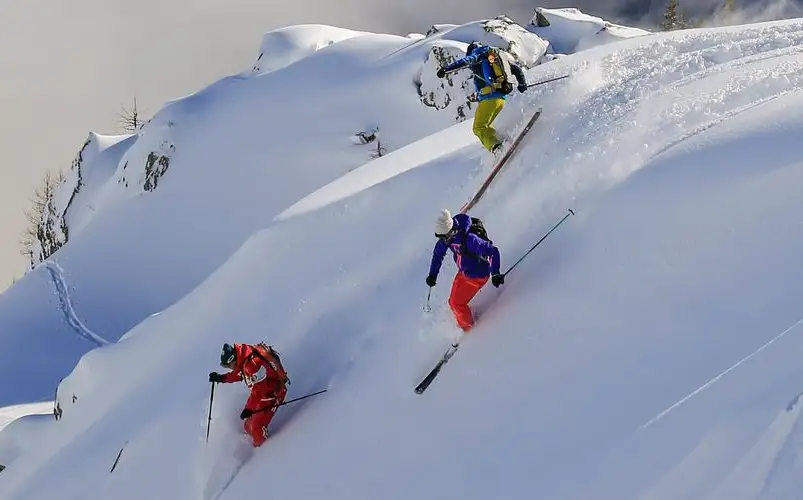
Off-piste skiing, or freeride skiing, offers a unique experience of freedom, inviting skiers to explore beyond the groomed slopes the vast and magnificent mountain spaces. This practice appeals equally to experienced skiers seeking challenges and beginners eager to discover the thrill of skiing on untouched terrain. The Alps, particularly Haute-Savoie with its breathtaking landscapes, represent an ideal playground, offering a variety of routes, from gentle descents to technical runs, in renowned resorts such as La Clusaz or Chamonix.
This article will guide you through the essentials of off-piste skiing: preparation, safety, technique improvement, and discovering the most iconic spots for an unforgettable experience. The importance of safety and responsibility in this exhilarating adventure will also be highlighted.
The basics of off-piste skiing
What is off-piste skiing?
Off-piste skiing, also called freeride or backcountry skiing, is practiced outside the marked and secured areas of ski resorts. This activity ventures onto ungroomed slopes, sometimes requiring the use of ski lifts, helicopter drops, snowmobiles, or even walking to reach the summits.
This discipline offers a unique experience, discovering preserved natural landscapes and the sensation of gliding on virgin powder snow. Off-piste skiing can be practiced close to ski areas, between slopes, or in adjacent valleys, as well as in the heart of the mountains, far from tourist infrastructures.
Differences between groomed piste skiing and off-piste skiing
The main distinction between piste skiing and off-piste skiing lies in the environment and terrain preparation. Ski pistes are regulated, secured, and often groomed, aiming to ensure the safety of practitioners.
Conversely, off-piste skiing takes place in a wild natural environment, where skiers face risks from snow, natural obstacles, and avalanches. It requires increased autonomy and profound terrain knowledge, as the usual markers and safeguards of groomed slopes are absent. This demands superior technical mastery, great caution, and rigorous preparation to navigate the varied mountain conditions.
Essential equipment
For safe off-piste skiing, some equipment is essential:
- Skis and bindings: Favor wide and light skis suited for powder and varied terrain, with strong and reliable bindings.
- Ski boots: Choose rigid and comfortable boots offering good flexibility for walking and descending.
- AVL (Avalanche Victim Locator), shovel, and probe: Indispensable in case of avalanche, these tools help locate and free a victim.
- Harness and mountaineering equipment: Necessary for technical routes, including harnesses, ropes, ice axes, and crampons.
- Clothing and accessories: Dress in warm, waterproof, and breathable clothes, and don’t forget sunglasses, helmet, and suitable gloves.
- Navigation equipment: A map, a compass, and a GPS are essential for orientation in unknown terrains.
Preparing your off-piste outing
Choosing the right equipment
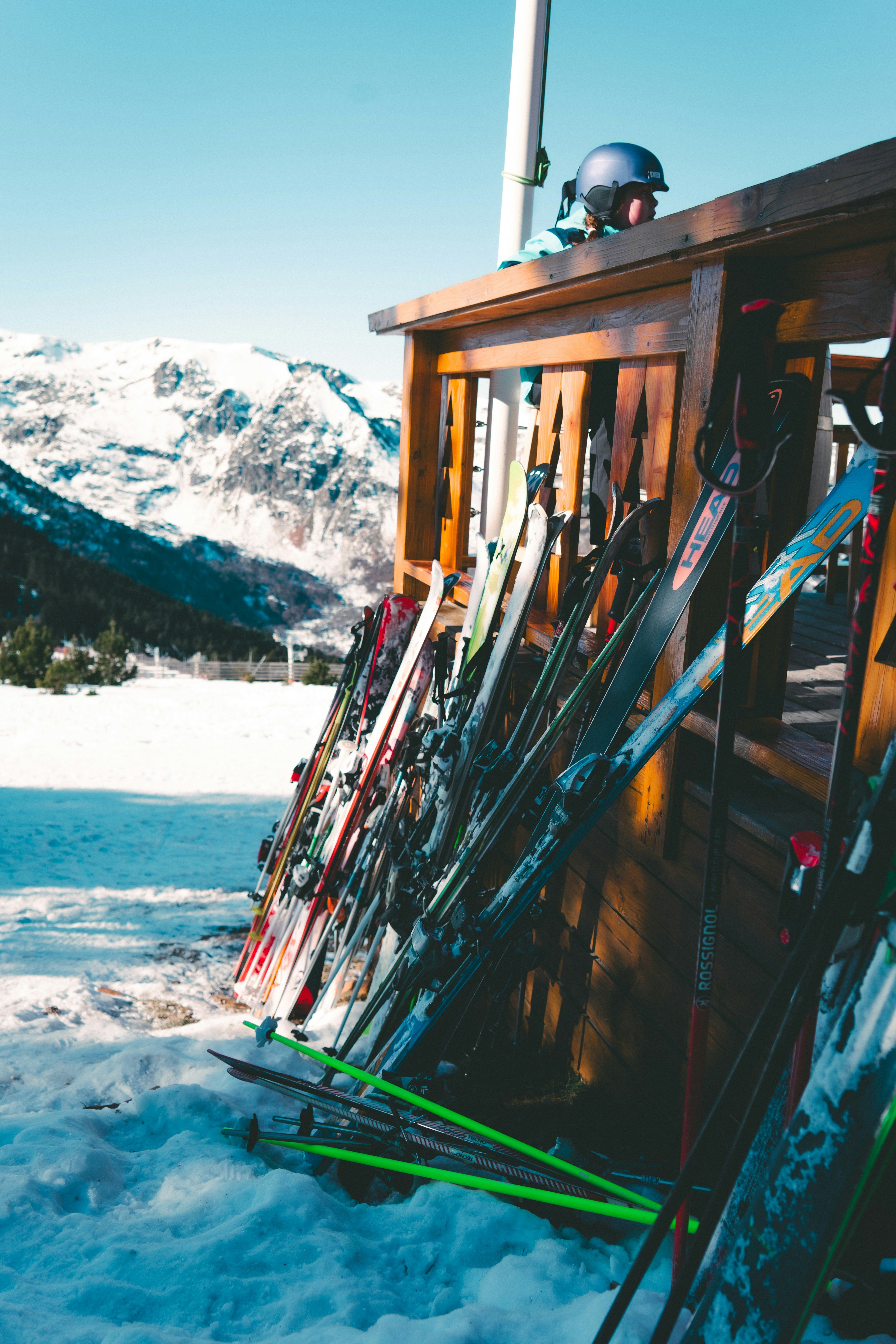
The key to a successful off-piste outing lies in choosing the appropriate equipment. It is essential to select gear specially designed for this activity. Opt for wide, light skis ideal for floating on powder and navigating various terrains. Solid bindings and ski boots that are both rigid and comfortable are indispensable.
Safety equipment, such as an avalanche victim detector (AVL), a shovel, and a probe, is vital in case of avalanche. Ensure these tools are in good condition and that you know how to use them. A helmet, ski goggles, waterproof and breathable clothing, as well as an ergonomic backpack for your gear, are also essential.
The importance of weather and avalanche bulletin
Checking the weather and avalanche bulletins is essential before any off-piste outing. It is vital to closely monitor weather forecasts to anticipate bad weather, such as gusts at altitude or sudden temperature changes.
Avalanche bulletins, which can change rapidly, must be consulted regularly. Being informed about weather conditions and avalanche risks will help you make informed decisions about your route and reduce dangers. It is advisable to check multiple sources for reliable information and stay informed until departure.
Planning your route
Route planning is essential for a safe and successful off-piste experience. To increase your chances of success, especially on your first outings, favor an easy route in a familiar area with a low avalanche risk.
Use online tools such as Google Earth to explore the area and combine this data with local maps and descriptions. Having a Plan B in case of unfavorable weather or avalanche conditions is also important. An alternative route will allow you to stay in control and ensure everyone’s safety.
Make sure your outing companions have the necessary skills to guarantee their safety and yours.
Off-piste safety

Off-piste skiing dangers
Off-piste skiing offers an exhilarating experience, but it carries significant risks. The danger of avalanche is particularly worrying, capable of occurring without warning, even on seemingly stable slopes. The consequences can be dramatic, as illustrated by the case of Rhianna Shaw, miraculously surviving after being buried under the snow.
Besides avalanches, skiers must also be vigilant against natural obstacles such as rocks, trees, and crevasses, often hidden beneath the snow. Changing weather conditions and injuries such as fractures and head trauma are also more frequent due to unpredictable terrain.
Essential safety equipment: AVL, shovel, probe
Being properly equipped is critical to minimizing off-piste skiing risks. Essential items include an avalanche victim detector (AVL), a shovel, and a probe. These tools are vital for quickly locating and freeing a buried person. Ensure they are in perfect working condition and that you know how to use them.
First aid gestures and avalanche management
In case of avalanche, every second counts. Knowing first aid gestures and procedures for managing an avalanche can make the difference. It is advised to discard all heavy equipment and let yourself be carried by the snow to reduce injury risks. Creating an air pocket and trying to move toward the surface will increase your chances of survival.
Following specialized training in avalanche management and first aid is also recommended to better prepare for these emergency situations.
Off-piste skiing safety: mistakes to avoid
Several mistakes can compromise off-piste safety. Not properly assessing your abilities and choosing inappropriate routes is a serious error. It is also vital to stay informed about avalanche bulletins and weather conditions before leaving.
Skiing in groups and maintaining clear communication is essential for safety. Finally, neglecting to wear safety equipment or not knowing how to use it properly can have fatal consequences.
When and how to hire a mountain guide
Hiring a mountain guide is often the best decision for those wishing to practice off-piste skiing safely.
Local guides possess in-depth knowledge of the terrain, weather conditions, and potential risks. They can direct you to the best routes adapted to your skills and current conditions, while teaching the most effective safety and risk management practices.
Guides can also play an important role in assessing your skills and helping you progress onto progressively more difficult routes. For experienced skiers, accompaniment by a guide offers extra safety and expertise, guaranteeing a rewarding experience without sacrificing safety.
Improving your technique
Off-piste specific skiing techniques
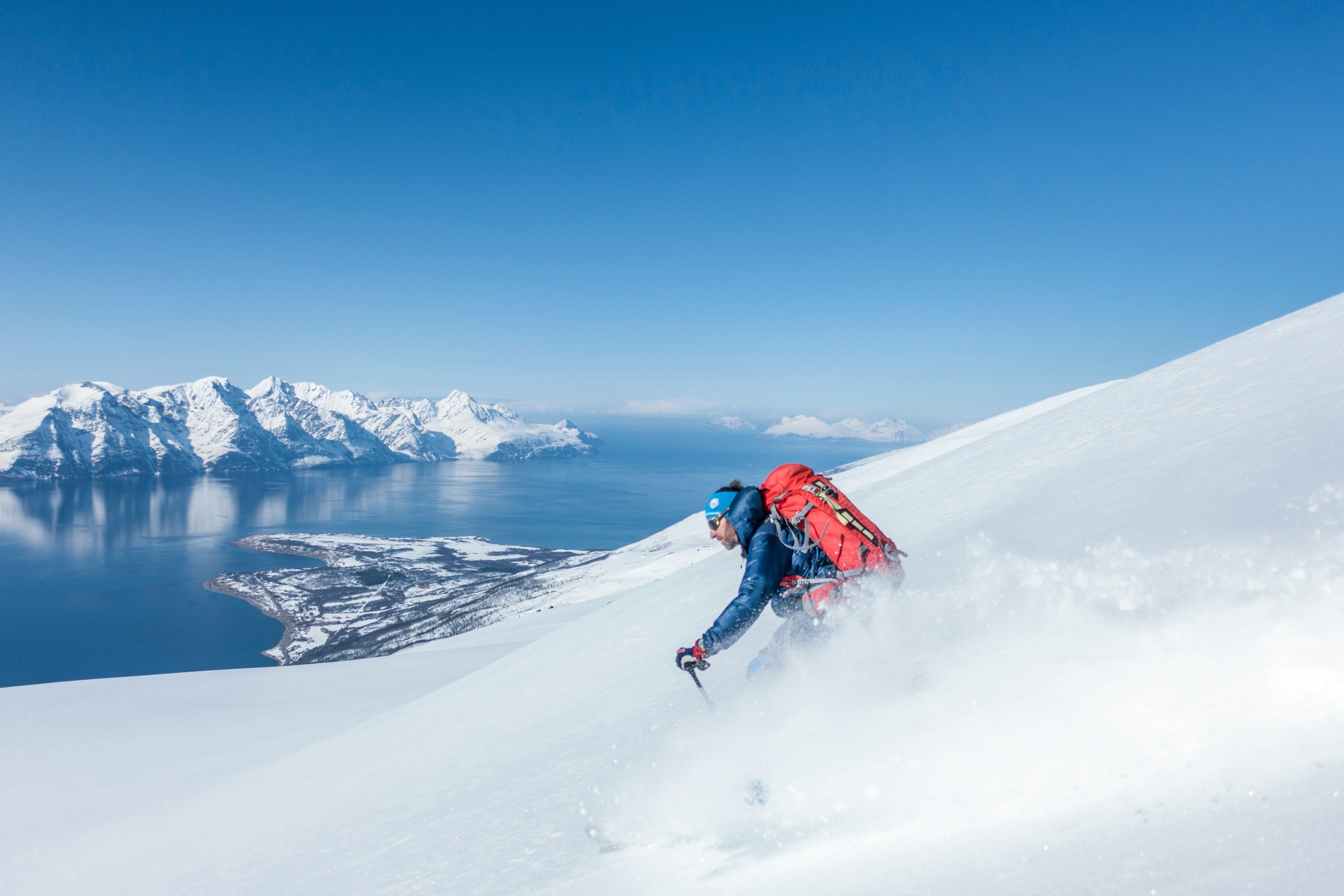
Off-piste skiing requires particular techniques to move effectively in deep snow and varied terrain.
A key element is to maintain a straight and stable torso, while lightening the body weight. It is essential that the shoulders remain aligned with the slope axis and that weight is well distributed to maintain balance.
The ski positioning is also crucial; they should be slightly apart to increase the surface area on the powder. The knees, meanwhile, must be well bent to absorb terrain irregularities and keep balance.
Movements should be active and dynamic, with constant knee flexion to adjust trajectory and stabilize posture.
Techniques may vary according to snow type. On crusted snow, the “stem turn”—bringing one ski closer to the other to turn—is recommended. On soft spring snow, it is better to shift as much weight as possible backward to avoid sinking. In powder, opt for large curves or zigzags, keeping weight centered on the ski and ensuring the tip remains visible.
Exercises to improve
To refine off-piste skiing technique, it is essential to start on simpler terrains and gradually progress.
Edges of pistes are perfect for training and learning to manage ungroomed snow. The presence of fir trees can be used to change direction quickly, which is an excellent exercise for beginners.
Targeted exercises can also help strengthen essential skills, such as practicing knee flexion to better absorb bumps or learning to use the ski heel to control speed and balance. Working on reactivity and alertness to adjust your trajectory according to terrain is also important.
Available courses and training
For those wishing to improve their off-piste skiing technique in a structured way, courses and training are available.
These programs, often led by experienced guides or instructors, offer technical advice and practical exercises tailored to the peculiarities of off-piste skiing. They cover topics like terrain assessment, avalanche risk management, and skiing techniques appropriate for different snow types.
Held in various ski resorts, these trainings provide a controlled environment and access to instructors’ expertise. They are highly recommended for beginners or those looking to boost their skills and confidence on off-piste terrains.
The best off-piste skiing spots
In France
France boasts exceptional off-piste skiing spots, each presenting its own unique challenges and characteristics. Among the most iconic destinations, Chamonix, at the foot of Mont Blanc, stands out as a true paradise for freeriders. Routes such as the Vallée Blanche feature an impressive descent of over 2000 meters across one of Europe’s largest glaciers, dotted with giant crevasses and passages beneath seracs. Generally, most of the Haute-Savoie ski resorts also offer more or less accessible off-piste terrain. Don’t hesitate to inquire.
Another gem of the Hautes-Alpes, La Grave, is dedicated to off-piste skiing, with routes reaching vertical drops between 1500 and 2000 meters. The cable car carries skiers to over 3200 meters altitude, opening access to legendary spots such as the Valons de la Meije, the Glacier de la Loze, and the Valon de Chancel.
The duo of Tignes and Val d’Isère, located in the Tarentaise, also represents a major hotspot for freeride enthusiasts. The ski domain offers a multitude of off-piste options, with lifts facilitating access to wild slopes. Routes like Combe de Constantin and Le Glattier are highly popular.
Paradiski, encompassing La Plagne and Les Arcs, is another bastion of freeride. This area played a key role in popularizing the discipline and offers several routes with 2000 meters of vertical drop, notably on the faces of l’Aiguille Rouge.
Internationally
Internationally, Verbier in Switzerland is often celebrated as the capital of extreme skiing. The resort offers off-piste routes accessible by a fast cable car, leading to the slopes of the 4 Vallées, with descents starting at Piz Nair toward the Suvretta valley, characterized by steep slopes and breathtaking views.
Andermatt, in central Switzerland, is also renowned for its off-piste routes. Its highest point, Gemsstock at 3000 meters, ensures quality snow cover throughout the season. Routes through the Felsen valley or Hintertal are particularly appreciated by freeriders.
In Austria, the Stubai Glacier represents the country’s largest glacier ski area, offering about fifteen off-piste routes. This resort is a hub for freeride enthusiasts from across Europe.
Kitzbühel, also in Austria, is famous for its demanding off-piste routes and breathtaking mountain landscapes, offering a variety of terrains from steep slopes to snowy valleys for a unique and memorable skiing experience.
The ethical and responsible side of off-piste skiing

Respecting the environment
Off-piste skiing carries a considerable environmental responsibility. It is essential to respect the mountain ecosystem and minimize the impact of this activity on nature.
Skiers must be attentive to sensitive and protected areas, avoiding breeding or wintering grounds of animals. Some ski resorts have established “quiet zones,” marked by cords or flags, to discourage access to these delicate spaces.
It is also important not to harm the flora. Young tree shoots, just emerging from the snow, can be damaged by sharp skis.
Initiatives such as tree planting in ski areas, like that of the National Forest Office at Les Arcs, play an important role in creating natural barriers to protect wintering spaces for certain species.
The impact of off-piste skiing on fauna and flora
Off-piste skiing can significantly impact mountain wildlife. The presence of skiers can disturb animals such as chamois, ibex, deer, and ibexes, forcing them to flee and use their energy reserves.
This stress can also harm their reproductive capabilities, already weakened by climate change.
Mountain birds, including Galliformes, also suffer from off-piste skiing activities. Collisions with ski lifts and resort infrastructure can be reduced through protection measures, such as installing red or white flags to alert birds.
Adopting responsible behavior
Adopting a responsible behavior is essential for sustainable off-piste skiing practice.
It is important for skiers to inform themselves about rules and good practices before venturing off-piste. Respecting private property, restricted areas, and never skiing alone to ensure mutual safety in case of incident are essential practices.
Awareness of biodiversity and the environment is an integral part of ski instructors’ training, who must be able to educate their students on environmentally respectful practices.
Becoming a mountain ambassador by adopting principles of social and responsible tourism promotes local economic development while respecting the environment.
Sharing experiences and knowledge with other skiers is a step that helps promote a more responsible and environmentally conscious approach to skiing, thus strengthening a culture of respect and preservation of our mountains.
The final word
Off-piste skiing offers a unique and exhilarating experience, but it requires preparation and heightened awareness. It is essential to master the basics of off-piste skiing, choose the right equipment, and respect weather conditions and avalanche bulletins.
Safety is paramount, with mandatory use of AVL, shovel, and probe, and knowledge of first aid gestures. Adopting responsible behavior by respecting the environment and local wildlife is also essential.
Courses and training are available to improve your technique and your confidence. Don’t hesitate to hire a mountain guide for a safer and more enriching experience.
With the right tools and a positive mindset, you can explore the best off-piste skiing spots in France and internationally. So, prepare your skis, your safety equipment, and set out to conquer the snowy slopes to live unforgettable experiences.
Don’t wait to take action and discover the joys of off-piste skiing.
Every descent is a unique adventure, and with proper preparation, you will be ready to face the challenges and fully enjoy this exciting activity.