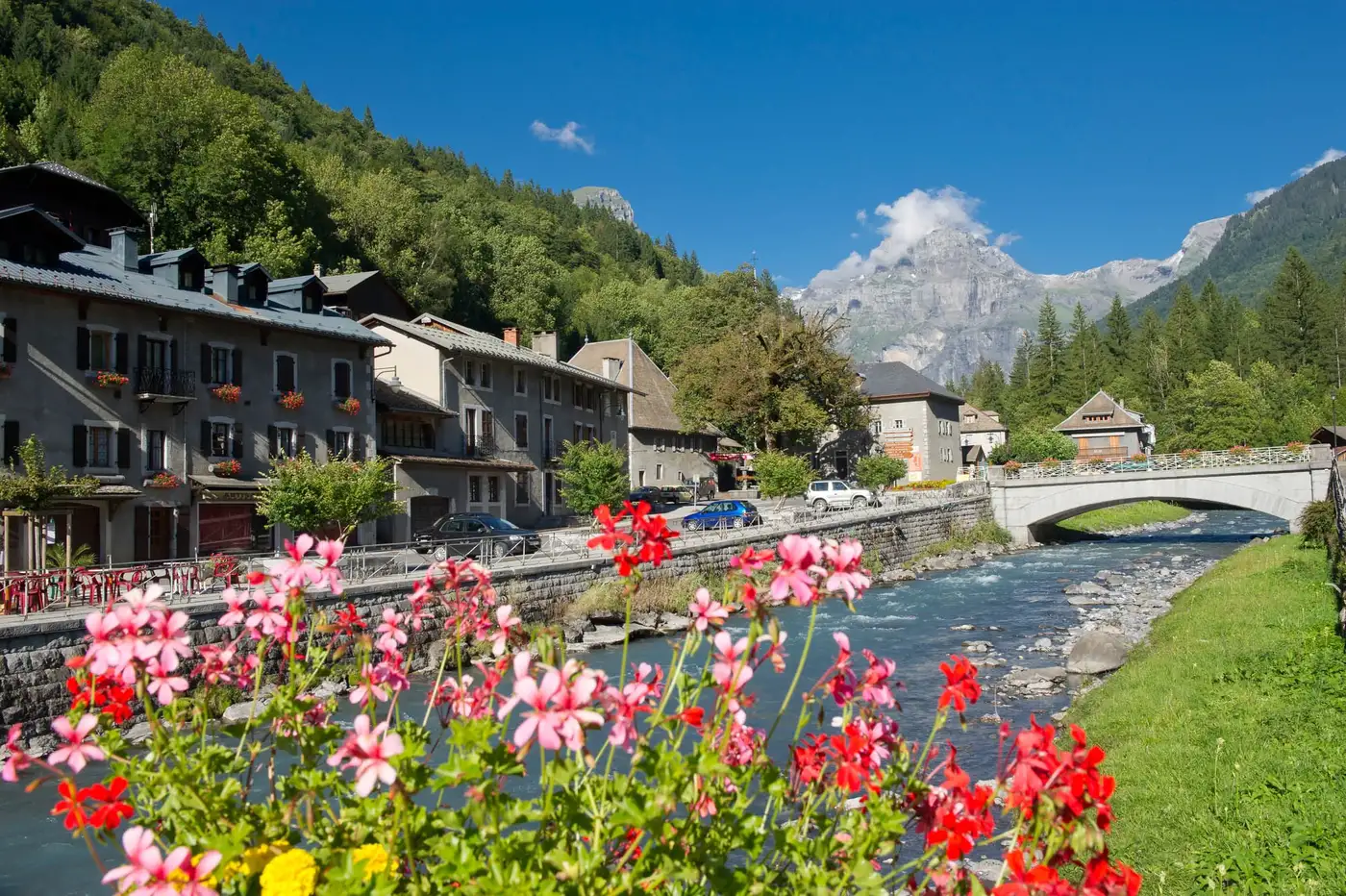
Nestled in the heart of the Haute-Savoie mountains, this discreet village reveals itself as a true alpine jewel still little known to the general public. This authentic village, ranked among the most beautiful in France, captivates with its exceptional natural setting. Its imposing mountain cirque, its protected natural reserve, and its rich architectural heritage make it an exceptional destination. Yet, many French people still ignore the existence of this Savoyard treasure where nature expresses itself in all its splendor.
The Hidden Treasure of Haute-Savoie
Located in the Haut-Giffre valley, at the eastern end of Haute-Savoie, this authentic mountain village owes its original name to the Abbey of Sixt founded in the 12th century and to the characteristic shape of its natural cirque. Recognized among the most beautiful villages in France, it offers a complete immersion into a preserved world, far from overcrowded tourist resorts. The inhabitants, called sizerets, have been carrying on ancestral traditions for generations. Certain Savoyard families have been rooted in these lands for over four centuries, contributing to the special soul of the place.
This remarkable village of Haute-Savoie is Sixt Fer-à-cheval, at the foot of the fer-à-cheval cirque.
A Natural Amphitheater Unique in France
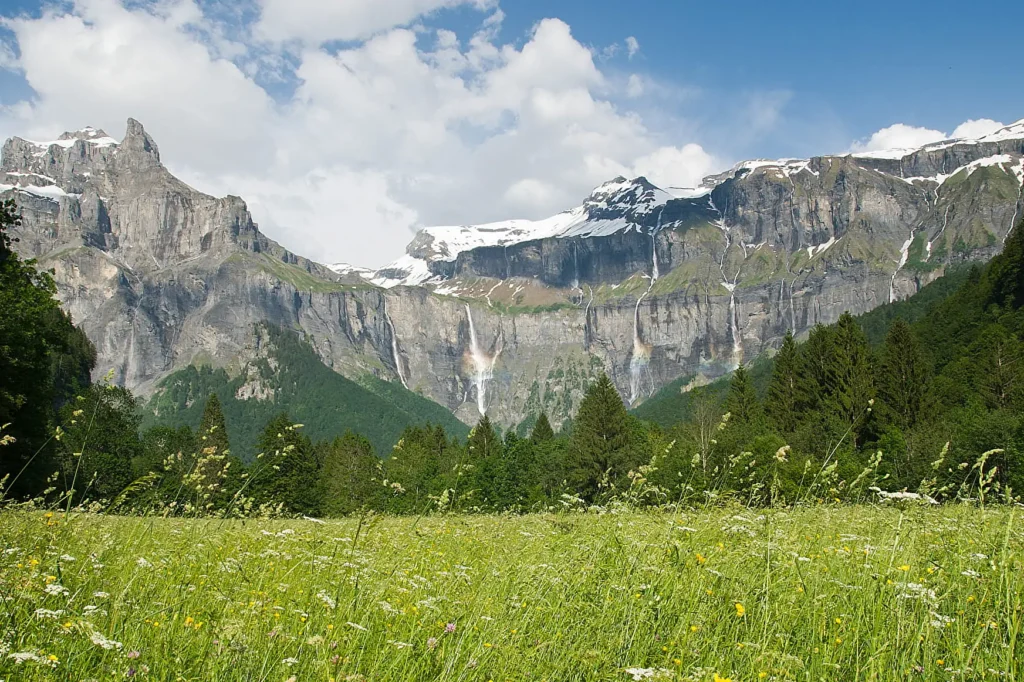
The Cirque du Fer-à-Cheval is the natural jewel of the region. This impressive limestone amphitheater stretches over 4 to 5 kilometers, forming a majestic semicircle surrounded by dizzying cliffs reaching 2000 meters high. This geological marvel, the largest mountain cirque in the Alps, is dominated by the Corne du Chamois and rests against the steep flanks of the Tenneverge peaking at 2985 meters. The rock formation owes its name to its characteristic shape resembling a horseshoe. This grandiose site attracts thousands of visitors every year who come to admire this monumental natural architecture.
The Spectacle of Spring Waterfalls
In spring, the cirque offers a natural spectacle of rare intensity. The snowmelt transforms the rocky walls into true walls of water where more than thirty tumultuous waterfalls erupt simultaneously. Spring is the best season to admire these alpine waterfalls in all their power. These temporary waterfalls create a natural symphony that resonates throughout the cirque, offering hikers an unforgettable sensory experience.
The Natural Reserve: An Exceptional Heritage to Discover

With its 9000 hectares, the Sixt-Passy Natural Reserve stands as the largest in Haute-Savoie. Its remarkable altitudinal range, extending from the banks of the Giffre at 900 meters up to the summit of Buet at over 3000 meters, creates a mosaic of alpine ecosystems. This diversity of terrains shelters an exceptionally rich flora and fauna. To preserve this natural sanctuary, certain rules apply to visitors, including a ban on picking plants and restrictions regarding domestic animals.
Waterfalls and Streams: Water in All Its Forms
Water reigns supreme in Sixt-Fer-à-Cheval, endlessly sculpting the landscape. The Rouget waterfall, nicknamed the “Queen of the Alps,” impresses with its majestic double fall. Not far away, the Gouille Verte Waterfall reveals its turquoise waters in an intimate setting. The mysterious Gorges des Tines offer a striking spectacle where water has carved narrow gorges into the rock. The Giffre, a torrential stream, roars through the valley and has been shaping this extraordinary mountain landscape for millennia.
The Authentic Village with History-Laden Alleys
Spread across 24 typical hamlets including Salvagny, the historic buildings of Sixt-Fer-à-Cheval bear witness to a rich past. The 12th-century abbey complex, built by Augustinian canons, is the architectural jewel of the village. In the paved alleys, one can discover 44 stone basins and fountains, 53 oratories, and 9 chapels. The traditional farms and mazots (granaries) with slate roofs perfectly illustrate Savoyard mountain architecture adapted to the rigors of the alpine climate.
- The 12th-century abbey, a major witness of religious heritage
- The traditional mazots, typical elevated granaries
- The 44 fountains and basins scattered across the hamlets
- The Carrousel Garden, a preserved space in the heart of the village
The Touristic History of Sixt
Tourism in Sixt-Fer-à-Cheval began in the mid-19th century. In 1854, Sir Alfred Wills, an English judge and mountaineer, discovered the valley and built the Nid d’Aigle at the Cirque des Fonts. This pioneer of alpine tourism helped to make the region known to the first travelers. The Sixt-Fer-à-Cheval Guides Company, founded in 1865, has since accompanied visitors in discovering the surrounding natural wonders.
Hikes Not to Miss Around the Cirque
Discovering the Cirque du Fer-à-Cheval is ideally done on foot. A route between hidden heritage and wild nature allows exploration of the region in all its diversity. The classic cirque hike offers an accessible 9.3-kilometer trail for 3h30 of walking, with a moderate elevation gain of 330 meters. This loop leads to the place called “Bout du Monde” at 1222 meters altitude. Parking costs 7 euros per day, and several restrictions apply: dogs prohibited beyond the Prazon Refreshment Hut and bivouacking allowed only from 7 pm to 9 am.
- Difficulty: Easy, ideal for families
- Distance: 9.3 km round-trip
- Duration: 3h30 of peaceful walking
- Elevation gain: 330 meters, gradual and accessible
Tips for Safe Hiking
Even on marked trails, the mountain requires some essential precautions. The basic equipment for the alpine hiker includes suitable shoes, warm and waterproof clothing, a sufficient water supply, and a detailed map. The changing weather at altitude requires checking in advance and allowing a safety margin in the timetable for excursions.
Fauna and Flora: A Remarkable Biodiversity
The exceptional altitudinal range of the reserve promotes a rare alpine biodiversity. The conifer forests and high-altitude meadows shelter emblematic fauna: majestic ibex, agile chamois, playful marmots, golden eagles soaring in the currents, and bearded vultures. Alpine flora thrives according to a precise zonation: edelweiss, gentians, orchids, and rhododendrons compose a colorful palette evolving with the seasons. This ecological richness delights naturalists and photographers alike.
- The Alpine ibex, king of the cliffs
- The bearded vulture, emblematic bird of prey reintroduced
- Edelweiss, flower symbol of the Alps
- The martagon lily, jewel of high-altitude meadows
Observing Wildlife Without Disturbing It
Respectful observation of wild animals requires a few simple rules: keep your distance, use binoculars, remain silent, and never feed the animals. The early morning hours generally offer the best opportunities to spot alpine wildlife in its natural environment, notably chamois and marmots.
Where to Stay to Fully Enjoy Sixt Fer à Cheval
The village and its hamlets offer authentic and welcoming accommodations for all budgets. Rural lodgings set up in old Savoyard farms promise a typical stay, while bed and breakfasts allow immersion in local life. Some small charming hotels, often family-run, complete the accommodation offer. Campsites and seasonal rentals are appreciated alternatives in summer. Early booking is advisable in high season for this village still preserved from mass tourism.
Meeting Local Producers
The stay gains authenticity through contact with local producers. At the Bergerie du Lochet, Karine Richard raises dairy ewes and offers artisanal cheeses. Marie and Pascal’s organic bread, passionate makers, delights lovers of authentic flavors. These encounters offer an immersion in the still vibrant pastoral traditions of Sixt-Fer-à-Cheval.