
High mountain fascinates. In Haute-Savoie, it offers a unique playground: sparkling glaciers, mythical peaks, snowy couloirs, airy ridges… But behind the raw beauty of the Mont-Blanc massif and the Aiguilles Rouges lies a demanding environment where preparation makes all the difference.
Here is the guide to essential basics for a memorable, safe, and perfectly successful experience.
Why does Haute-Savoie require serious preparation?
With some of Europe’s most technical terrains, Haute-Savoie combines a wide variety of landscapes: rocks, snowfields, crevassed glaciers, mixed routes, high-altitude ridges… Even a “simple” outing can quickly evolve depending on the weather, the time of day, or the quality of the snow.
This is why rigorous preparation is indispensable, whether you are going for a glacier hike, a ridge climb, or a summit like Buet, Pointe Percée, or Vallée Blanche.
1. Choose the right route according to your level
The first step is to select a course suitable for your physical condition, experience, and equipment.
For a gentle start :
- Glacier hike on the Argentière Glacier
- Ascent to the Albert 1st refuge
- Crossing the Lac Blanc (high mountain approach)
For intermediate level :
- Ascent of Buet (3,096 m)
- Pointe Isabelle (if conditions allow)
- Cosmiques Ridge (with guide)
For experienced mountaineers :
- Mont Blanc via the 3 Monts or Goûter
- Rochefort Ridge
- Mixed climbs of the Aiguilles de Chamonix
Of course, there are many other mountain courses in Haute-Savoie; above we offer just a small selection of possibilities.
Tip :
Always check conditions (crevasses, bergschrunds, freeze-thaw, storm risks). The high mountain offices of Chamonix, Samoëns, or Sixt are true mines of up-to-date information.
2. Equip yourself well: essential equipment

High mountains do not forgive approximate equipment. Here is the essential list to adapt according to the route.
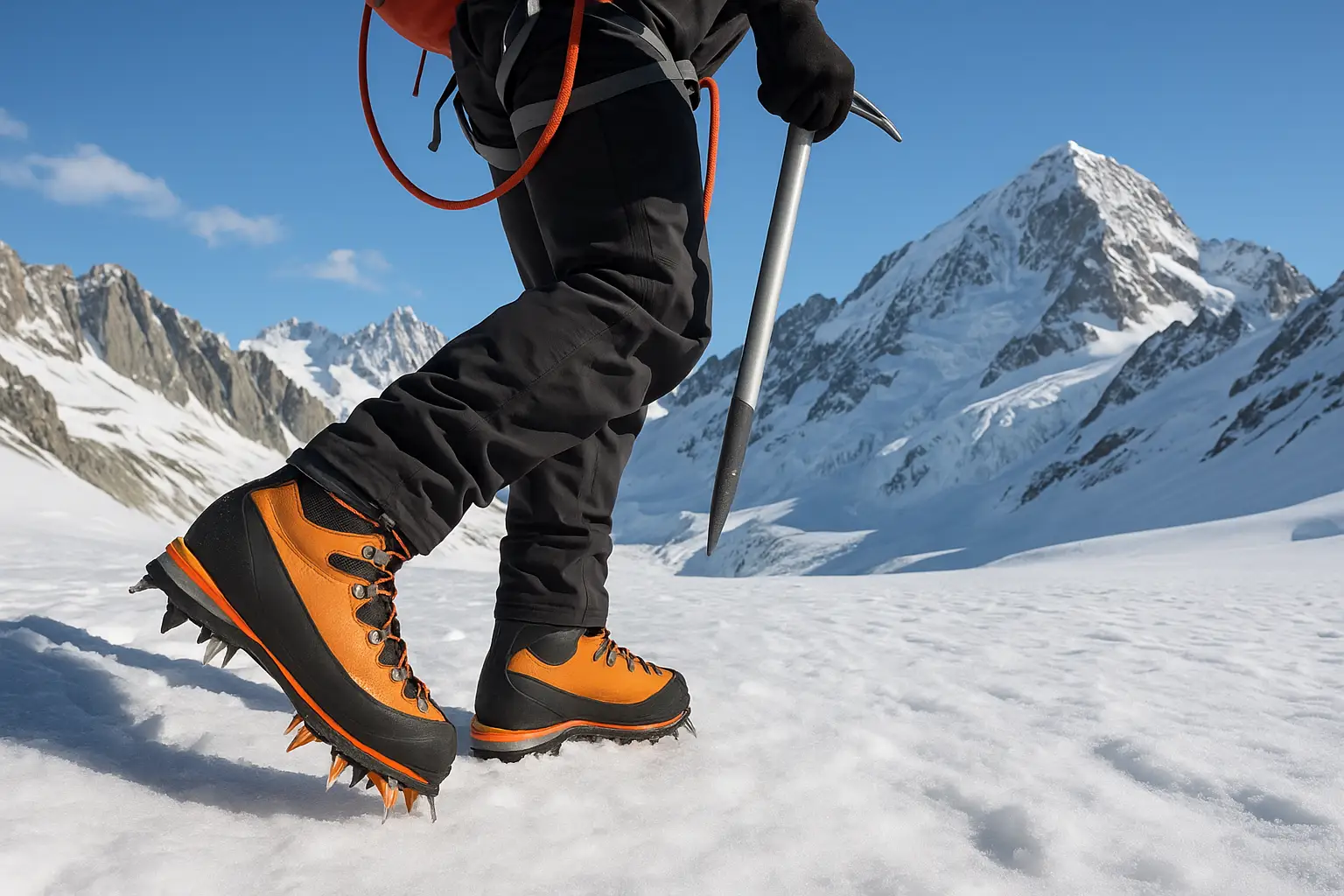
Mountaineering boots: your best ally
This is THE aspect never to neglect. Choosing mountaineering boots adapted to your needs and foot shape is truly crucial! They ensure stability, grip, and compatibility with crampons. Poorly adapted boots will not only be painful for your feet (imagine after 10 hours of walking…), but also, and most importantly, could compromise your safety.
In the mountains, terrains vary greatly, so:
- Semi-rigid boots → perfect for easy glacier walks, technical hikes, and summer snowfields.
- Rigid crampon-compatible boots → essential for ridges, steep slopes, ice, and more technical peaks.
- Insulated models → recommended for outings above 3,500 m or early in the morning.
Practical advice: Try your boots in the afternoon (feet slightly swollen) and walk in them well before the big day. A blister at altitude quickly becomes a major problem.
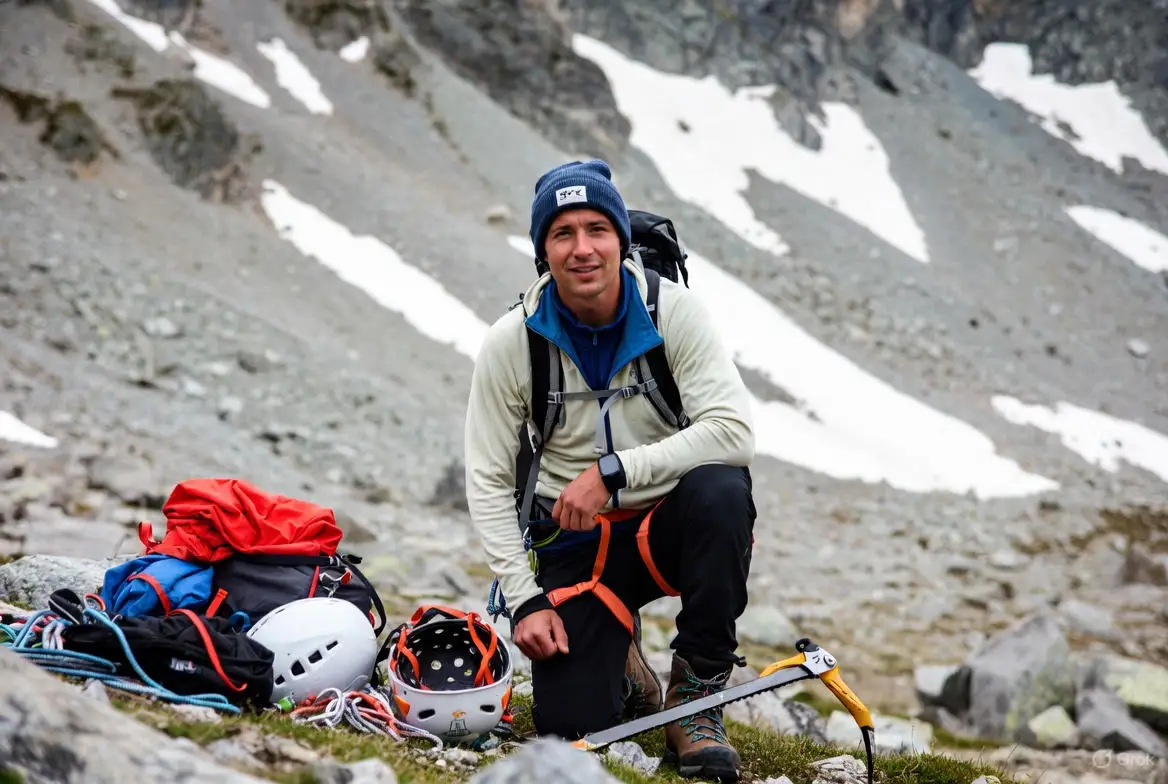
Essential technical equipment
- Crampons
- Ice axe
- Harness
- Helmet
- Rope (if self-guided)
- Avalanche transceiver, shovel, probe (if unstable snow or spring conditions)
- Warm gloves + light gloves
- Category 3 or 4 sunglasses
- Layered clothing: thermal, fleece, down jacket, hardshell jacket
- Thermos + water + energy snacks
3. Check the weather and snow conditions
In Haute-Savoie, as in mountains in general, conditions change very quickly. Before leaving, absolutely check:
- The weather trend
- Nighttime freeze
- Avalanche bulletins (even in summer, in case of fresh snow)
- Wind at altitude
- Forecast storms
Golden rule:
If the freeze is bad, give up. Snow bridges become fragile and crevasse falls more likely.
4. Adapt your schedule: leave very early
In high mountains, the day often starts before 6 a.m. Why?
- Stronger glaciers
- More stable snow
- Fewer cold avalanches
- Less risk of storms
- More comfortable temperatures for effort
Example:
For Buet or Albert 1st → departure between 4 a.m. and 6 a.m. depending on the season.
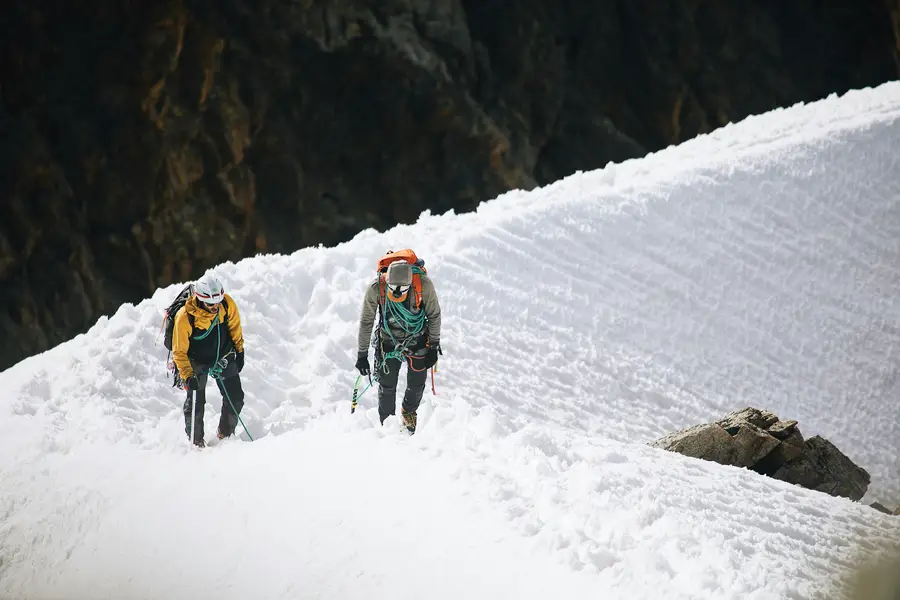
5. Roping up or going with a guide: a matter of safety
Haute-Savoie is full of passionate professional guides, particularly in Chamonix, Samoëns, Morzine, or Argentière. If you doubt your skills, don’t hesitate, hire a guide!
Going with a guide means:
- An itinerary adapted to your level
- Zero technical management (rope, pace, safety)
- Valuable teaching to improve
- Maximum safety on glacier or mixed terrain
Roping up among friends?
Possible only if everyone masters:
- Taut rope progression
- Step on snow/ice
- Setting up an anchor
- Crevasse rescue management
6. Physical training before the outing
High mountain requires:
- Endurance
- Power in quadriceps and calves
- Good acclimatization
- Proper hydration
Recommended preparation 2 to 4 weeks before:
- Hiking outings with elevation gain
- Leg strengthening
- Endurance (running, cycling)
- 1 or 2 nights at altitude to get the body used
7. Safety: common mistakes to avoid
- Relying only on valley weather
- Underestimating sun exposure (UV + reflection)
- Overloading your backpack
- Not drinking enough
- Going out with new mountaineering boots
- Starting a route late in the morning
And the most classic:
Not turning back when conditions are bad.
In high mountains, turning back = wisdom, not failure.
A successful high mountain outing is 80% preparation
With its glaciers, mythical peaks, and unreal panoramas, Haute-Savoie offers a unique experience to high-altitude enthusiasts. But the success of an outing depends above all on careful preparation: adapted itinerary, good equipment, especially mountaineering boots, weather vigilance, and a controlled pace.
Well prepared, the massif becomes a ground of unforgettable emotions.