
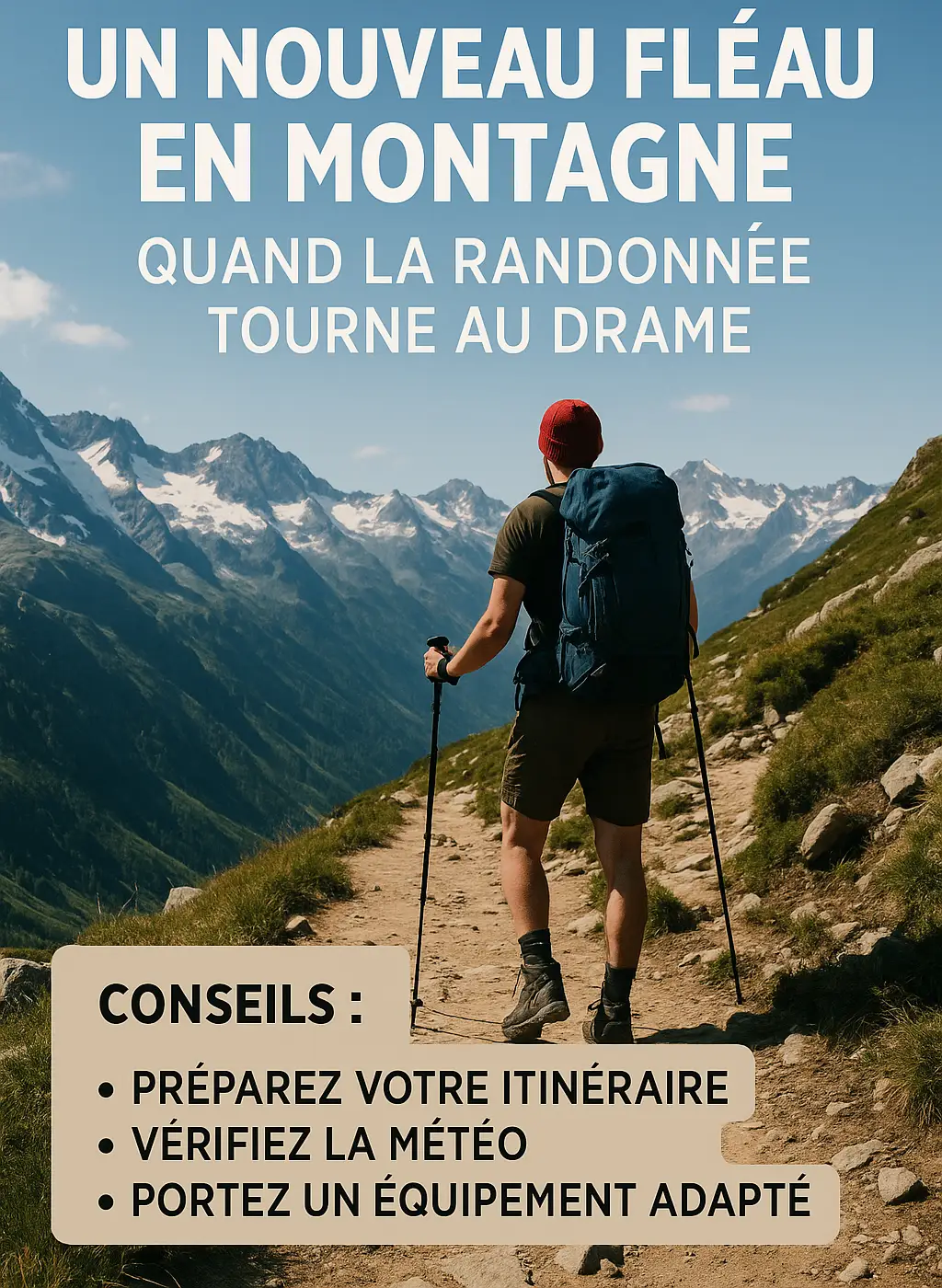
Haute-Savoie – The department of the Alps known for its magnificent landscapes, Mont Blanc, crystalline lakes, and blooming alpine pastures, now faces a worrying phenomenon: more and more hikers venture into unknown terrain, under-equipped, poorly informed, sometimes simply driven by the temptation of “Instagrammable” images from the summits. The result: numerous rescue operations, accidents, and a worsening death toll, especially in recent years.
A more deadly spring in 2025
The numbers are clear: in Haute-Savoie, the beginning of 2025 is more deadly than in 2024 on mountain trails. Chamonix rescuers report five more deaths than during the same period the previous year.
Among the tragedies counted are accidents at La Tournette or Parmelan, which highlight the vulnerability of practitioners even on very frequented routes.
The summer season’s toll is not yet known but seems to follow the same upward trend.
Causes: social networks, lack of preparation, seasonal effects
According to rescuers and local authorities, several factors converge:
- Social networks and image: photos of summits and spectacular panoramas encourage inexperienced hikers to attempt ascents or dangerous passages without measuring the risks. The “photogenic journey” becomes a stronger driver than safety for some.
- Changing weather/snow conditions: in spring, late snow patches persist, causing slippery zones, hard snow, and high-altitude passages still in winter conditions. These are moments when the environment is less stable and mistakes are very costly.
- Mismatch of equipment and experience: inadequate shoes, lack of crampons or poles, poor maps or orientation, overestimation of physical abilities. The “easy” mountain remains demanding.
Figures & data: summer and winter accident rates

- In summer, the “classic” hiking season, the department already recorded in 2024 more than 795 rescue operations from June to October, and 39 deaths. The first figures for 2025 are not encouraging.
- In winter 2023-2024, in the SNOSM report (mountain rescue structures), 13 people died in avalanches nationally, including 3 off-piste skiers in Haute-Savoie during the same avalanche.
- The avalanche risk remains high: Haute-Savoie is among the departments most affected by PPRN (Natural Risk Prevention Plans) avalanche measures.
Testimonials & examples
- The mayor of Talloires-Montmin had to ban access to La Tournette above 1,700 meters in spring due to dangerous still-winter conditions.
- Rescuers mention hikers “well equipped” for trail runs or simple hikes but not for high-altitude passages with snow, ice, or exposed terrain.
Consequences
- Increase in mountain mortality.
- Greater need for mobilization of rescue services: helicopters, specialized teams, costs and risks for rescuers.
- Media impact that fuels the alert, but also sometimes stigmatization or fear, which can discourage beneficial mountain activities if poorly supervised.
What must be done: towards more prevention
To reverse the trend, here are some identified paths:
| Measure | Expected consequence |
|---|---|
| Strengthen information before hikes: reliable maps, weather forecasts, equipment advice | Better preparation of hikers, reduction of unexpected dangerous situations |
| Awareness on site (tourist office, refuges, local shops) of altitude realities, persistent snow patches, exposed sections | Hikers more aware of risks |
| Temporary regulations/local prohibitions (e.g., access to high-altitude routes when conditions are poor) | Reduction of dangerous passages, avoided accidents |
| Promotion of supervised practices (guides, leaders) | Increased safety, better compliance with instructions |
| Better use of technologies: reliable GPS, specialized apps, real-time information | Fewer orientation losses, early alerts |
Haute-Savoie, like other mountain ranges, is going through a delicate period: enthusiasm for the mountains grows, but the price to pay, sometimes tragic, also. Between overexposure in the media, lack of preparation, changing weather conditions, this is a warning. To keep hiking a pleasure without becoming a danger, balance must be found: respect for the environment, caution, preparation, humility.
Some advice for hikers
Before going to the mountains:
- Check the mountain weather (not the valley forecast).
- Plan your route and inform someone of your expected return.
- Equip yourself properly (suitable shoes, poles, crampons if necessary).
- Always bring water, snacks, a first aid kit, and a charged phone.
- Respect local bans (closed or discouraged routes).
👉 Remember, in the mountains, humility and preparation are your best protection.
To read: The guide to good hiking practices